The safest first move may be to leave some marks alone. White, powdery deposits are often efflorescence, which is generally harmless and can weather away over time; mortar smears need a different approach. If you’re cleaning mortar stains from new brickwork in Wolverhampton, identifying the mark first can help prevent damage to the finish.
It’s tempting to reach for a pressure washer or strong cleaner as soon as fresh brickwork looks messy. But gentle, patient cleaning is usually the better place to start. This guide explains how to distinguish cement staining from efflorescence, when deposits can weather naturally, and how to brush or carefully scrape away mortar residue by hand. You’ll also learn when an acid-free brick cleaner may be suitable, and why testing a small area first matters. A careful method can lift residue while protecting the brick face and mortar joints.
Key Takeaways
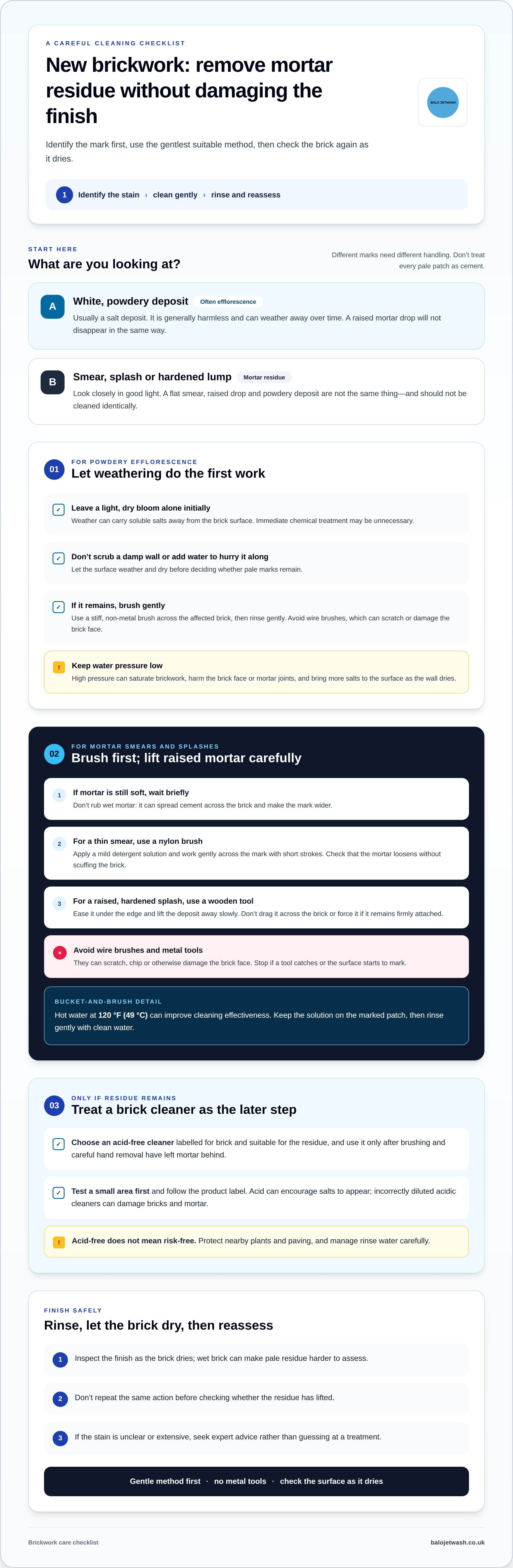
Identify whether the mark is powdery efflorescence or hardened mortar before choosing how to treat it.Let harmless deposits weather naturally where possible, and avoid using high pressure to remove them.Use a stiff brush for light residue and a wooden tool for larger hardened mortar deposits; avoid wire brushes and metal tools.Choose an acid-free brick cleaner suited to the stain, test it on a small area and follow its label directions.Take care with fresh masonry: mortar curing and the cleaning method affect when brickwork can be safely cleaned.Allowing deposits to weather naturally
Identify the deposit before reaching for a cleaner. Efflorescence is usually a white, powdery salt deposit on the brick face, while mortar residue appears as smears, splashes or hardened lumps. Efflorescence is generally harmless and temporary, and can weather away over time. If the mark is a raised mortar drop, waiting for it to disappear like salt bloom won’t remove the cement.Initially, leave a light, dry salt bloom alone and see how it changes. Weather gradually carries soluble salts from the brick surface, so immediate chemical treatment may be unnecessary. Don’t scrub a damp wall or add water to hurry the process. If the deposit remains after the surface has weathered, use a stiff brush and water to remove loose salts gently.Brush carefully with a stiff, non-metal brush, working across the affected brick rather than grinding at one spot. Efflorescence can often be removed this way, followed by a gentle rinse with water. Avoid a wire brush: its metal bristles can scratch or damage the brick face. Check the area as you work, and stop if the surface starts to mark or the deposit looks like cement rather than powder.Keep water pressure low. A high-pressure hose can saturate the brickwork and bring more salts to the surface, creating another bloom as the wall dries. It can also harm the brick face or mortar joints. For a small powdery patch, a soft brush and controlled rinse are more suitable than blasting the wall. Let the masonry dry before deciding whether pale marks remain.Reduce repeat staining by keeping new brickwork and materials as dry as possible during building work. Store bricks off the ground, protect them from rain and surface water, and cover opened packs with a waterproof sheet. Shield freshly laid masonry from rain while mortar cures, and fill mortar joints fully so pockets don’t collect water that can penetrate clay bricks.Protect unfinished walls at the end of each workday. Extend waterproof covering at least 2 ft (0.6 m) down from the top on all sides, and cover completed brickwork against dirt from ongoing work. Clay bricks supplied to the UK market are tested for soluble salt content under BS EN771-1, but good site protection still helps limit avoidable deposits. For existing efflorescence, let weathering work first, then brush and rinse gently.The right method for cleaning brickwork depends on the stain. Seek expert advice if staining is extensive or difficult to identify. When the mark is unclear, don’t assume every stain needs the same treatment. First consider whether you can identify it; if not, get expert advice before cleaning. The same applies to extensive marks. This cautious approach helps ensure the cleaning method suits the stain, rather than risking damage with an unsuitable treatment.
Brushing and scraping mortar residue
For mortar smears, avoid rubbing them while they’re wet, as this can spread cement across the brick face. Let splashes harden slightly, then remove them carefully by hand before washing away any remaining residue.
Inspect the mark in good light. A flat grey smear, a raised mortar drop and powdery efflorescence need different handling. Focus on the mortar itself, not the surrounding brickwork. If the mortar is still soft, leave it briefly to firm up; rubbing it now can push residue into the brick’s texture and make the mark wider and harder to remove.Brushing mortar residue from brickwork
Apply a mild detergent solution to the dirty area with a nylon brush, then work gently across the smear. Use short strokes and check whether the mortar loosens without scuffing the brick face. Avoid wire brushes and metal tools, which can damage the surface. A bucket-and-brush method keeps the cleaning controlled and limits unnecessary force on new brickwork.