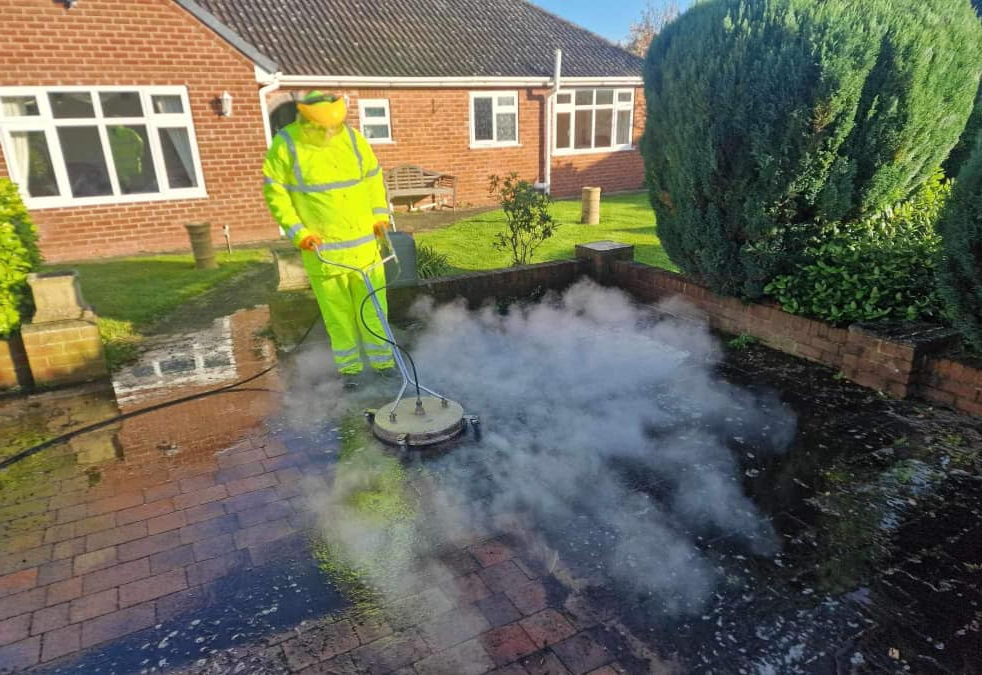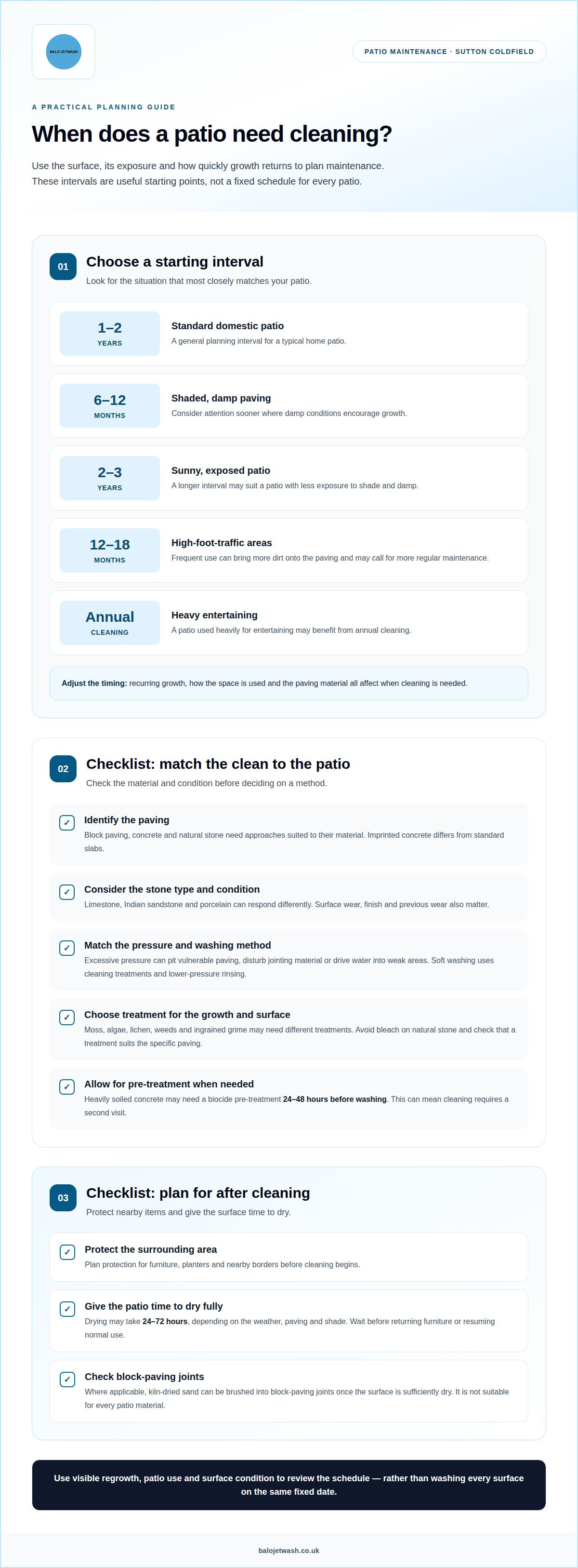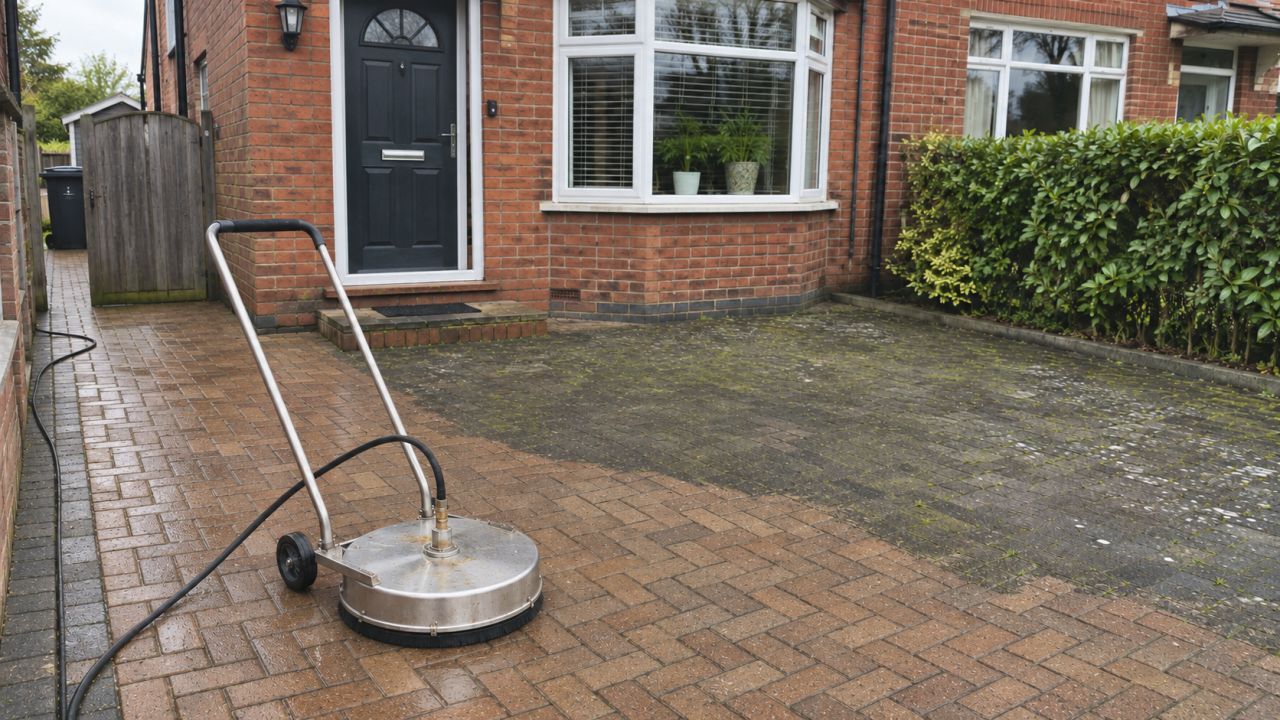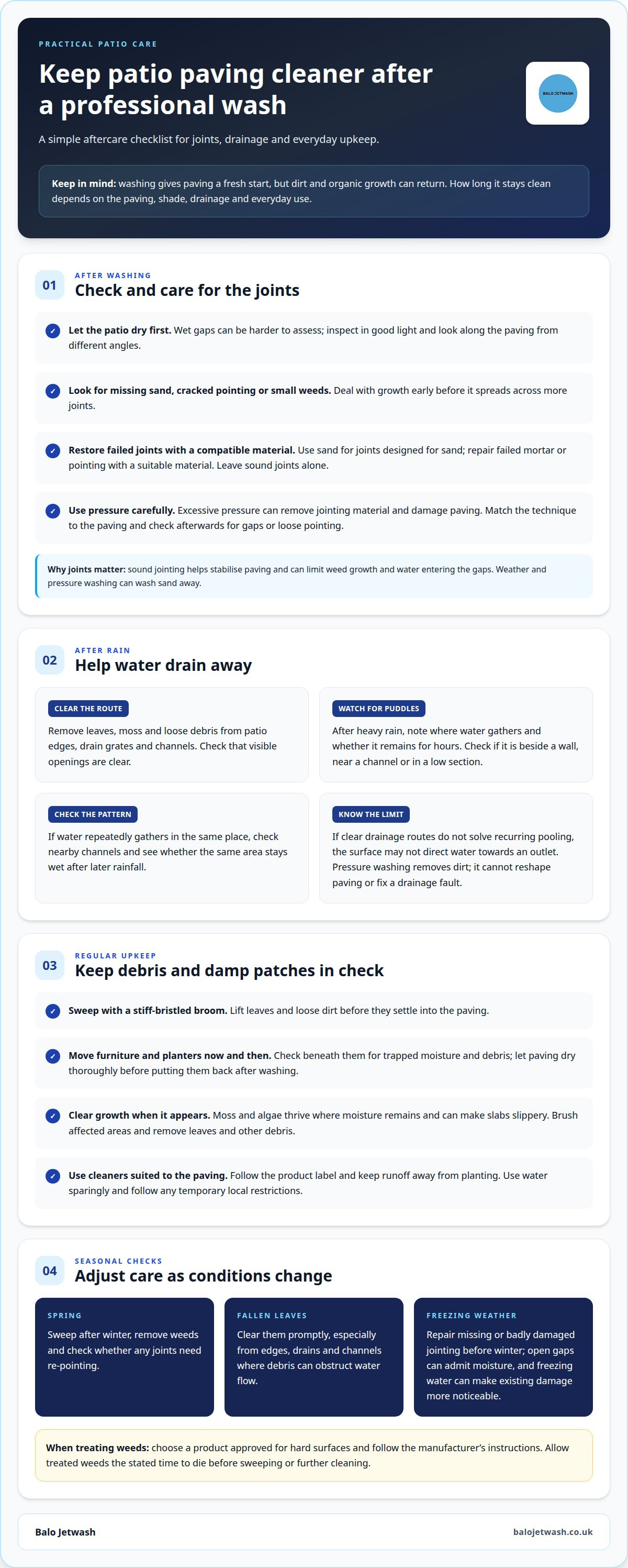
A professional patio wash gives your paving a fresh start, but it cannot prevent dirt and organic growth from returning. To maintain a clean patio after professional washing, sweep away leaves and debris, keep joints in good condition, and deal with damp patches before grime builds up. How long the results last depends on the paving, shade, drainage and everyday use.
It’s satisfying to see your paving clean again, and a few simple habits can help it stay that way. Sweep regularly, clear debris from the edges, move furniture and planters now and then, and watch for standing water or weeds between slabs. This guide covers seasonal patio care, returning growth and signs that routine upkeep may not be enough. With practical aftercare, you can enjoy a cleaner, more welcoming outdoor space for longer.
Key Takeaways
Keep weeds from taking hold by watching the paving joints and replacing jointing material where it has been lost or damaged.After heavy rain, look for lingering puddles and clear debris from drains and channels to help water flow away.Move furniture and planters now and then so you can spot trapped moisture and clean beneath them.Adapt seasonal care to your patio: clear fallen leaves promptly and take extra care with paving during freezing weather.Sweep regularly with a stiff-bristled broom to lift leaves and loose dirt before they settle into the surface.Controlling weeds between paving joints
Use pressure washing carefully. Excessive pressure can strip out jointing material and damage paving, while dislodged sand can affect stability. Match the pressure and technique to the paving material, avoid directing forceful jets into joints, and check afterwards for gaps or loose pointing.For slippery paving in wet British weather, clear moss and algae as soon as they appear, then remove leaves and other debris. Moisture encourages organic growth, which can make slabs slippery. Brush affected areas and keep joints clear so damp material does not remain trapped between the paving.Once the patio has dried after washing, inspect the joints for missing sand, cracked pointing or small weeds emerging between slabs. Roots can widen gaps and weaken the surface, so deal with growth early rather than waiting for weeds to spread across several joints.Remove small weeds by hand or use a suitable tool to clear them from the gaps. If you apply weedkiller, choose a product approved for hard surfaces and follow the manufacturer’s instructions. Allow treated weeds the stated time to die before sweeping or carrying out further cleaning.Check whether each gap needs re-sanding or re-pointing. Use sand for joints designed to receive it; repair failed mortar or other pointing with compatible material. Replacing lost jointing material helps stabilise paving and can reduce weed growth, slab movement and water entering the gaps.After pressure washing, let the patio dry before assessing its joints. Wet gaps can be harder to judge, so inspect them in good light and look along the paving from different angles. Re-sand suitable joints where sand has washed away, or repair failed pointing with compatible material.Repair missing or badly damaged jointing before winter. Open gaps expose the spaces between slabs to more moisture, and freezing water can make existing damage more noticeable. Remove loose material first, then restore the joint with a product suited to the paving and its original joint type.Add a spring check to your patio routine. After winter, sweep the paving, remove weeds and see whether any joints need re-pointing. Leave sound gaps alone; where sand or pointing has failed, restore it promptly to help keep slabs stable and limit new weed growth.
Filled joints help protect paving and maintain its appearance. Removing weeds from cracks and joints helps prevent structural damage. Jointing sand can limit weed growth, improve stability between slabs and reduce water entering the gaps. Weather and pressure washing can wash sand out, so replace any that has been lost to help keep the paving stable and secure.
After treating weeds with weedkiller, allow them the stated time to die before cleaning or sweeping the paving. In spring, clean the patio after winter and check whether the joints need re-pointing. After patio washing, re-sand or re-point failed joints with material suited to the paving.
Checking patio drainage and standing water
After heavy rain, watch where water flows across the paving and whether it drains away. Clear debris from channels and note any puddles that remain for hours.