
Patio Cleaning Maintenance in Mere Green

How often does a patio need attention? For homeowners in Sutton Coldfield, a standard domestic patio may need cleaning every 1-2 years, while shaded, damp paving can need it every 6-12 months. Treat those timings as a starting point: recurring growth, how the space is used and the paving material all influence the schedule.
A pressure washer won’t suit every surface. This guide explains how to plan patio cleaning maintenance around block paving, concrete and natural stone, and what professional cleaning can address when moss, algae or grime returns. It also covers washing methods, protecting furniture and nearby plants, and allowing the surface to dry after cleaning. You’ll find practical ways to assess what your patio needs and when to arrange the work, rather than relying on a fixed routine for every outdoor space.
Key Takeaways
Choose a cleaning approach that suits the paving material, its condition and exposure to damp or shade. For block paving, suitable pressure and joint care matter; kiln-dried sand may be brushed into joints where applicable. Professional treatments can target moss, algae, lichen, weeds and ingrained grime without relying on one method for every surface. Pressure washing needs a surface-appropriate technique. Poorly matched pressure can damage paving or disturb joints. Plan protection for furniture, planters and nearby borders before cleaning, and allow the surface to dry fully afterwards.How Often Should You Clean a Patio?
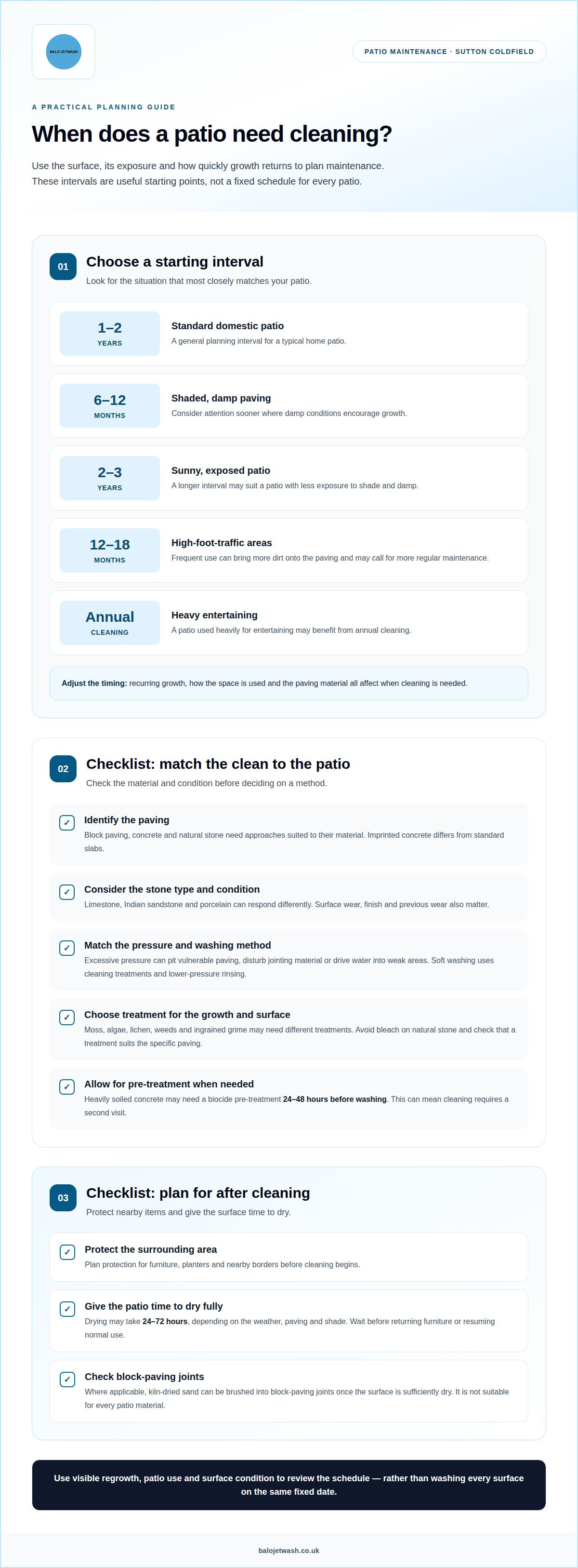
A standard domestic patio may need cleaning every 1-2 years, while shaded, damp paving may need attention every 6-12 months. A sunny, exposed patio may suit professional maintenance every 2-3 years. In Sutton Coldfield, use these intervals as planning guides and consider how quickly growth returns. High-foot-traffic areas may benefit from professional maintenance every 12-18 months, especially where frequent use brings dirt onto the paving.
Block paving needs care at its joints as well as across the blocks. Cleaning pressure should suit the paving to reduce the risk of pitting or washing away jointing sand. After cleaning, kiln-dried sand can be brushed into the joints once the surface is sufficiently dry. This helps stabilise the blocks, but it isn’t suitable for every patio material. Concrete slabs and natural stone have different jointing needs.
Block paving, concrete and natural stone each need a cleaning approach suited to the material and its condition. Imprinted concrete is different from standard slabs, while existing finishes and surface wear can affect the appropriate washing method. Cleaning should be planned around the paving rather than applying one process to every patio.
Natural stone also needs a method suited to its type. Limestone, Indian sandstone and porcelain can respond differently to cleaning, so these materials should not be treated as interchangeable. Wear, exposure and ongoing maintenance also need consideration when deciding how to clean the surface.
After cleaning, allow the patio to dry fully before returning furniture or normal use. Drying can take 24-72 hours, depending on weather, paving and shade. For example, a shaded stone patio may need a different drying period from an exposed concrete area. Plan cleaning with enough time for the surface to dry properly.
Chemical Treatment for Moss, Algae and Grime
Moss, algae, lichen, weeds and ingrained grime may need different treatments. The location of the growth and the paving material help determine the right approach.
Removing moss, algae, lichen and weeds
Moss and algae can cling to textured paving, while lichen may remain attached after washing. A suitable treatment can target remaining growth and ingrained grime. Weeds often sit in joints, so their location matters when choosing how to clean. A professional assesses the growth and surface together, rather than applying the same treatment indiscriminately across a domestic patio.
Natural stone needs particular care. Avoid bleach on natural stone patios, and consider whether a treatment suits the specific paving. Sandstone, concrete and porcelain can respond differently, so identify the material before choosing a product. The cleaner can then match the treatment and washing method to the affected area.
Professional treatments to help prevent algae and mould
Preventive treatment may be considered after cleaning where algae or mould tends to return. Heavily soiled concrete patios may need a biocide pre-treatment 24-48 hours before washing. This gives the treatment time to act before the main clean. Where pre-treatment is needed, cleaning may require a second visit rather than one continuous session.
Preparation depends on the surface condition and the type of soiling. For example, concrete with heavy build-up may need pre-treatment, while another patio may benefit from treatment after washing. The aim is to address the specific growth, not to apply chemicals automatically to every paving type.
Professional treatments to help reduce future moss and algae growth
After cleaning, a suitable treatment can help manage recurring moss and algae. Shaded edges, joints and areas beside garden borders can collect moisture and debris, so they deserve attention during assessment. Treatment can address growth, while the patio’s exposure and material guide future maintenance. It won’t make every surface immune to regrowth.
Testing a product on a small, inconspicuous area can show how the paving responds before wider application. This is especially relevant for natural stone, where an unsuitable cleaner may affect its appearance. The plan should distinguish between removing established growth and helping limit its return, with products chosen for the surface and the problem.
Pressure Washing Technique and Surface Care
How often to pressure wash depends on use, exposure and paving condition. The technique matters just as much: excessive pressure can harm the surface or disturb joints.
Choosing a professional cleaning method for your patio
Pressure washing uses a directed water jet to lift dirt and surface growth. Soft washing relies more on cleaning treatments and lower-pressure rinsing. The right approach depends on the paving material, its condition and the type of grime. Robust concrete and delicate natural stone, for example, need different care. A professional assesses the patio before choosing a method and adjusting the pressure.
Excessive pressure can pit vulnerable paving, strip jointing material or drive water into weak areas. Soft washing may suit surfaces where aggressive force creates unnecessary risk, but the treatment must still match the material. A professional patio cleaning service considers visible growth alongside the surface’s age, finish and previous wear.
Planning pressure-washing frequency
For high-foot-traffic patio areas, professional maintenance every 12-18 months can help manage recurring dirt and growth. Patios used for heavy entertaining may benefit from annual cleaning. These are planning guides, not an obligation to wash on a fixed date. A quieter patio with little visible build-up may need a different schedule from a busy dining area.
Weather, shade and algae or mould can affect when cleaning is needed. Notice how quickly growth returns and whether the paving becomes slippery or discoloured. Not every surface needs pressure washing each year. The aim is to clean when conditions call for it, while avoiding unnecessary wear from repeated, forceful washing.
What to expect from a professional patio pressure-washing process
A careful clean starts with assessing the paving, joints and visible growth. The cleaner selects suitable pressure and equipment, then works in controlled passes across the surface. They pay attention to edges, drainage and nearby features. After washing, an inspection helps identify remaining grime or areas that need further treatment.
DIY pressure washing can be difficult to control, particularly on uneven paving or delicate stone. A poorly directed jet may remove jointing sand, mark concrete or damage the finish. Professional equipment also needs an operator who can adapt the pressure as the surface changes.
For patios requiring a managed approach, professional patio pressure washing can be tailored to the paving and its condition.
Protecting Furniture and Planters
Before patio cleaning begins, furniture and planters need a clear place away from the working area. A professional can move lightweight chairs and pots, while heavier tables may need protective covers. Clearing the paving also helps the cleaner see stains, weeds and vulnerable joints. Share which items are delicate or difficult to move before work starts.
Planters need particular care. A glazed ceramic pot, timber trough and lightweight plastic container can all react differently to knocks or spray. Moving them to a protected area reduces contact with cleaning equipment and treatments. If a planter can’t be moved, the cleaner can work around it carefully and shield its sides from direct spray.
Protect plants and borders from both water pressure and cleaning products. Professionals can shield nearby planting, direct spray towards the paved area and avoid washing debris into beds. A border beside a patio may contain delicate leaves or fresh growth, so its position affects the cleaning approach. Drainage and runoff matter too, particularly where paving slopes towards planted areas.
Furniture covers should be secure and suitable for the item beneath them. Loose covers can shift when exposed to water, while cushions and textiles are best stored indoors. Move timber furniture away from splash zones, and don’t leave metal feet sitting in pooled water. These simple preparations help protect furniture finishes during exterior cleaning.
Stain prevention starts with choosing a cleaning approach suited to the paving. A suitable cleaning method can make routine maintenance easier, but it can’t prevent every mark. UV exposure can also affect colour and finish over time, especially on exposed surfaces. A professional considers the material and existing finish when planning the work.
Weed prevention needs attention around joints and edges. After cleaning block paving, replace displaced jointing sand once the surface is sufficiently dry. This helps stabilise the blocks, while maintaining the joints can reduce spaces where weeds establish. Patios made from slabs or natural stone need different joint care, so kiln-dried sand isn’t suitable for every surface.
For professional driveway or patio cleaning, preparation should suit the layout, furniture and planting. A specialist can identify fragile items, protect borders and adjust the cleaning method around them. In Sutton Coldfield and Wolverhampton, these practical steps help keep the work focused on the paving while reducing avoidable disruption to the surrounding garden.
Patio Cleaning Services in Sutton Coldfield
A professional patio clean in Sutton Coldfield starts with assessing the paving, its condition and visible growth. That helps determine suitable washing pressure, cleaning treatment and any preparation needed before cleaning. Concrete, block paving and Indian sandstone each need a different approach. The surface material matters more than applying one method across every garden.
The cleaning sequence depends on what the inspection finds. Moss, algae and grime may need suitable treatment alongside controlled washing. For heavily soiled concrete, a biocide pre-treatment may be applied 24-48 hours before washing. This can mean a second visit before the main clean. Weeds or loose joint material also affect the work, especially around block paving.
After cleaning, the paving needs time to dry before it returns to normal use. Patios generally need 24-72 hours, depending on weather, paving type and shade. A shaded Indian sandstone patio may take a different time to dry from exposed concrete. Drying conditions form part of the cleaning plan and help ensure the finished surface is ready for use.
Cleaning methods and aftercare depend on the paving material and its existing finish. Indian sandstone and porcelain each need a suitable approach, while block paving joints require appropriate care after washing. A professional matches the cleaning method to the surface and its condition, helping maintain the patio without applying the same treatment to every material.
Quotes for patio cleaning are tailored to the surface size, paving type and amount of moss, algae or staining. A clear description of the area helps establish the work involved. Note whether the patio includes steps, multiple paving materials or a narrow access route. These details can affect preparation, equipment positioning and the cleaning sequence.
Planning patio maintenance in Sutton Coldfield and Wolverhampton also means considering how the space is used. A frequently used entertaining area may need a different maintenance schedule from a quiet, sheltered corner. Shade, dampness and recurring growth influence cleaning frequency. A practical plan reflects the actual paving, rather than relying on an automatic schedule or one cleaning method for every surface.
Balo Jetwash: Patio Cleaning
Balo Jetwash provides patio cleaning for homeowners dealing with persistent moss, algae or grime. Its professional, van-mounted industrial-grade pressure-washing equipment supports thorough cleaning, with appropriate treatments used where suitable. The method depends on the paving material, its condition and the risk of damage. A textured concrete patio, for example, needs a different assessment from delicate natural stone.
Cleaning may help when recurring growth makes paving slippery or grime dulls a frequently used area. The surface, visible growth and previous wear guide the approach. For example, a cleaner can adapt the washing method around worn sections instead of applying equal pressure everywhere. This keeps the assessment focused on the actual patio, not a one-size-fits-all process.
Planning future patio maintenance is a separate decision from arranging a clean. The paving material, existing finish and condition all influence the work required. Natural stone, concrete and porcelain each need different consideration, so a patio cleaning plan for Sutton Coldfield homeowners should reflect the surface and its maintenance needs rather than assume every patio requires the same approach.
Block paving joints also need attention after washing. If jointing sand has been displaced, kiln-dried sand can be brushed back in once the surface is sufficiently dry. This applies where appropriate to block paving, not every patio. Slabs and natural stone have different jointing needs, so aftercare should reflect the paving rather than follow a generic routine.
Homeowners arranging exterior maintenance can also consider driveway cleaning alongside patio work. Balo Jetwash provides both services for residential and commercial customers. If required, we can supply water ourselves. Cleaning treatments and joint re-sanding are included in the quote where applicable, rather than assumed for every surface or project.
A patio cleaning plan for Sutton Coldfield residents can start with the surface’s current condition, recurring growth and intended use. Balo Jetwash tailors its cleaning method to the paving and its condition, without promising a brand-new finish for every surface.
If your patio needs professional attention, contact Balo Jetwash to discuss the work.
Frequently Asked Questions
How often should a patio be cleaned in the UK?
Most domestic patios need cleaning every 1-2 years, with shade and dampness affecting the timing. A sheltered patio with recurring green growth may need attention sooner than a sunny, well-drained one. High-traffic areas may also need more frequent attention, so base the schedule on how quickly dirt and growth return.
How should different patio materials be cleaned?
The cleaning method depends on the paving: Indian sandstone, limestone, block paving and porcelain can all respond differently to pressure and cleaning products. These materials need surface-appropriate methods rather than interchangeable treatment. Existing finishes, joint condition and surface wear matter too, so the cleaner should assess the paving before work begins.
What are the steps for professional patio cleaning?
A professional clean typically begins by identifying the paving material, condition, joints and growth. The cleaner then chooses a suitable treatment and washing method, protects nearby items and cleans the surface. Joint care may follow where relevant. The sequence and products should reflect the actual patio, with different approaches for surfaces such as porcelain, sandstone and block paving.
How long does a patio take to dry after cleaning in UK weather?
After cleaning, a patio generally needs 24-72 hours to dry, depending on weather, shade and paving type. Damp or cool weather can extend the drying period. The patio should be kept clear while the surface dries, and normal use can resume when it is sufficiently dry.
What are the risks of pressure washing patio paving?
Excessive pressure can pit vulnerable paving, damage a surface finish or dislodge joint material. Natural stone and concrete, for example, shouldn’t automatically receive identical treatment. The risk depends on the surface condition and washing technique. An assessment helps determine an appropriate method for that particular patio.
How can I maintain a patio between professional cleanings?
Keep the surface clear of fallen leaves and garden debris, which can collect in corners and joints. After entertaining, promptly clean food and drink spills using a method suitable for the paving. Watch for returning growth, discolouration or areas where water sits. Avoid harsh products unless they’re compatible with the surface. These simple checks can help you spot when your patio needs professional attention.
Do local patio cleaning services in Sutton Coldfield offer maintenance plans?
Patio maintenance can be planned around material, shade, use and the return of visible growth; it needn’t mean a fixed subscription. In Sutton Coldfield, a practical schedule might record the last clean and set a reminder to reassess the paving. A busy entertaining area may need attention sooner than a lightly used patio. Base each cleaning decision on the surface’s condition.
{"@context":"https://schema.org","@type":"FAQPage","mainEntity":[{"@type":"Question","name":"How often should a patio be cleaned in the UK?","acceptedAnswer":{"@type":"Answer","text":"Most domestic patios need cleaning every 1-2 years, with shade and dampness affecting the timing. A sheltered patio with recurring green growth may need attention sooner than a sunny, well-drained one. High-traffic areas may also need more frequent attention, so base the schedule on how quickly dirt and growth return."}},{"@type":"Question","name":"How should different patio materials be cleaned?","acceptedAnswer":{"@type":"Answer","text":"The cleaning method depends on the paving: Indian sandstone, limestone, block paving and porcelain can all respond differently to pressure and cleaning products. These materials need surface-appropriate methods rather than interchangeable treatment. Existing finishes, joint condition and surface wear matter too, so the cleaner should assess the paving before work begins."}},{"@type":"Question","name":"What are the steps for professional patio cleaning?","acceptedAnswer":{"@type":"Answer","text":"A professional clean typically begins by identifying the paving material, condition, joints and growth. The cleaner then chooses a suitable treatment and washing method, protects nearby items and cleans the surface. Joint care may follow where relevant. The sequence and products should reflect the actual patio, with different approaches for surfaces such as porcelain, sandstone and block paving."}},{"@type":"Question","name":"How long does a patio take to dry after cleaning in UK weather?","acceptedAnswer":{"@type":"Answer","text":"After cleaning, a patio generally needs 24-72 hours to dry, depending on weather, shade and paving type. Damp or cool weather can extend the drying period. The patio should be kept clear while the surface dries, and normal use can resume when it is sufficiently dry."}},{"@type":"Question","name":"What are the risks of pressure washing patio paving?","acceptedAnswer":{"@type":"Answer","text":"Excessive pressure can pit vulnerable paving, damage a surface finish or dislodge joint material. Natural stone and concrete, for example, shouldn’t automatically receive identical treatment. The risk depends on the surface condition and washing technique. An assessment helps determine an appropriate method for that particular patio."}},{"@type":"Question","name":"How can I maintain a patio between professional cleanings?","acceptedAnswer":{"@type":"Answer","text":"Keep the surface clear of fallen leaves and garden debris, which can collect in corners and joints. After entertaining, promptly clean food and drink spills using a method suitable for the paving. Watch for returning growth, discolouration or areas where water sits. Avoid harsh products unless they’re compatible with the surface. These simple checks can help you spot when your patio needs professional attention."}},{"@type":"Question","name":"Do local patio cleaning services in Sutton Coldfield offer maintenance plans?","acceptedAnswer":{"@type":"Answer","text":"Patio maintenance can be planned around material, shade, use and the return of visible growth; it needn’t mean a fixed subscription. In Sutton Coldfield, a practical schedule might record the last clean and set a reminder to reassess the paving. A busy entertaining area may need attention sooner than a lightly used patio. Base each cleaning decision on the surface’s condition."}}]}Information
Water available? - You don't need to be present for us to carry out the service. If required, we can supply water ourselves.
Insurance
Balo Jetwash is fully insured, We have £5,000,000 of public liability insurance. Balo Jetwash operatives are professional, reliable and endeavour to carry out the work to the highest standard with minimal fuss and upheaval.