
Commercial entrance cleaning contracts in Sutton Coldfield

Could a cleaner entrance make your business feel more welcoming from the moment customers arrive? A six-monthly commercial entrance cleaning contract in Sutton Coldfield sets out planned cleaning visits six months apart, with tasks agreed to suit the entrance and its condition. A clear scope helps you understand what the service covers and how visits can fit around your opening hours.
It’s understandable to want a tidy, presentable entrance without disrupting the working day. This article explains which cleaning tasks may be included, what affects the work involved and how scheduling can fit your business routine. You’ll also learn what to consider when arranging a commercial entrance cleaning contract, so you can plan a cleaner, fresher first impression with confidence.
Key Takeaways
Agree the entrance cleaning tasks in the contract so the service scope is clear from the outset. Set a cleaning frequency that reflects how the entrance is used and the condition it’s in. Read the contract’s duration, renewal and cancellation terms before committing. Compare quotes by their included tasks and proposed schedule, not price alone. Plan visits around business opening hours to help limit disruption to staff and customers.Cleaning tasks included
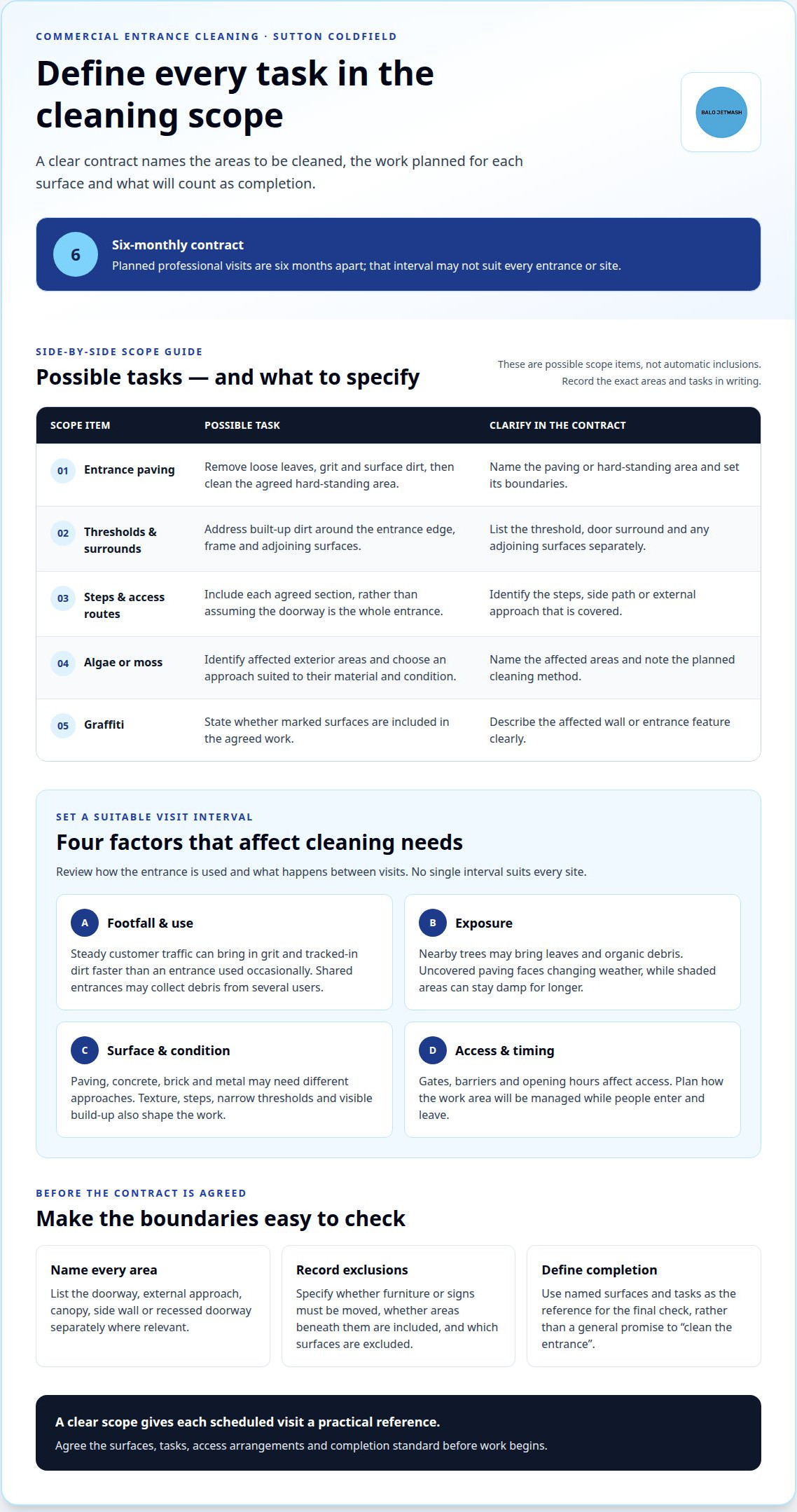
A commercial entrance cleaning contract should name each surface and task, rather than promise a general tidy-up. For a six-monthly visit, the written scope can list the doorway, threshold, external approach and any other agreed entrance areas separately. This makes clear what the cleaning team will tackle, what needs separate attention and how the completed work will be assessed.
Local commercial cleaning companies serving Sutton Coldfield can discuss the entrance, its surfaces and the work required before setting out a task schedule. A clear proposal identifies the areas covered and the cleaning method planned for each one.
The agreed tasks depend on the entrance. A small shop doorway with a hard external approach needs a different scope from a shared entrance with several doors, steps and a broad paved forecourt. The plan should identify materials such as paving, concrete, brick or metal, then match each task to the surface and its condition.
For example, a contract may specify tasks such as:
Entrance paving: remove loose leaves, grit and surface dirt, then clean the agreed hard-standing area. Thresholds and door surrounds: address built-up dirt around the entrance edge, frame and adjoining surfaces. Steps and access routes: include each agreed section, rather than treating only the doorway as the full entrance. Algae or moss: identify affected exterior areas and set out the suitable cleaning approach for their material and condition. Graffiti: state whether marked surfaces are included, with the affected wall or entrance feature described clearly.These are possible scope items, not automatic inclusions. A contract should specify the exact areas and tasks. If the entrance includes a canopy, side wall or recessed doorway, name it separately. If a surface needs different treatment from the paving, record that distinction. This avoids assumptions about what “entrance cleaning” means and gives both parties a practical reference for each visit.
Access also shapes the job. The scope can describe which entrance is being cleaned, any gates or barriers that affect access, and how the work fits around opening hours. For a customer-facing doorway, the schedule should explain how the team will manage the work area while people enter and leave. If cleaning extends to an external approach, identify its boundaries, such as the paved route up to the main doors.
Before work begins, the cleaning team can review the listed surfaces and tasks against the entrance’s visible condition. A practical sequence is to clear loose debris, clean the agreed surfaces using an appropriate method, then inspect the specified areas for remaining marks or growth. The contract can also state whether the business must move furniture, signs or other obstructions, or whether those areas are excluded.
Finally, make the completion standard specific. “Clean the entrance” is difficult to assess; “clean the named paving and door surround” gives the visit a defined outcome. Record excluded surfaces, access arrangements and any task requiring separate agreement. This detail helps a business understand exactly what its scheduled entrance cleaning covers.
The review can also distinguish entrance work from a broader deep-clean brief. A full-house deep clean may include cleaning behind and under furniture. That does not make moving or cleaning around furniture an automatic part of an entrance contract: if furniture is in the agreed area, the scope can say whether it is to be moved, whether the floor beneath it is included, or whether the team will clean only accessible surfaces. If no such item is involved, the contract can keep the task focused on the named entrance surfaces. Recording exclusions alongside included work keeps the visit aligned with the agreed areas, rather than implying that a broader deep-clean task is part of the schedule. The final check can then refer to the same defined boundaries.
How often should a commercial entrance be professionally cleaned?
There isn’t one cleaning interval that suits every commercial entrance. A six-monthly commercial entrance cleaning contract in Sutton Coldfield means planned professional visits six months apart, but that interval may not suit every site. Footfall, weather exposure, surface type and visible build-up all affect how quickly an entrance needs attention. A sheltered office doorway, for example, may collect less debris than a busy shop entrance opening directly onto a paved approach.
Start by considering how the entrance is used. A doorway serving steady customer traffic can accumulate grit and tracked-in dirt faster than a staff entrance used occasionally. A shared entrance may also collect debris from several users throughout the day. These differences matter because footfall and the size of the area shape the work each visit requires.
Exposure makes a difference, too. An entrance beside trees may gather leaves and organic debris, while an uncovered paved approach faces rain and changing conditions. Shaded areas can stay damp for longer, encouraging visible organic growth on some surfaces. A site with these features may need attention sooner than a sheltered entrance with little surrounding vegetation.
Surface material and condition matter. Dirt on sound, open paving differs from build-up on textured paving, steps or a narrow threshold. An entrance with several surface types may also need different cleaning approaches across its sections. A professional assessment can take these details into account when planning visits, rather than treating every entrance as identical.
Use a simple review process when setting the interval:
Assess use: note whether customers, staff or deliveries use the entrance throughout the day. Review exposure: identify nearby trees, uncovered paving and shaded sections. Consider condition: record where dirt, algae or moss becomes visible between visits. Define the scope: distinguish the doorway from steps, side paths or a larger paved approach. Revisit the schedule: use the condition observed after each visit to inform future planning.A six-monthly arrangement can provide a straightforward planned interval when the entrance’s use and condition support it. It also gives a business a recurring opportunity to review the surface and agreed tasks. However, six months between visits may leave a heavily used or exposed entrance looking untidy before the next appointment. A quiet, protected entrance may not need the same pattern as a busy customer-facing doorway.
For a business considering a six-monthly commercial entrance cleaning contract in Sutton Coldfield, keep the visit interval separate from the work scope. Frequency describes when professional cleaning is planned; the scope explains which areas receive attention at each visit. For example, an agreement might schedule visits six months apart and define the doorway, steps and approach separately. This makes it easier to spot whether changing conditions call for a different arrangement.
Opening hours should shape the appointment plan. A customer-facing entrance may be easier to clean when fewer people need access, while a staff entrance may have quieter periods at different times. Agreeing a suitable visit window helps the cleaning team plan access and reduce disruption to normal entry and exit. The right interval reflects actual use, exposure and surface condition, not simply a calendar pattern.
Six-month commercial cleaning contract terms and cancellation clauses
A six-month commercial cleaning contract can describe either its duration or the interval between visits. Those are different arrangements. A contract lasting six months might cover several scheduled visits, while a longer agreement could schedule cleaning every six months. Check the start date, end date and visit dates separately so the schedule and commitment are clear.
The written terms should identify the business and cleaning provider, the entrance covered, and the agreed work. For example, a contract might name the main doorway and paved approach, then set out the tasks for each visit. If access depends on a particular entrance or opening-hour window, record that arrangement too. Clear wording makes it easier to understand what each scheduled visit includes.
Payment terms should explain when invoices are issued, when payment is due and how additional work is approved. A clause might distinguish the agreed entrance cleaning from a separately requested task. It should also say how changes to the scope or schedule are recorded. These details help prevent misunderstandings about whether a change forms part of the original agreement.
Cancellation clauses deserve careful attention before signing. Look for the notice period, the method for giving notice and the date cancellation takes effect. The contract should explain whether notice must be written, who receives it and whether email is accepted. Don’t assume that a six-month term automatically ends after six months; check whether it expires, renews or continues under another arrangement.
Review these points in order:
Term: identify the agreement’s start and end dates, plus any renewal process. Visit plan: distinguish a six-month contract from visits scheduled six months apart. Cancellation: note the notice period, delivery method and effective date stated in the agreement. Charges: check how completed work, outstanding invoices or cancellation charges are handled. Changes: find out how revised dates, added tasks or access arrangements are agreed.For example, a business planning a move might need to end its agreement before the next scheduled visit. The relevant clause should explain how to give notice and what happens to work already completed. If the contract renews automatically, note the date by which notice must reach the provider. This is more useful than relying on a diary reminder without checking the wording.
Also consider what happens if a visit cannot proceed. A closed entrance, restricted access or severe disruption could affect the appointment. The agreement can state how a replacement date is arranged and whether the original visit remains outstanding. If the provider cannot attend, the terms should explain how the business will be informed and how rescheduling works.
Before agreeing, compare the written terms with the arrangement discussed. Check that the named entrance, tasks, visit timing, payment process and cancellation procedure match. Keep a copy of the final agreement and any written changes. If a clause is unclear, ask for its meaning in writing before signing; clear terms make a six-month cleaning arrangement easier to plan and manage.
How to compare commercial entrance cleaning quotes in Sutton Coldfield
Compare commercial entrance cleaning quotes by matching the proposed work, not just the total. Two proposals may describe different surfaces, cleaning methods or visit arrangements. A quote covering only the doorway isn’t directly comparable with one that includes steps and the paved approach. Start with the entrance areas you need cleaned, then check that each proposal describes the same job.
Review the tasks line by line. One quote might include the entrance paving and threshold, while another also covers steps or a side path. Check how each proposal treats visible algae, moss or graffiti, and whether those areas are included. If a task is excluded, make sure the difference is clear before comparing totals.
The proposed method should suit the surfaces named in the quote. Concrete, brick and textured paving can differ in condition and cleaning needs. A useful proposal connects its approach to the entrance, rather than relying on a vague phrase such as “complete clean”. For example, it can distinguish the paved approach from a doorway surround that needs different handling.
Look at the visit plan as well. Confirm whether the quoted arrangement covers one visit or recurring visits, and how the schedule relates to a six-monthly commercial entrance cleaning contract in Sutton Coldfield. The proposal should make the timing clear, without leaving you to infer the number of visits from the contract length. It should also account for opening hours and access for customers, staff or deliveries.
Compare the practical details alongside the cleaning scope:
Area covered: match the doorway, steps, paths and paved sections named in each proposal. Work included: distinguish routine surface cleaning from specific marks or organic growth. Access: note how the proposed visit fits around opening hours and entrance use. Preparation: identify obstructions or access arrangements that affect the work. Completion: check how the proposal describes the areas to be cleaned and reviewed.The price depends on the site and is provided after a quote request; factors include size, surface types, condition, access and agreed tasks. Compare these factors across proposals before deciding that one is cheaper. A lower amount may reflect fewer included areas, while a higher one may cover more surfaces or detailed work. The written scope helps explain the difference.
Check that every quote identifies exclusions. For instance, a proposal may cover a main paved entrance but omit a side passage or marked wall. An exclusion isn’t automatically a problem; it matters because the comparison should reflect the work you need. Likewise, a separately priced task should be distinguished from the core entrance cleaning.
Finally, assess clarity. A well-structured quote describes the entrance, tasks, method and proposed timing. If a phrase could mean several things, ask for its meaning before accepting. Compare each proposal against the same checklist, rather than relying on memory or a headline figure. To discuss a clearly scoped entrance-cleaning quote, request a tailored cleaning quote.
Balo Jetwash: commercial exterior cleaning
Balo Jetwash provides commercial pressure washing and cleaning for businesses looking to refresh exterior surfaces. If dirt, algae or moss is affecting an entrance or adjoining outdoor areas, professional pressure washing can help restore a cleaner appearance. The work can also complement a wider exterior cleaning plan for a driveway, patio or graffiti-marked surface. Tell us which areas need attention and how the entrance is used, so we can discuss work suited to the site and its surfaces. For commercial properties in Sutton Coldfield and Wolverhampton, contact Balo Jetwash to discuss your cleaning requirements.
Make your next exterior improvement count
Think beyond the doorway. Consider how customers arrive, where they pause and which surfaces shape their first impression. Those priorities can guide a wider exterior plan without making entrance cleaning more complicated than it needs to be. Balo Jetwash also offers driveway cleaning, patio cleaning and roof cleaning, which may suit other areas of your business premises.
A six-monthly commercial entrance cleaning contract in Sutton Coldfield can be a starting point for planning the work. Identify the surfaces you want addressed and the outcome your business needs, then discuss an approach that fits your routine. A clear brief keeps the conversation focused on your priorities, rather than assumptions about the site. It also helps you consider whether related exterior areas belong in the same conversation or should be planned separately.
Contact Balo Jetwash to discuss your needs, and take a positive next step towards a fresher first impression.
Frequently Asked Questions
What is included in commercial entrance cleaning?
Commercial entrance cleaning can cover agreed external surfaces, with the exact tasks set for the site. For example, a business may need its outside approach and steps cleaned, whilst indoor floors and entrance mats need separate attention. Commercial pressure washing focuses on exterior areas, rather than routine indoor janitorial work. Naming the relevant surfaces helps distinguish exterior cleaning from other facilities tasks.
Do commercial cleaning companies offer six-monthly or twice-yearly entrance cleaning?
Yes, six-monthly or twice-yearly visits can be arranged as a recurring cleaning schedule. The phrase means visits are planned at six-month intervals, rather than describing a particular cleaning method. For example, a business could plan visits in spring and autumn to refresh its entrance around seasonal changes. The contract should make clear whether those dates are fixed or arranged within agreed scheduling terms.
{"@context":"https://schema.org","@type":"FAQPage","mainEntity":[{"@type":"Question","name":"What is included in commercial entrance cleaning?","acceptedAnswer":{"@type":"Answer","text":"Commercial entrance cleaning can cover agreed external surfaces, with the exact tasks set for the site. For example, a business may need its outside approach and steps cleaned, whilst indoor floors and entrance mats need separate attention. Commercial pressure washing focuses on exterior areas, rather than routine indoor janitorial work. Naming the relevant surfaces helps distinguish exterior cleaning from other facilities tasks."}},{"@type":"Question","name":"Do commercial cleaning companies offer six-monthly or twice-yearly entrance cleaning?","acceptedAnswer":{"@type":"Answer","text":"Yes, six-monthly or twice-yearly visits can be arranged as a recurring cleaning schedule. The phrase means visits are planned at six-month intervals, rather than describing a particular cleaning method. For example, a business could plan visits in spring and autumn to refresh its entrance around seasonal changes. The contract should make clear whether those dates are fixed or arranged within agreed scheduling terms."}}]}Information
Water available? - You don't need to be present for us to carry out the service. If required, we can supply water ourselves.
Insurance
Balo Jetwash is fully insured, We have £5,000,000 of public liability insurance. Balo Jetwash operatives are professional, reliable and endeavour to carry out the work to the highest standard with minimal fuss and upheaval.