
How to Keep a Patio Clean After Professional Washing in Walmley

A professional patio wash gives your paving a fresh start, but it cannot prevent dirt and organic growth from returning. To maintain a clean patio after professional washing, sweep away leaves and debris, keep joints in good condition, and deal with damp patches before grime builds up. How long the results last depends on the paving, shade, drainage and everyday use.
It’s satisfying to see your paving clean again, and a few simple habits can help it stay that way. Sweep regularly, clear debris from the edges, move furniture and planters now and then, and watch for standing water or weeds between slabs. This guide covers seasonal patio care, returning growth and signs that routine upkeep may not be enough. With practical aftercare, you can enjoy a cleaner, more welcoming outdoor space for longer.
Key Takeaways
Keep weeds from taking hold by watching the paving joints and replacing jointing material where it has been lost or damaged. After heavy rain, look for lingering puddles and clear debris from drains and channels to help water flow away. Move furniture and planters now and then so you can spot trapped moisture and clean beneath them. Adapt seasonal care to your patio: clear fallen leaves promptly and take extra care with paving during freezing weather. Sweep regularly with a stiff-bristled broom to lift leaves and loose dirt before they settle into the surface.Controlling weeds between paving joints
Use pressure washing carefully. Excessive pressure can strip out jointing material and damage paving, while dislodged sand can affect stability. Match the pressure and technique to the paving material, avoid directing forceful jets into joints, and check afterwards for gaps or loose pointing. For slippery paving in wet British weather, clear moss and algae as soon as they appear, then remove leaves and other debris. Moisture encourages organic growth, which can make slabs slippery. Brush affected areas and keep joints clear so damp material does not remain trapped between the paving. Once the patio has dried after washing, inspect the joints for missing sand, cracked pointing or small weeds emerging between slabs. Roots can widen gaps and weaken the surface, so deal with growth early rather than waiting for weeds to spread across several joints. Remove small weeds by hand or use a suitable tool to clear them from the gaps. If you apply weedkiller, choose a product approved for hard surfaces and follow the manufacturer’s instructions. Allow treated weeds the stated time to die before sweeping or carrying out further cleaning. Check whether each gap needs re-sanding or re-pointing. Use sand for joints designed to receive it; repair failed mortar or other pointing with compatible material. Replacing lost jointing material helps stabilise paving and can reduce weed growth, slab movement and water entering the gaps. After pressure washing, let the patio dry before assessing its joints. Wet gaps can be harder to judge, so inspect them in good light and look along the paving from different angles. Re-sand suitable joints where sand has washed away, or repair failed pointing with compatible material. Repair missing or badly damaged jointing before winter. Open gaps expose the spaces between slabs to more moisture, and freezing water can make existing damage more noticeable. Remove loose material first, then restore the joint with a product suited to the paving and its original joint type. Add a spring check to your patio routine. After winter, sweep the paving, remove weeds and see whether any joints need re-pointing. Leave sound gaps alone; where sand or pointing has failed, restore it promptly to help keep slabs stable and limit new weed growth.Filled joints help protect paving and maintain its appearance. Removing weeds from cracks and joints helps prevent structural damage. Jointing sand can limit weed growth, improve stability between slabs and reduce water entering the gaps. Weather and pressure washing can wash sand out, so replace any that has been lost to help keep the paving stable and secure.
After treating weeds with weedkiller, allow them the stated time to die before cleaning or sweeping the paving. In spring, clean the patio after winter and check whether the joints need re-pointing. After patio washing, re-sand or re-point failed joints with material suited to the paving.
Checking patio drainage and standing water
After heavy rain, watch where water flows across the paving and whether it drains away. Clear debris from channels and note any puddles that remain for hours.
Knowing how to maintain a clean patio after professional washing starts with noticing where rainwater collects and what might be obstructing its route.
Clear debris from drainage areas
Remove leaves, moss and loose garden debris from patio edges, drain grates and channels. Organic matter can obstruct water flow and leave wet patches beside the paving. Clear it by hand or with a brush, then check that the visible opening is free of debris. Follow the drainage route from the patio towards its outlet. Look for compacted leaves at corners, around grates and where the patio meets a driveway. Clear surface debris without pushing it further into a drain or channel, where it could cause a deeper blockage. Repeat this check after storms or when falling leaves build up. A shaded patio near trees may collect debris faster than an open area, so inspect the edges as well as the central paving. Keeping these routes clear helps rainwater drain instead of pooling.Check for standing water
After heavy rainfall, inspect the paving for puddles and note where they form. Water that remains for hours may point to a drainage problem. Record whether it sits beside a wall, near a channel or in a low section; this pattern can help show where the flow is interrupted. Watch how water moves across the surface during the next rainfall. If it repeatedly gathers in the same place, check nearby channels for debris and compare the wet area with the surrounding paving. Shade may slow drying, but a persistent puddle still deserves attention. Keep drains and channels clear, then reassess the patio after rain. If water continues to collect despite clear drainage routes, the surface may not direct it towards an outlet. Don’t try to correct a low spot with a pressure washer: it removes dirt but won’t reshape paving or fix a drainage fault.These checks can help distinguish a blocked route from a recurring low spot. When learning how to maintain a clean patio after professional washing, watch for standing water as well as visible dirt. Clear channels and paving that sheds rainwater help reduce lingering moisture, especially in shaded areas.
Protecting paving from furniture and planters
After washing, let the paving dry thoroughly before returning furniture or planters. Drying time depends on the weather: paving may dry quickly on a hot summer’s day, while cooler conditions may mean leaving it overnight.
Use water sparingly for routine care and follow any temporary restrictions where you live. Choose cleaners suited to the paving material, follow the label, and keep runoff away from planting.
Move chairs, tables and planters occasionally so damp patches and trapped leaves don’t stay hidden. For example, lift a pot from a shaded corner and sweep away debris underneath. Protective feet can limit direct contact and make furniture easier to move for cleaning. When you move furniture, inspect the paving for hairline cracks, loose slabs or a change in colour beneath a planter. These signs can reveal persistent moisture or wear hidden from view. Clear debris and damp organic matter promptly rather than leaving it trapped. Clean light dirt with warm, soapy water and a soft brush. Work on a small area, then rinse without flooding nearby garden beds. If the paving needs a cleaning product, choose one suitable for its material and follow the manufacturer’s directions. Natural stone and concrete may need different products. Protect plants and wildlife from cleaning runoff. Bleach in patio-cleaning solutions can harm plants, grass and wildlife if it runs off the paving. Avoid using bleach near planting, and don’t assume a patio cleaner is safe for pets. Follow the label precautions and keep animals away as directed. In winter, avoid de-icing salts on delicate paving or softer stone, as they can discolour slabs. Clear snow with a plastic shovel or soft-edged tool before it compacts and turns to ice. Where possible, remove standing water from vulnerable areas, since freezing can make existing cracks more noticeable. Make seasonal inspections part of your spring and autumn routine. Check beneath planters, around furniture feet and beside decking for cracks, loose slabs or dirt build-up. Regular cleaning removes organic matter before it settles, while prompt attention to damage helps stop small defects becoming more apparent. Return furniture only when the paving feels dry across the surface, not just at the edges. Cooler weather, shade and poor airflow can extend drying, so leave heavier planters aside until damp patches disappear. This helps prevent trapped moisture and leaves the slabs ready for everyday use.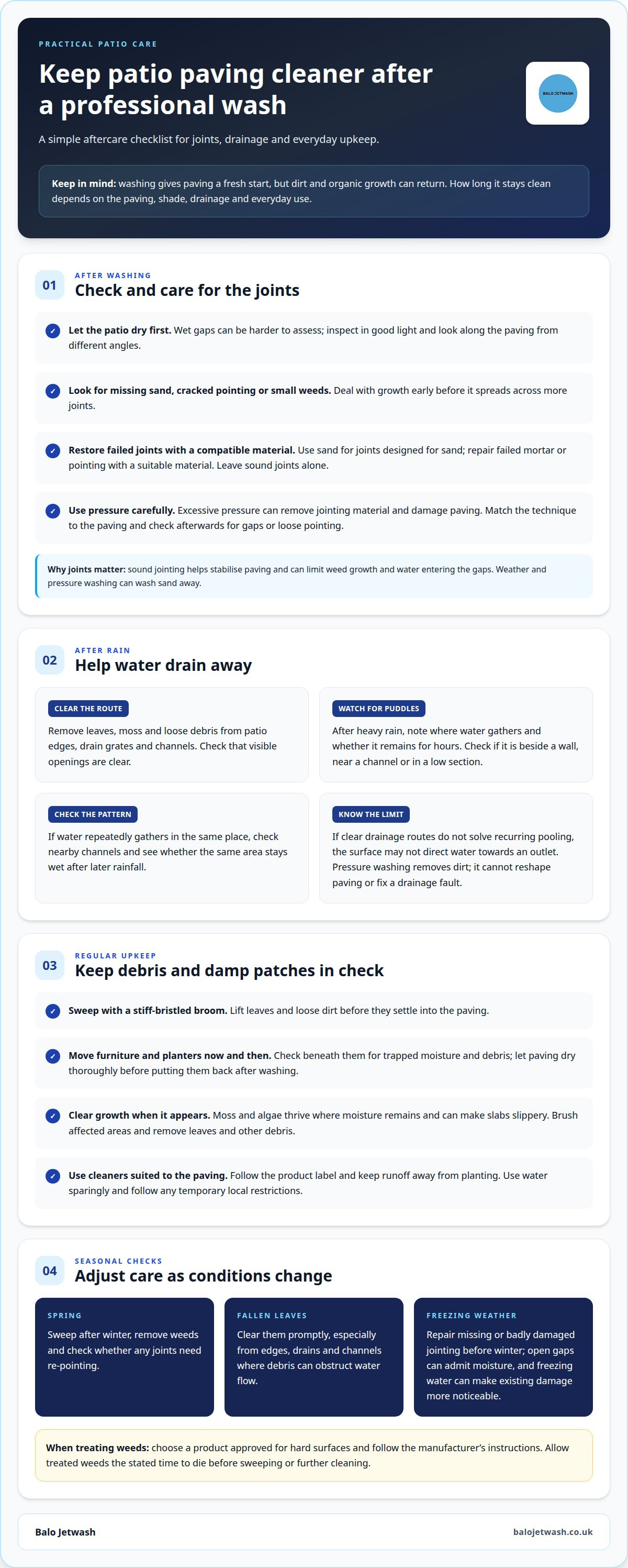
Checking patio drainage and standing water
After heavy rain, observe how water travels across the paving and whether it drains away. Clear debris from channels and note any puddles that remain for hours.
Rainwater patterns can reveal where patio drainage needs attention. Look at the paving, edges and nearby outlets together, rather than judging a damp patch on its own.
Clear debris from drainage areas
Remove leaves, moss and loose garden debris from patio edges, drain grates and channels. Organic matter can gather there and slow water flow, leaving wet areas beside the paving. Clear visible debris by hand or with a brush, then check that the grate opening is unobstructed. Follow the drainage route from the patio towards its outlet. Check corners, grates and the boundary where paving meets a driveway, as leaves can collect along these edges. Lift surface debris away instead of pushing it into a drain or channel, where it may obstruct the route further along. Repeat the check after heavy rain or when wind scatters leaves across the garden. A shaded patio near trees may collect more debris than an open area, so inspect the edges and central paving. Clear material around channels and avoid leaving piles where rain can wash them back.Check for standing water
After rainfall, inspect the paving and note where puddles form. Water that remains for hours may indicate a drainage problem. Record whether it sits beside a wall, near a channel or in a low section; its location can show where the flow may be interrupted. Observe the next rainfall to see whether water moves towards an outlet or repeatedly gathers in the same spot. Compare that area with nearby paving. Shade can slow drying, but a recurring puddle is different from a surface that simply takes longer to dry. Clear nearby drains and channels, then check again after rain. If water still collects despite an unobstructed route, the paving may not direct it towards an outlet. A pressure washer can remove dirt, but it cannot reshape a low spot or correct a drainage fault. Note any repeated pooling for further assessment.These observations help distinguish a blocked route from a recurring low area. Clear channels and effective drainage help water move off the patio, reducing lingering dampness in shaded parts of the garden.
Year-round patio sweeping and debris removal
Sweep paving weekly, or whenever debris gathers, to lift dirt before it becomes ingrained. Regularly removing leaves and organic matter also limits the damp build-up that encourages moss and algae, although it cannot prevent regrowth completely.
Sweep patio paving regularly
Use a stiff-bristled broom across the whole surface, including corners and edges. Sweep towards a collection point instead of pushing dirt into joints or drains. On concrete, block paving and natural stone, steady brushing removes loose material before it settles into pores.
Work from the far edge towards the patio entrance, gathering dust, grit and loose leaves into one pile. This makes it easier to remove debris without spreading it across clean paving. Brush around joints and beneath benches, where dirt can collect out of sight. Use controlled strokes near the edges so the broom doesn’t dislodge sand or pointing from the gaps. Sweep more often after windy weather or near trees and flower beds. Shaded patios may need extra attention because damp leaves and organic matter can remain on the surface longer.Remove leaves promptly
Clear fallen leaves as soon as practical, especially in autumn and after rain. Wet leaves can break down, mark paving and create slippery patches. Check patio edges too, where wind can gather leaves against walls or borders.
Lift wet leaves with a broom or suitable garden brush before they cling to the surface. Avoid leaving a damp pile on the paving, as it can transfer marks and hold moisture against the slabs. Clean summer spills promptly with warm water and a suitable patio cleaner if needed. Follow the product instructions and test it discreetly first, especially on natural stone or older concrete. Remove loose moss and algae during routine sweeping, then use a suitable patio cleaner if needed. Check shaded joints and the edges beside decking, where returning growth can take hold if debris stays damp.Clear patio edges monthly, then sweep more often whenever leaves gather. This simple routine keeps debris from settling into the paving and helps you spot early staining or returning growth between deeper cleans.
Regularly sweep with a stiff-bristled broom to keep dirt, leaves and other debris from building up on outdoor hard surfaces. Removing material as it gathers also limits moisture and organic matter on the paving. Sweep weekly, or whenever debris appears, to help prevent dirt and organic growth from accumulating. This makes sweeping a regular part of patio care, not just a task for deeper cleans.
In autumn, sweep fallen leaves regularly to help prevent staining. Porcelain paving can also be maintained with regular sweeping and occasional washing to remove everyday dirt and debris. A coarse-bristled yard brush helps lift dirt before it becomes ingrained. Consistent care keeps debris, moisture and organic matter from building up on the paving.
Balo Jetwash: Patio Cleaning
Balo Jetwash provides Patio Pressure Washing & Cleaning for paving affected by stubborn dirt, moss and algae. If regular sweeping and seasonal care no longer restore the surface, professional cleaning can refresh the patio and tackle built-up grime.
The approach uses modern, industrial vanbuilt equipment and specialised cleaning detergent. The right technique depends on the paving, helping remove surface growth without treating every material alike. Learn more about professional patio pressure washing and how it can help bring outdoor paving back to a cleaner appearance.
Keep up with aftercare by clearing leaves, watching for standing water and maintaining the joints. If your patio needs a thorough refresh, contact Balo Jetwash to discuss patio cleaning in Sutton Coldfield.
Keep your patio ready for the seasons ahead
A clean patio can make your garden feel more welcoming, and consistent care helps you enjoy it between professional washes. Build a simple routine around how you use the space, then adjust it as the weather changes. If dirt, moss or algae return across the paving, a professional clean can give you a fresh starting point for ongoing care.
Balo Jetwash offers patio cleaning alongside driveway and roof cleaning across Wolverhampton and Sutton Coldfield. If your patio needs more than routine sweeping, get in touch to discuss the cleaning your outdoor space needs.
Contact Balo Jetwash for patio cleaning, and look forward to enjoying a brighter, more inviting space.
Frequently Asked Questions
How Long Should Patio Cleaning Results Last?
There’s no fixed lifespan for a clean patio; exposure and use make a real difference. A sunny, open surface may stay presentable longer than paving beneath trees, where shade and falling leaves encourage grime to return. Heavy foot traffic can also bring dirt back sooner. Judge the result by the surface itself and address early patches rather than waiting for widespread build-up.
How often should a professionally pressure-washed patio be cleaned?
Plan professional cleaning around the patio’s exposure and use. A sunny, exposed patio may need attention every 2 to 3 years, while a high-foot-traffic surface may need it every 12 to 18 months. Shaded, damp paving can need more frequent care. These are useful planning intervals, not a calendar rule: recurring growth, persistent dampness and heavy use can bring the next clean forward.
Should patio paving be sealed after professional washing, and how much does sealing cost?
Sealing can help protect suitable stone or concrete from moisture and staining, but it isn’t essential for every patio. The paving must be thoroughly clean and dry before application, and you should follow the product’s guidance on weather and temperature. There’s no single sealing cost: it depends on the area, paving material and preparation required. Request a tailored quote that sets out the work and materials.
How can I prevent weeds growing between patio slabs after cleaning?
Keep joints filled with suitable material and remove small weeds before roots spread. After washing, inspect narrow gaps where sand may have been displaced; replace it once the paving is dry. For established weeds, use a product approved for hard surfaces and follow its label, including the stated waiting time before sweeping. No treatment permanently prevents outdoor weed growth, so check the joints regularly.
{"@context":"https://schema.org","@type":"FAQPage","mainEntity":[{"@type":"Question","name":"How Long Should Patio Cleaning Results Last?","acceptedAnswer":{"@type":"Answer","text":"There’s no fixed lifespan for a clean patio; exposure and use make a real difference. A sunny, open surface may stay presentable longer than paving beneath trees, where shade and falling leaves encourage grime to return. Heavy foot traffic can also bring dirt back sooner. Judge the result by the surface itself and address early patches rather than waiting for widespread build-up."}},{"@type":"Question","name":"How often should a professionally pressure-washed patio be cleaned?","acceptedAnswer":{"@type":"Answer","text":"Plan professional cleaning around the patio’s exposure and use. A sunny, exposed patio may need attention every 2 to 3 years, while a high-foot-traffic surface may need it every 12 to 18 months. Shaded, damp paving can need more frequent care. These are useful planning intervals, not a calendar rule: recurring growth, persistent dampness and heavy use can bring the next clean forward."}},{"@type":"Question","name":"Should patio paving be sealed after professional washing, and how much does sealing cost?","acceptedAnswer":{"@type":"Answer","text":"Sealing can help protect suitable stone or concrete from moisture and staining, but it isn’t essential for every patio. The paving must be thoroughly clean and dry before application, and you should follow the product’s guidance on weather and temperature. There’s no single sealing cost: it depends on the area, paving material and preparation required. Request a tailored quote that sets out the work and materials."}},{"@type":"Question","name":"How can I prevent weeds growing between patio slabs after cleaning?","acceptedAnswer":{"@type":"Answer","text":"Keep joints filled with suitable material and remove small weeds before roots spread. After washing, inspect narrow gaps where sand may have been displaced; replace it once the paving is dry. For established weeds, use a product approved for hard surfaces and follow its label, including the stated waiting time before sweeping. No treatment permanently prevents outdoor weed growth, so check the joints regularly."}}]}Information
Water available? - You don't need to be present for us to carry out the service. If required, we can supply water ourselves.
Insurance
Balo Jetwash is fully insured, We have £5,000,000 of public liability insurance. Balo Jetwash operatives are professional, reliable and endeavour to carry out the work to the highest standard with minimal fuss and upheaval.