
Builders Dust Removal for Patio Renovations in Four Oaks

The patio may look ready once the builders have packed up, but fine dust can continue to settle. For builders’ dust removal from a new patio in Sutton Coldfield, arrange cleaning after dusty work has finished. If work is continuing, cleaning can be planned in stages to avoid fresh dust settling on a newly cleaned surface.
It’s frustrating to see a new surface dulled by a film of dust, plaster residue, paint marks or leftover construction debris. The right approach depends on the patio material and the type of residue, so cleaning needs to suit the surface rather than rely on one method for everything. This guide explains when a professional clean can begin, how fine dust is removed without simply spreading it around, and what affects the treatment of marks and debris. You’ll also learn what to consider when arranging builders’ dust removal from a new patio in Sutton Coldfield, so you can plan the final tidy-up with confidence and enjoy the finished space.
Key Takeaways
Time the clean for after dusty work has finished, or plan it in stages if renovation work is continuing. Fine dust can settle again after the builders leave, so the cleaning approach needs to account for residue that returns. Paint marks, plaster residue and construction debris call for methods suited to the patio material and its condition. Professional patio cleaning can help refresh suitable outdoor surfaces without treating every material the same way. Learn what to consider when arranging a clean so the finished patio is ready to enjoy.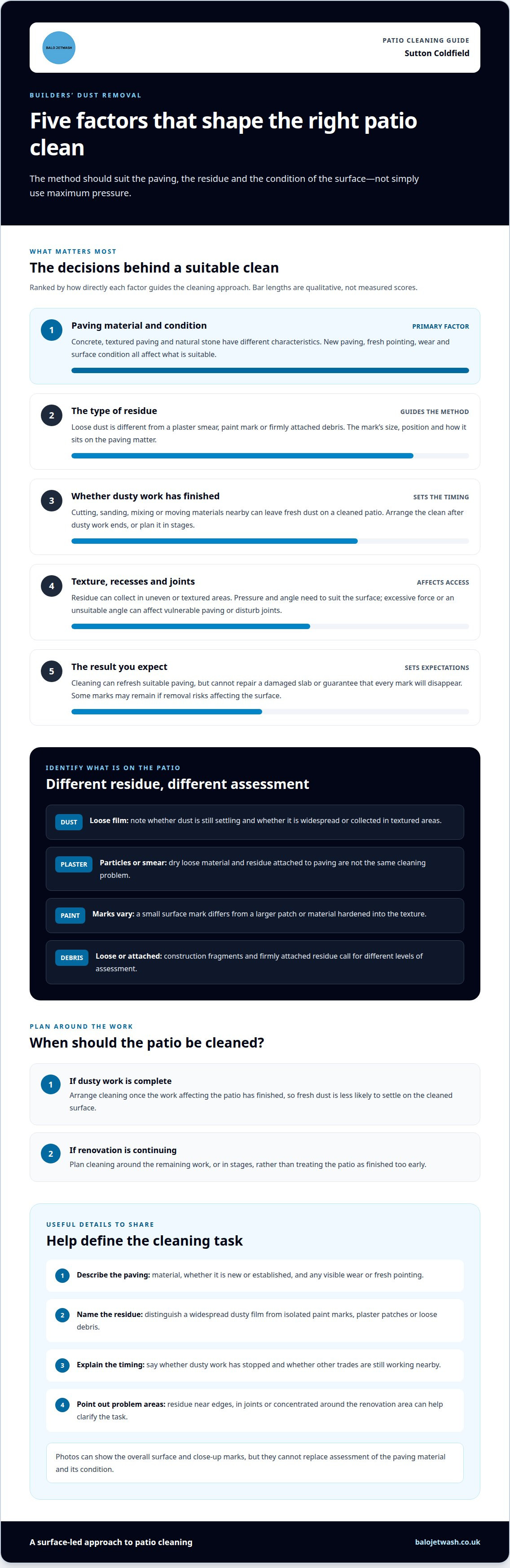
Balo Jetwash: Patio Cleaning
Balo Jetwash provides Patio Pressure Washing & Cleaning for patios affected by builders’ dust, plaster residue, paint marks or loose debris. The cleaning approach is chosen to suit the paving material and its condition, helping refresh suitable outdoor surfaces without treating every patio the same way.
When a professional patio clean fits
Timing matters. If builders are still cutting, sanding, mixing or moving materials nearby, fresh dust can settle on a cleaned patio. Cleaning is most useful once dusty work affecting the surface has finished. If renovation is happening in stages, arrange the clean around the work rather than treating the patio as finished too early.
Renovation can leave different kinds of residue. Loose dust is not the same as damp plaster smears, paint splashes or hardened material attached to paving. The material matters too: concrete, textured paving and natural stone have different characteristics, so the method should reflect the residue and how the surface may respond.
For builders’ dust removal from a new patio in Sutton Coldfield or Wolverhampton, Balo Jetwash assesses the surface, its condition and the visible residue as part of its patio-cleaning service. The aim is to select a suitable approach, not simply use maximum pressure. This is particularly useful after renovation, when paving may be newly laid, recently pointed or still affected by construction residue.
Be clear about what you want the clean to address. Loose builders’ dust and ordinary surface dirt differ from paint dried onto paving or plaster that has bonded to it. Patio cleaning can refresh suitable surfaces, but results depend on the mark and the paving beneath it. Discussing this at the outset helps set realistic expectations and makes the work easier to assess.
Matching the method to the patio
A patio’s appearance alone doesn’t tell the whole story. Its material, finish, texture, condition and existing wear can all affect how it should be cleaned. A technique suited to one type of paving may be too aggressive for another. Balo Jetwash tailors professional patio cleaning to the surface rather than using a one-setting approach.
Pressure washing can clean suitable exterior surfaces, but the pressure and angle need to suit the job. Too much force or an unsuitable angle can affect a vulnerable surface or disturb joints. Residue may collect in recesses on textured or uneven paving, while a fine film can show differently on a smoother surface. The material and the type of dirt guide the cleaning approach.
Balo Jetwash uses professional pressure-washing equipment for exterior cleaning, with the method selected to suit the surface and task. Appropriate professional cleaning treatments are used where suitable. The aim is to address the residue that needs attention while taking the paving material into account, not to add treatments unnecessarily.
Newly completed work needs particular care. Fresh pointing, recently laid paving or a surface not yet settled into normal use may need a more considered assessment than established paving. A professional clean should account for these details and remove surface dirt from suitable materials without promising a factory-new finish.
The boundary between patio and garden matters too. Soil, leaves and other loose material can collect at edges and in joints, while renovation debris may be concentrated around the work area. Identifying where residue sits helps define the cleaning task and distinguish general patio cleaning from marks that need a more cautious assessment.
Dust, paint marks, plaster and debris
Builders’ dust can leave a dull film across paving and settle in textured areas. A suitable patio clean can address loose surface dust, but the amount present and whether more is still settling affect the timing. If work continues nearby, arranging the clean in stages can help avoid having to repeat it on areas covered by fresh dust.
Plaster residue needs a different assessment from loose dust. Dry particles and a smear attached to the paving are not the same cleaning problem. Paint marks vary too: a small surface mark differs from a larger patch or material hardened into the texture. The mark’s appearance and position, as well as the paving beneath it, all matter when choosing an approach.
Construction debris can mean many things. Loose fragments are different from firmly attached residue, which may need closer assessment. Professional patio cleaning focuses on the outdoor surface and suitable cleaning methods; it cannot promise that every renovation mark will disappear or that pressure washing suits every material. Some marks may remain if removing them risks affecting the paving.
Before work begins, describe the renovation and point out the areas of concern. This gives Balo Jetwash a clearer picture of the surface and residue. Distinguish a widespread dusty film from isolated paint marks or plaster patches, rather than grouping everything under “builders’ mess”. These details support a more accurate assessment.
Set expectations according to the surface. Cleaning can improve the appearance of suitable paving, but it cannot change the material, repair a damaged slab or guarantee removal of every mark. Where the patio is worn or residue has become part of the surface, the result may differ from untouched new paving. A careful assessment is more useful than an unrealistic promise.
Preparing for a useful assessment
A clear description helps define the cleaning task. Include the patio material, whether the paving is new or established, the work carried out and the areas with the most visible residue. Photos can show the overall surface and close-up marks, but they cannot replace an assessment of the material and its condition.
Explain whether dusty work has finished and whether other trades are still working nearby. This helps determine whether to arrange cleaning after the main source of dust has stopped or plan it around remaining work. Cleaning a patio before further dusty activity may mean fresh dust settles on it again.
For an accurate discussion about builders’ dust removal from a new patio in Sutton Coldfield or Wolverhampton, describe the marks rather than assuming what caused them or how easily they will lift. A pale patch could be loose dust, plaster residue or a change in the paving’s appearance. Paint may sit on the surface or catch in its texture. These details help Balo Jetwash assess the job without relying on a broad label.
The patio’s condition matters as well as the renovation residue. Loose or damaged joints, chipped paving, worn areas and changes in finish can all affect the cleaning decision. Mentioning these features clarifies the work and helps ensure the method suits the patio as it is, rather than overlooking existing wear or risking damage to a vulnerable area.
Identify what you most want to improve: an overall dusty appearance, residue around the renovation area or specific marks. This keeps the discussion focused on the result that matters to you. It doesn’t mean every mark can be treated in the same way, but it gives the cleaning assessment a clear purpose.
Maintaining the outdoor surface
Professional patio cleaning can help maintain an outdoor surface, not just finish a renovation. Dust and general dirt can make paving look tired, while outdoor grime may obscure its colour and texture. Cleaning suitable surfaces helps reveal their appearance and makes the patio feel better cared for. The result depends on the material, its condition and the residue present.
Timing patio cleaning alongside other exterior work can help bring the finished space together. If the patio is the main area affected, focus the assessment on its surface and the marks left by the project. Balo Jetwash also provides driveway cleaning, with each surface and task assessed on its own merits.
Patio cleaning does not replace repairs or building work. If paving is cracked, unstable or unfinished, cleaning alone won’t fix it. Nor can cleaning guarantee a particular colour or restore every surface to its original state. Its value is in cleaning suitable material with a method that addresses removable surface dirt.
For homeowners considering broader exterior upkeep alongside the patio, roof cleaning and moss removal is a separate service. Keeping those tasks distinct helps avoid confusion about what a particular clean includes. The patio assessment remains centred on the outdoor paving, its condition and the residue renovation has left behind.
Good maintenance starts with realistic expectations and a method suited to the paving. If the patio is in sound condition and the main issue is removable surface dirt, professional cleaning may be a suitable way to refresh it. Hardened marks, damage or materials needing special care affect what can sensibly be done. The assessment should explain the cleaning task and any limits imposed by the surface.
Choosing the right next step
When arranging professional patio cleaning, clear details about the surface and renovation residue are more useful than asking for a one-size-fits-all treatment. Share the paving type if you know it, describe the marks and say whether building work is complete. This helps establish whether the patio is ready and what the cleaning needs to address.
Ask what the proposed cleaning is intended to tackle. A clear scope distinguishes a general refresh from attention to particular paint or plaster marks. It also keeps expectations realistic if residue is bonded to the paving or its condition limits the method. The aim is to clean suitable surfaces appropriately, without claiming every mark will vanish.
Balo Jetwash provides Patio Cleaning for homeowners who want help refreshing suitable outdoor paving after renovation or as part of ongoing surface maintenance. The service is relevant when dusty work has finished, the patio is ready to be assessed and surface dirt is affecting the finished appearance. The patio pressure washing service is suited to outdoor paving that needs a professional clean, with the approach considered according to its surface and condition.
A free, personalised quotation gives you the opportunity to discuss the patio, the residue and the work you want considered. Balo Jetwash can assess the cleaning requirements in context, including the paving material and its condition, so the proposed work is focused on the surface and your concerns.
If the surface is ready for a professional assessment, contact Balo Jetwash to discuss patio cleaning and request a free, no-obligation quotation.
Frequently Asked Questions
How soon after the builders finish can you start?
Arrange the clean once the patio is clear and trades no longer need it as a work or storage area. This helps the cleaning team reach the paving and reduces the chance of tools or materials being moved across a freshly cleaned surface. Mention any remaining work nearby and whether the patio is still being used to move equipment or building supplies.
What is post-construction cleaning?
Post-construction cleaning is a finishing clean after building or renovation work, focused on dust and residue in affected areas. For an outdoor patio, the work may focus on the paving rather than indoor rooms or building repairs. Cleaning can address suitable residue, but it does not complete installation or fix patio defects.
How long should you wait before washing a newly installed patio?
Follow the care instructions for the paving and installation, especially if mortar, grout or pointing has been used. Washing too early may interfere with materials that are still setting, and requirements vary with products and installation methods. The installer’s guidance is the best reference for when the patio is ready. Once the recommended setting period has passed, the cleaning method should still suit the paving’s material and condition.
How to prevent builders dust and cement haze from damaging patio paving
Wait until dusty work has finished, or arrange cleaning in stages if it continues. Have the paving assessed and use pressure suited to its material, as excessive force or an unsuitable angle can damage vulnerable surfaces or disturb joints.
Patio cleaning companies serving Sutton Coldfield and nearby areas
Balo Jetwash provides patio cleaning for homes in Sutton Coldfield and Wolverhampton. The method is selected to suit the patio material, condition and residue.
{"@context":"https://schema.org","@type":"FAQPage","mainEntity":[{"@type":"Question","name":"How soon after the builders finish can you start?","acceptedAnswer":{"@type":"Answer","text":"Arrange the clean once the patio is clear and trades no longer need it as a work or storage area. This helps the cleaning team reach the paving and reduces the chance of tools or materials being moved across a freshly cleaned surface. Mention any remaining work nearby and whether the patio is still being used to move equipment or building supplies."}},{"@type":"Question","name":"What is post-construction cleaning?","acceptedAnswer":{"@type":"Answer","text":"Post-construction cleaning is a finishing clean after building or renovation work, focused on dust and residue in affected areas. For an outdoor patio, the work may focus on the paving rather than indoor rooms or building repairs. Cleaning can address suitable residue, but it does not complete installation or fix patio defects."}},{"@type":"Question","name":"How long should you wait before washing a newly installed patio?","acceptedAnswer":{"@type":"Answer","text":"Follow the care instructions for the paving and installation, especially if mortar, grout or pointing has been used. Washing too early may interfere with materials that are still setting, and requirements vary with products and installation methods. The installer’s guidance is the best reference for when the patio is ready. Once the recommended setting period has passed, the cleaning method should still suit the paving’s material and condition."}}]}Information
Water available? - You don't need to be present for us to carry out the service. If required, we can supply water ourselves.
Insurance
Balo Jetwash is fully insured, We have £5,000,000 of public liability insurance. Balo Jetwash operatives are professional, reliable and endeavour to carry out the work to the highest standard with minimal fuss and upheaval.