
How to clean mortar stains from new brickwork in Walmley

The safest first move may be to leave some marks alone. White, powdery deposits are often efflorescence, which is generally harmless and can weather away over time; mortar smears need a different approach. If you’re cleaning mortar stains from new brickwork in Wolverhampton, identifying the mark first can help prevent damage to the finish.
It’s tempting to reach for a pressure washer or strong cleaner as soon as fresh brickwork looks messy. But gentle, patient cleaning is usually the better place to start. This guide explains how to distinguish cement staining from efflorescence, when deposits can weather naturally, and how to brush or carefully scrape away mortar residue by hand. You’ll also learn when an acid-free brick cleaner may be suitable, and why testing a small area first matters. A careful method can lift residue while protecting the brick face and mortar joints.
Key Takeaways
Identify whether the mark is powdery efflorescence or hardened mortar before choosing how to treat it. Let harmless deposits weather naturally where possible, and avoid using high pressure to remove them. Use a stiff brush for light residue and a wooden tool for larger hardened mortar deposits; avoid wire brushes and metal tools. Choose an acid-free brick cleaner suited to the stain, test it on a small area and follow its label directions. Take care with fresh masonry: mortar curing and the cleaning method affect when brickwork can be safely cleaned.Allowing deposits to weather naturally
Identify the deposit before reaching for a cleaner. Efflorescence is usually a white, powdery salt deposit on the brick face, while mortar residue appears as smears, splashes or hardened lumps. Efflorescence is generally harmless and temporary, and can weather away over time. If the mark is a raised mortar drop, waiting for it to disappear like salt bloom won’t remove the cement. Initially, leave a light, dry salt bloom alone and see how it changes. Weather gradually carries soluble salts from the brick surface, so immediate chemical treatment may be unnecessary. Don’t scrub a damp wall or add water to hurry the process. If the deposit remains after the surface has weathered, use a stiff brush and water to remove loose salts gently. Brush carefully with a stiff, non-metal brush, working across the affected brick rather than grinding at one spot. Efflorescence can often be removed this way, followed by a gentle rinse with water. Avoid a wire brush: its metal bristles can scratch or damage the brick face. Check the area as you work, and stop if the surface starts to mark or the deposit looks like cement rather than powder. Keep water pressure low. A high-pressure hose can saturate the brickwork and bring more salts to the surface, creating another bloom as the wall dries. It can also harm the brick face or mortar joints. For a small powdery patch, a soft brush and controlled rinse are more suitable than blasting the wall. Let the masonry dry before deciding whether pale marks remain. Reduce repeat staining by keeping new brickwork and materials as dry as possible during building work. Store bricks off the ground, protect them from rain and surface water, and cover opened packs with a waterproof sheet. Shield freshly laid masonry from rain while mortar cures, and fill mortar joints fully so pockets don’t collect water that can penetrate clay bricks. Protect unfinished walls at the end of each workday. Extend waterproof covering at least 2 ft (0.6 m) down from the top on all sides, and cover completed brickwork against dirt from ongoing work. Clay bricks supplied to the UK market are tested for soluble salt content under BS EN771-1, but good site protection still helps limit avoidable deposits. For existing efflorescence, let weathering work first, then brush and rinse gently.The right method for cleaning brickwork depends on the stain. Seek expert advice if staining is extensive or difficult to identify. When the mark is unclear, don’t assume every stain needs the same treatment. First consider whether you can identify it; if not, get expert advice before cleaning. The same applies to extensive marks. This cautious approach helps ensure the cleaning method suits the stain, rather than risking damage with an unsuitable treatment.
Brushing and scraping mortar residue
For mortar smears, avoid rubbing them while they’re wet, as this can spread cement across the brick face. Let splashes harden slightly, then remove them carefully by hand before washing away any remaining residue.
Inspect the mark in good light. A flat grey smear, a raised mortar drop and powdery efflorescence need different handling. Focus on the mortar itself, not the surrounding brickwork. If the mortar is still soft, leave it briefly to firm up; rubbing it now can push residue into the brick’s texture and make the mark wider and harder to remove.Brushing mortar residue from brickwork
Apply a mild detergent solution to the dirty area with a nylon brush, then work gently across the smear. Use short strokes and check whether the mortar loosens without scuffing the brick face. Avoid wire brushes and metal tools, which can damage the surface. A bucket-and-brush method keeps the cleaning controlled and limits unnecessary force on new brickwork.
Scraping mortar smears safely
Let a mortar splash harden slightly, then ease a wooden tool under its edge. Work slowly, lifting the deposit away rather than dragging it across the brick. Wooden tools are preferable for larger deposits because metal can scratch or chip the face. Stop if the tool catches on the brick or mortar joint, and don’t force a deposit that remains firmly attached.
Once loose mortar has been brushed or lifted, use detergent solution and a nylon brush on the remaining dirty patch. Hot water at 120 °F (49 °C) can improve bucket-and-brush cleaning effectiveness. Keep the solution on the marked area, rather than spreading it over clean bricks. This makes it easier to see whether the residue is lifting or simply becoming wet. Rinse the treated patch gently with clean water, then inspect it as the brick dries. Wet brick can make pale residue harder to assess, so don’t repeat the same action before checking the finish. If a thin cement smear remains, don’t attack it with metal or scrub harder. The next step depends on the stain and brick surface. Keep each pass controlled: brush first, scrape only raised, hardened mortar, then rinse and reassess. For example, ease away a small splash with a wooden tool, while a thin dirty film may respond better to detergent and a nylon brush. Stop if the brick face starts to mark or the joint edges appear disturbed.Acid-free brick cleaners
Use an acid-free cleaner only if brushing and careful hand removal leave mortar residue behind. Choose a product intended for brick, test it first and manage rinse water carefully.
Choosing an acid-free brick cleaner
Choose a brick cleaner labelled acid-free and suitable for the residue. For mortar or cement smears, use a specialist product only as directed on its label. Acid can encourage salts to appear on the brick surface, while incorrectly diluted acidic cleaners can damage bricks and mortar. Acid-free does not mean risk-free, so protect nearby plants and paving.
Testing a cleaner on brickwork
Test the cleaner on an inconspicuous patch before treating the visible stain. For new brickwork, make the trial area about 20 sq ft (2 m²), then let the wall dry before judging the colour and finish. Apply the cleaner as directed, and look for changes to the brick face, mortar joints or appearance. Don’t expand the treatment until the test area looks acceptable when dry.
Avoiding acid and pressure-washer risks
Avoid hydrochloric acid on new brickwork. It can bring salts in the brick to the surface, and acidic products can damage brick and mortar if diluted incorrectly. Avoid high-pressure washing too: the force can damage the brick face and joints, drive water into the wall, and leave the masonry more exposed to water penetration and frost damage.
Apply the chosen acid-free cleaner to damp brickwork only if its label instructs this method. Usually, leave an acid-free brick cleaner for 5-10 minutes before rinsing, but follow the product directions because formulations differ. Work on a small section at a time, and don’t let the cleaner dry on the wall. Rinse gently, without directing force into mortar joints. Protect nearby surfaces before applying any cleaner. Cover plants and adjacent paving, and keep runoff away from planted beds and drains. An acid-free product avoids acidic wash water, but its rinse water still contains cleaner and loosened residue. Contain runoff where practical, then follow the label’s disposal directions rather than letting it spread across the site. Choose water-only cleaning if brushing removes the residue; reserve chemical cleaner for marks that remain. Don’t combine products or improvise a stronger mixture. If a test patch changes the brick colour, roughens the surface or leaves another mark, stop and rinse as directed. For extensive or unclear staining, let the stain type and brick condition guide the next cleaning method.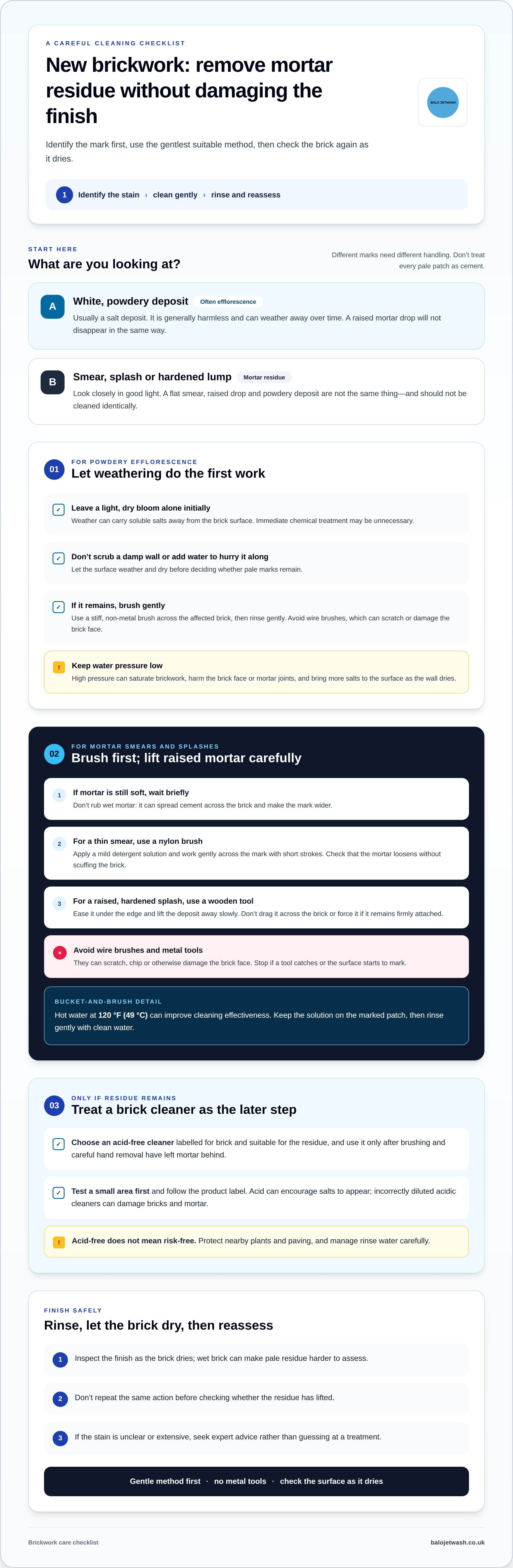
How to remove mortar stains from new brickwork safely
Identify the mark before choosing a treatment. Fresh mortar splashes, cement smears, white salt deposits and coloured stains are different problems. A raised mortar drop can be eased away after hardening slightly, while powdery deposits often respond to gentle brushing. If you’re cleaning mortar stains from new brickwork in Wolverhampton, don’t experiment with chemicals across the wall when the stain is unclear or extensive. Match the method to the deposit and brick surface. Remove raised mortar by hand before considering a cleaner. Allow a splash to harden slightly, then lift it carefully with a wooden tool. Avoid metal tools, which can damage the brick face. For thin residue, start with a brush and water. Don’t smear wet mortar across the face or force a tool against joint edges. Stop if the brick begins to scratch or chip. Trial the selected method on a discreet area of new brickwork. A trial cleaning should cover 20 sq ft (2 m²), and the wall must dry before you assess the result. This reveals whether treatment changes the brick’s appearance or leaves a pale edge. If the patch looks worse when dry, don’t carry the same method across the remaining wall. Choose cleaning conditions that allow the brickwork to dry safely. Avoid cleaning during freezing weather or when freezing is expected. Chemical cleaning solutions are generally more effective when the outdoor temperature is at least 50 °F (10 °C). Water-only methods are preferred when it is at least 40 °F and will remain so until the wall dries. Ideally, temperatures stay above freezing for seven days after cleaning. Treat a small area at a time, following the cleaner’s label. Pre-wet brickwork before applying a chemical solution if the instructions require it, and prevent runoff from spreading across untreated sections. Initial lime marks can be brushed with water, but calcium carbonate formed after lime reacts with air needs an acid solution. Don’t assume every pale stain needs the same treatment. Rinse gently, then assess the wall after it dries. High-pressure washing can damage brick faces and mortar joints, so don’t use it to force away a stubborn mark. After cleaning, check that no cleaner residue remains on the brick surface. Measure it again 48 hours after cleaning is complete, once the wall is dry. For cleaning mortar stains from new brickwork in Sutton Coldfield, stop if the surface changes or residue remains after a careful treatment, rather than repeating the process blindly.How long should new mortar cure before cleaning brickwork
Base the cleaning time on mortar hardness and the method planned. New masonry is typically cleaned between 24 hours and seven days after the mortar hardens, depending on the cleaning method. That range isn’t a single cure time for every wall. A gentle hand-cleaning method and a chemical treatment place different demands on fresh brickwork, so assess both the mortar and the proposed process. Take particular care during the first three to five days. New brickwork is especially vulnerable to peacocking and picture framing while mortar cures. These effects can leave uneven patches or outlines on the brick face. Avoid rushing into aggressive treatment during this early period. Check whether the mortar has hardened, and consider how the cleaning method might affect the new joints before proceeding. Choose the cleaning method before setting a date. A stiff brush and water differ from a specialist cement-cleaning product, and each may suit a different stage. The practical starting point is hardened mortar, not simply the number of hours since laying. If a smear remains after the mortar hardens, treat a small test area and assess the result once dry. Don’t interpret “as soon as possible” as permission to clean soft mortar. New masonry should be cleaned promptly after the mortar hardens, typically within the 24-hours-to-seven-days window, depending on the method. Before cleaning, inspect joints for softness or disturbance. If brushing pulls mortar from the joints, stop and allow more curing time. A clean brick face isn’t worth weakening fresh pointing. Plan around the mark as well as the mortar. A raised splash may need to harden slightly before you can lift it with a wooden tool, while light residue may suit gentle brushing. The first three to five days call for extra care because curing brickwork can show peacocking or picture framing. Don’t move to harsher treatment simply because a mark remains visible. Use the wall’s response to guide the next step. Start with the gentlest method suited to the stain, then pause if joints soften, the brick face changes, or residue spreads. A trial patch on new brickwork should dry before its finish is judged. The timing within 24 hours to seven days depends on mortar hardness and cleaning method, so those checks matter more than choosing an arbitrary day.For lime staining, pre-wet the brickwork before applying a chemical cleaning solution, and treat small areas at a time. Mortar splashes or drops are usually best left to harden slightly before removal, which helps avoid smearing mortar into the brick face. For larger deposits, choose wooden rather than metal tools to reduce the risk of damage. A MyBuilder answer advises scraping dried mortar off before applying diluted brick-cleaning acid.
Specialist cement-cleaning products can be used for mortar and cement smears, but test the product on a small area first and follow its label. Identify the stain before choosing a cleaner: hydrochloric acid-based cleaners should not be used on vanadium stains, because they can cause a permanent dark-coloured stain. Keep the cleaning controlled, and check the brick face and joints as you work. If the trial area changes the surface or spreads the residue, stop rather than applying the solution more widely.
Balo Jetwash
If mortar staining has you thinking about the rest of your exterior, Balo Jetwash can help with other surface cleaning. Its services include driveway cleaning, patio cleaning, block paving cleaning, and moss and algae removal. The cleaning method is chosen to suit the surface and its condition, rather than applying the same approach everywhere.
For new brickwork, use the steps above to distinguish mortar residue from deposits that may weather naturally. If you’re also planning to refresh a driveway or patio, Balo Jetwash provides cleaning for those surfaces. It’s a useful next step when your project extends beyond the brickwork itself.
Contact Balo Jetwash to talk through your exterior cleaning needs.
Choose the right next step for your exterior
For homeowners in Sutton Coldfield considering cleaning mortar stains from new brickwork, decide whether the remaining mark needs further treatment or more time. Treat brickwork and wider exterior cleaning as separate decisions. A method that suits one surface may not suit another, so don’t extend a brick-cleaning treatment to paving or roofing.
Balo Jetwash offers driveway and patio cleaning. If your plans include refreshing those areas too, treat them as separate parts of the project, with an approach suited to each surface.
A clear plan helps you focus on the brickwork first and consider other exterior areas on their own merits. Take a measured approach to make a confident start on improving your property’s appearance.
Frequently Asked Questions
What is cement staining?
Cement staining is mortar or cement residue left on the brick face after bricklaying. It may appear as a smear, splash or hardened deposit rather than loose powder. Appearance alone can be misleading, so check the mark’s texture and how it sits on the brick. A raised, gritty patch differs from a fine surface bloom, and that distinction helps determine the gentlest suitable cleaning method.
What is the best brick acid or mortar stain remover for new bricks in the UK?
For new bricks, choose an acid-free brick cleaner labelled for mortar or cement residue rather than reaching first for brick acid. There isn’t one universally suitable product: brick type, surface condition and the stain all affect the choice. Test a discreet patch, let it dry fully, and follow the cleaner’s label. Avoid hydrochloric acid, which can bring salts to the surface and damage the brickwork.
{"@context":"https://schema.org","@type":"FAQPage","mainEntity":[{"@type":"Question","name":"What is cement staining?","acceptedAnswer":{"@type":"Answer","text":"Cement staining is mortar or cement residue left on the brick face after bricklaying. It may appear as a smear, splash or hardened deposit rather than loose powder. Appearance alone can be misleading, so check the mark’s texture and how it sits on the brick. A raised, gritty patch differs from a fine surface bloom, and that distinction helps determine the gentlest suitable cleaning method."}},{"@type":"Question","name":"What is the best brick acid or mortar stain remover for new bricks in the UK?","acceptedAnswer":{"@type":"Answer","text":"For new bricks, choose an acid-free brick cleaner labelled for mortar or cement residue rather than reaching first for brick acid. There isn’t one universally suitable product: brick type, surface condition and the stain all affect the choice. Test a discreet patch, let it dry fully, and follow the cleaner’s label. Avoid hydrochloric acid, which can bring salts to the surface and damage the brickwork."}}]}Information
Water available? - You don't need to be present for us to carry out the service. If required, we can supply water ourselves.
Insurance
Balo Jetwash is fully insured, We have £5,000,000 of public liability insurance. Balo Jetwash operatives are professional, reliable and endeavour to carry out the work to the highest standard with minimal fuss and upheaval.