
Old Stone Wall Cleaning in Sutton Coldfield

Cleaning an older driveway isn’t always the kindest way to care for it. Careful driveway cleaning in Sutton Coldfield is worth considering when moss, algae, staining or grime needs attention, but an unsuitable method can damage the surface. Sometimes, leaving a lightly weathered driveway alone is the better choice.
It’s understandable to want a driveway to look cared for again, especially when green growth or dark marks stand out. The key is to address the deposits without damaging the surface. Pressure and unsuitable methods can be too harsh, particularly on more delicate materials or driveways in poor condition.
Here, you’ll learn when cleaning is worthwhile, why the surface material and condition matter, and how suitable approaches can reduce biological growth and grime. You’ll also see why a small trial helps guide the method, and when deterioration calls for repair rather than a cosmetic clean. The aim is a considered result, not a like-new finish at any cost.
Key Takeaways
A driveway doesn’t always need cleaning; lightly soiled surfaces may be better left alone. The right cleaning approach depends on the surface material and its condition. Moss, algae and grime need suitable treatment to help avoid damaging the driveway or patio. A small test area can show how a cleaning method affects the surface before wider work begins. Cleaning may improve a surface, but signs of damage may need attention before cleaning.Cleaning Service Coverage in Sutton Coldfield
The right approach depends first on the driveway or patio surface and the work needed. In Sutton Coldfield, an old stone patio needs a different assessment from modern block paving. Don’t assume the same cleaning method suits both. Surface material, joint condition, access and the deposits present all affect the approach.
Cleaning a stone patio in Sutton Coldfield should begin with identifying the material and assessing its condition. A surface with sound joints and organic growth is different from one with loose paving, missing mortar or cracks. Cleaning may remove surface grime or growth, but it won’t correct movement or failing joints. Those signs affect what work is suitable.
For a stone patio in Sutton Coldfield, consider the surface material and its condition before cleaning. Don’t treat pressure washing as the default: excessive pressure can damage softer stone, loosen joints or affect the surface. The right method depends on the material and the deposits present.
Seek specialist advice when paving is significantly deteriorated, uneven, cracked or made from fragile materials. Repairs may be needed before cleaning. A careful assessment can help determine whether the surface is suitable for pressure washing or needs a gentler approach.
For a managed cleaning job, keep the site notes together: record the patio’s location in Sutton Coldfield, surface material, access arrangements, observed damage and any agreed trial area. If another worker takes over, these details help maintain continuity and avoid an unsuitable approach.
Recognising when cleaning isn’t the next step matters too. Loose paving, damaged joints and cracks can indicate problems that cleaning won’t resolve. A practical assessment should distinguish removable grime and growth from surface damage. That distinction matters when choosing a method for patio cleaning or nearby block paving.
Cleaning Marble, Travertine, Limestone, Slate and Sandstone
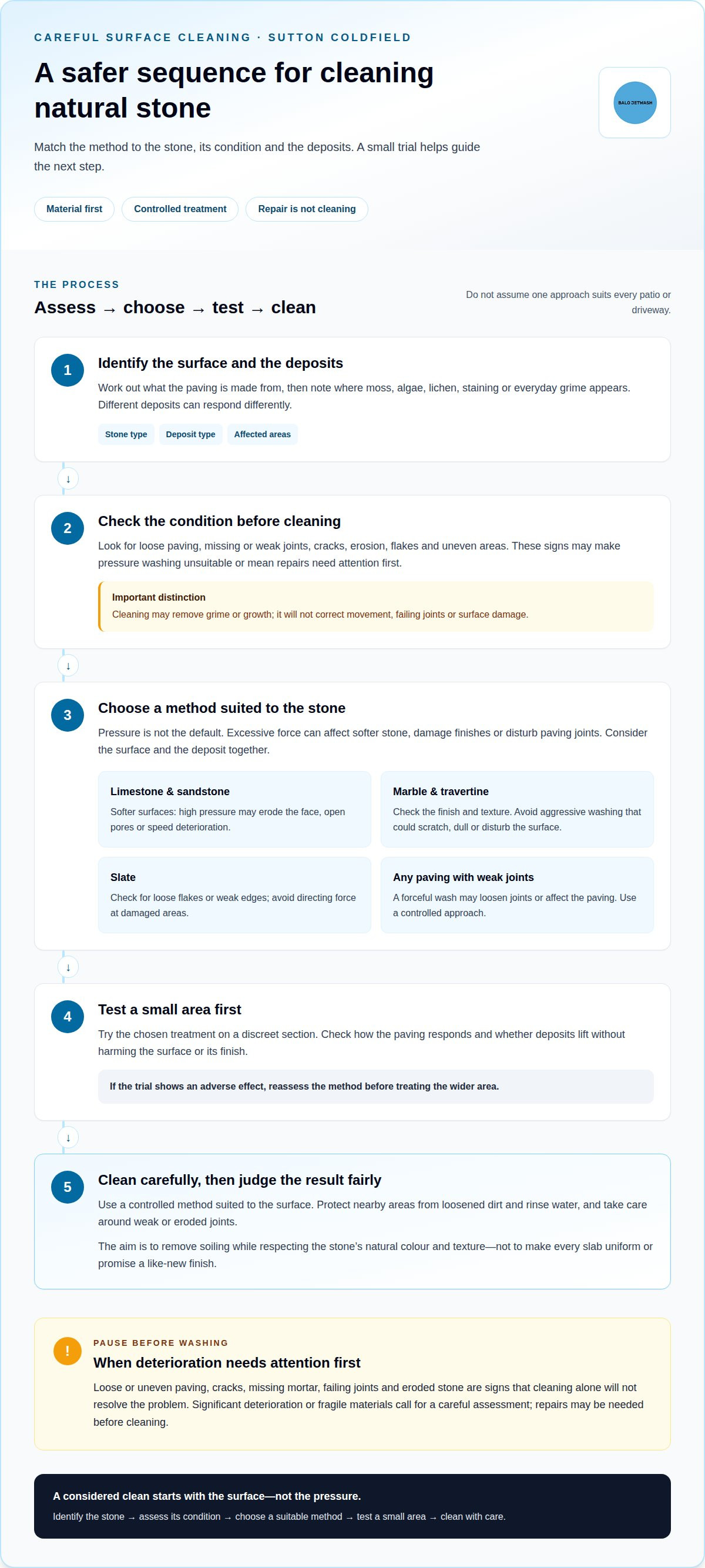
Natural stone isn’t one uniform surface. Marble, travertine, limestone, slate and sandstone each have distinct textures and conditions to consider before cleaning. A method suited to a robust surface may roughen a softer one or disturb its finish. Start by identifying the stone, checking for loose areas and noting where staining or biological growth appears.
Sandstone and limestone need particular care because high-pressure washing can erode their softer surfaces, open pores and speed deterioration. Pressure can also loosen paving or damage joints. A deep clean doesn’t mean using greater force. Match the treatment to the stone and deposit, and trial it on a small area before cleaning the wider surface.
Marble: Check for a polished, honed or naturally textured finish. Choose a gentle approach that won’t scratch or dull the visible surface. Travertine: Inspect pits and surface texture, where grime can collect. Avoid aggressive washing that could disturb the stone’s finish. Limestone: Treat this softer stone cautiously. Strong pressure may erode the face and affect its pores. Slate: Look for loose flakes or weak edges before selecting a cleaning method. Avoid directing force into damaged areas. Sandstone: Assess the grain and existing wear. A controlled, gentle treatment helps reduce the risk of surface erosion.Patios made from these stones need a material-led assessment. For example, an Indian sandstone patio with green biological growth calls for a different approach from a smooth marble patio. A trial area shows how the surface responds and whether the treatment lifts deposits without harming the stone. Professional patio cleaning in Sutton Coldfield also starts with the material, not a one-size-fits-all wash.
Cleaning aims to remove soiling while respecting natural colour and texture, not to make every slab completely uniform. Earlier repairs, weathering and exposure can leave visible differences after washing. Where stone is eroded or joints are failing, cleaning alone won’t fix the damage. This distinction helps prevent a cosmetic deep clean from being mistaken for surface repair.
For stone patios, follow a clear sequence: identify the material, assess its condition, choose a suitable method, then test a small area. Marble, travertine, limestone, slate and sandstone can all be cleaned, but their surfaces aren’t interchangeable. Professional patio cleaning in Sutton Coldfield means matching the treatment to the stone and preserving its distinctive character.
Choose a gentle treatment suited to the stone and deposit, and test it on a small area first. Avoid aggressive, high-pressure washing, which can erode sandstone or limestone and damage paving joints.
Removing Moss, Staining and Grime from Driveways and Patios
Safe cleaning starts by identifying the surface and the deposit, then choosing a suitable method and testing a small area. Moss, algae, lichen and other marks can respond differently; excessive pressure or unsuitable cleaning can damage paving and joints.
Moss, algae and lichen removal
Moss and algae often collect in damp joints and shaded sections, while lichen can cling closely to paving. Check whether growth sits on the surface or has established itself in joints before choosing a cleaning method. Loosen deposits carefully rather than scraping hard or directing strong pressure at the surface. A small trial shows how the paving responds and helps protect its finish.
Grime removal
Everyday grime may gather around edges, joints and sheltered corners. Identify the affected area first, then use a controlled cleaning method suited to the paving. Excessive pressure can damage some surfaces or disturb joints. Protect nearby areas from loosened dirt and rinse water, and take care around weak or eroded joints during cleaning.
Stain removal from driveways and patios
Assess marks by their appearance and position rather than treating them all the same. Test the cleaning method in an inconspicuous spot and compare the result with nearby paving. A mark that remains after suitable cleaning may be embedded or linked to deterioration, rather than removable surface grime.
Work methodically across the driveway or patio. Start with a small test area, observe whether the surface or joints change, and extend the cleaning only if the result is suitable. Limit cleaning to the areas that need attention. Worn paving can show signs of age; trying to achieve a uniform finish may cause unnecessary damage.
If moss, grime or staining sits beside loose paving, cracks or eroded joints, pause before cleaning that section. The condition and material of the surface affect the suitable cleaning method, and cleaning may dislodge jointing or worsen weak areas. Distinguish removable growth from signs of damage, then address each appropriately. The aim is to lift unwanted deposits while preserving sound paving and its finish.
Risks and Appropriate Methods of Cleaning
Driveways need a cleaning method suited to their surface, condition and deposits. On block paving, cleaning can remove dirt, moss and algae, but unsuitable methods may damage the blocks or disturb the joints.
Risks of cleaning driveways
Abrasive cleaning can wear away a surface and damage its finish. High pressure may damage softer paving or concrete and dislodge jointing sand, particularly where joints are already weak. The aim isn’t to make every driveway look newly laid. Gently weathered areas may be best left alone if cleaning would remove sound material without solving a real problem.
Before wider work, a professional cleaner should assess the surface and deposits, then test the proposed method on a small area. Watch for roughening, colour changes or disturbed joints. Cleaning treatments should be chosen carefully because an unsuitable product can contribute to deterioration. A test helps show whether a method can remove deposits without causing visible harm.
Suitable methods for block paving and patios
No single cleaning method suits every block-paved driveway or patio. Choose according to the surface’s condition and whether the deposit is moss, algae or general staining. Don’t assume a product intended for one surface is suitable for another. Test any proposed treatment discreetly and assess its effect before using it across the surface.
A suitable method should lift the deposit without roughening the surface or affecting the joints. If the blocks change or jointing sand loosens, stop and reconsider the approach. The cleaning treatment matters, but so do pressure and rinsing. A method that’s too aggressive or applied carelessly can cause damage, even if it’s intended for exterior surfaces.
How cleaning can worsen damage
Weak joints and surface deterioration can make paving more vulnerable. Forceful washing can worsen a fragile surface by eroding material, opening pores or dislodging jointing sand. Water may also enter existing cracks or damaged joints, so removing visible moss or algae won’t resolve the underlying cause of damage.
If loose blocks, cracks or eroded joints are present, assess the condition before cleaning. Repairs may be needed before or after washing. Cleaning can remove staining, but it can’t correct structural movement or repair failed joints. Treating these issues separately avoids mistaking a cleaner appearance for sound paving.
Algae and Moss Prevention for Driveways and Patios
Algae and moss can establish where a driveway or patio stays damp. After cleaning, maintenance is less about applying a coating and more about noticing where moisture lingers, what collects on the surface and how it changes over time.
After cleaning paving, let it dry naturally and clear loose debris before it builds up. Leaves and garden matter can hold moisture against the surface. Avoid scraping at joints to remove new growth, as this can disturb the jointing material.
Use damp patches as a practical clue. If one section stays darker than nearby paving after rain, note its position and check whether it remains damp in drier weather. A recurring patch may need attention before another clean. Comparing areas can help distinguish temporary wetness from a persistent problem.
Small maintenance habits can limit the conditions that encourage regrowth:
Clear leaf build-up: Remove loose leaves and garden debris from the paving. Check the joints: Treat crumbling or missing jointing material as a maintenance concern, not a reason to scrub harder. Track recurring patches: Note where moss or algae returns and whether it follows a particular damp area.Nearby planting can affect paving too. Soil or plant matter resting on the surface may retain moisture and hide early signs of regrowth. Keep the paving visible enough to inspect, and watch for fresh deposits, jointing changes or areas that appear uneven. These signs call for attention to the paving’s condition, not just its appearance.
After cleaning, compare the surface in similar weather rather than judging it while wet. Paving can look darker when damp, and uneven drying may make separate areas appear mismatched. A later visual check can show whether moss or algae is returning or the surface is simply drying at different rates. This helps avoid unnecessary repeat cleaning.
For driveway and patio paving in Sutton Coldfield, a brief seasonal inspection can focus on the same points each time: debris on the surface, recurring damp patches, visible jointing changes and fresh moss or algae. Record what has changed rather than aiming for a spotless surface. This measured approach keeps maintenance focused on the condition of the paving and helps maintain a moss free driveway.
Balo Jetwash
Balo Jetwash specialises in driveway and patio cleaning in Sutton Coldfield. This guidance can help you judge whether an old stone wall needs attention, but wall cleaning and exterior surface cleaning aren’t interchangeable. For driveways and patios, the material, existing condition and type of soiling guide the approach. Choosing by surface matters more than simply using the strongest wash.
For exterior cleaning, Balo Jetwash uses professional van-mounted, industrial-grade pressure washing equipment and suitable cleaning treatments. Equipment is part of the cleaning process, not a reason to use high pressure on every material. A paved driveway, patio and old stone wall each have different characteristics. Matching the method to the surface keeps the work focused on its actual cleaning needs.
If your question concerns a patio, the paving material and its condition help shape the work. For example, a paved area with organic growth needs a different assessment from one with loose or damaged sections. Patio cleaning in Sutton Coldfield is relevant when the surface is a patio rather than fragile historic walling. The same distinction helps avoid assuming one approach suits every exterior.
Driveway cleaning is another reason to consider professional help, particularly when grime or growth has built up across several areas. Block paving may need suitable treatment as well as washing, with joint re-sanding included in the quoted work where applicable and once the surface is sufficiently dry. This finishing step relates to block paving; it isn’t a general requirement for patios or stone walls.
When describing a cleaning project, note the surface material, affected area and any visible wear or loose sections. Say whether it’s a driveway or patio, and whether growth or staining is concentrated in particular places. These details help distinguish a cleaning job from a surface with damage that needs attention first. A clear description also keeps the discussion focused on the work required.
Balo Jetwash’s exterior cleaning services include driveway cleaning and patio cleaning. This article’s guidance can help you make an informed decision about historic stone; the relevant service depends on the surface you want cleaned. For driveway or patio cleaning in Sutton Coldfield, discuss the area and its condition with Balo Jetwash.
Contact Balo Jetwash to discuss your driveway or patio cleaning requirements and request a free, no-obligation quotation.
Frequently Asked Questions
Should I clean old stonework?
Clean old stone only when there’s a clear reason, such as staining, soiling, graffiti or deposits that interfere with repairs. A gently weathered surface may be better left untouched, since cleaning can erase historic evidence and offer only short-lived improvement. For example, a wall with stable mortar and light age-related discolouration may need no intervention. Focus on the condition and purpose of the work, not brightness alone.
What should I do with the deteriorating stonework on my old building?
Arrange a detailed survey before repairing deteriorating historic stonework. Cracks or distortion can point to issues beyond the stone surface, including rotten timber lintels, tree roots or expanding iron cramps. Monitoring or laboratory analysis may help identify the cause. Minor repairs can include repointing eroded joints or rebedding loose stones. Replace stone only when it’s too defective to serve its structural or weathering purpose, matching the original as closely as possible.
Is it safe to pressure wash stone surfaces?
Pressure washing isn’t automatically safe for stone, particularly soft sandstone or limestone. Strong jets can erode the surface, open pores and dislodge mortar, so pressure alone isn’t a reliable way to remove deposits. A sound, modern stone surface and a fragile historic wall present different risks. Before a wider clean, assess the material and condition, then test the proposed method discreetly and check for changes to the stone or joints.
How can I gently clean old stone walls without damaging the stone or mortar?
Start by identifying the stone, mortar and deposit, then test a small, inconspicuous area. Use a controlled method that lifts unwanted material without hard scraping or forcing water into joints. Check the trial area for changes to texture, colour or pointing before extending the work. If mortar crumbles or stones move, stop cleaning that section. A cosmetic clean can’t stabilise loose masonry or repair failed joints.
Which cleaning methods are safe for historic stone walls: soft brushing, steam or low-pressure washing?
No method is safe for every historic wall. A soft brush may help with loose surface growth, but brushing can still abrade fragile stone. Steam and low-pressure washing also need to be assessed against the material, its condition and the deposit. Test the selected method on a small area first. If it roughens the stone, changes its appearance or disturbs mortar, don’t continue across the wall.
Which methods should I avoid on old stone walls, including pressure washing and acids?
Avoid aggressive abrasive cleaning, which can remove the stone’s surface and historic evidence. High-pressure washing can erode softer stone and damage pointing. Don’t assume acidic cleaners are suitable: acidic rainfall can contribute to stone and mortar deterioration, so acid treatments need careful, material-specific assessment. Paint and colourless water-repellent solutions are generally inadvisable because they can cause further deterioration. A trial helps reveal whether a proposed method harms the surface.
{"@context":"https://schema.org","@type":"FAQPage","mainEntity":[{"@type":"Question","name":"Should I clean old stonework?","acceptedAnswer":{"@type":"Answer","text":"Clean old stone only when there’s a clear reason, such as staining, soiling, graffiti or deposits that interfere with repairs. A gently weathered surface may be better left untouched, since cleaning can erase historic evidence and offer only short-lived improvement. For example, a wall with stable mortar and light age-related discolouration may need no intervention. Focus on the condition and purpose of the work, not brightness alone."}},{"@type":"Question","name":"What should I do with the deteriorating stonework on my old building?","acceptedAnswer":{"@type":"Answer","text":"Arrange a detailed survey before repairing deteriorating historic stonework. Cracks or distortion can point to issues beyond the stone surface, including rotten timber lintels, tree roots or expanding iron cramps. Monitoring or laboratory analysis may help identify the cause. Minor repairs can include repointing eroded joints or rebedding loose stones. Replace stone only when it’s too defective to serve its structural or weathering purpose, matching the original as closely as possible."}},{"@type":"Question","name":"Is it safe to pressure wash stone surfaces?","acceptedAnswer":{"@type":"Answer","text":"Pressure washing isn’t automatically safe for stone, particularly soft sandstone or limestone. Strong jets can erode the surface, open pores and dislodge mortar, so pressure alone isn’t a reliable way to remove deposits. A sound, modern stone surface and a fragile historic wall present different risks. Before a wider clean, assess the material and condition, then test the proposed method discreetly and check for changes to the stone or joints."}},{"@type":"Question","name":"How can I gently clean old stone walls without damaging the stone or mortar?","acceptedAnswer":{"@type":"Answer","text":"Start by identifying the stone, mortar and deposit, then test a small, inconspicuous area. Use a controlled method that lifts unwanted material without hard scraping or forcing water into joints. Check the trial area for changes to texture, colour or pointing before extending the work. If mortar crumbles or stones move, stop cleaning that section. A cosmetic clean can’t stabilise loose masonry or repair failed joints."}},{"@type":"Question","name":"Which cleaning methods are safe for historic stone walls: soft brushing, steam or low-pressure washing?","acceptedAnswer":{"@type":"Answer","text":"No method is safe for every historic wall. A soft brush may help with loose surface growth, but brushing can still abrade fragile stone. Steam and low-pressure washing also need to be assessed against the material, its condition and the deposit. Test the selected method on a small area first. If it roughens the stone, changes its appearance or disturbs mortar, don’t continue across the wall."}},{"@type":"Question","name":"Which methods should I avoid on old stone walls, including pressure washing and acids?","acceptedAnswer":{"@type":"Answer","text":"Avoid aggressive abrasive cleaning, which can remove the stone’s surface and historic evidence. High-pressure washing can erode softer stone and damage pointing. Don’t assume acidic cleaners are suitable: acidic rainfall can contribute to stone and mortar deterioration, so acid treatments need careful, material-specific assessment. Paint and colourless water-repellent solutions are generally inadvisable because they can cause further deterioration. A trial helps reveal whether a proposed method harms the surface."}}]}Information
Water available? - You don't need to be present for us to carry out the service. If required, we can supply water ourselves.
Insurance
Balo Jetwash is fully insured, We have £5,000,000 of public liability insurance. Balo Jetwash operatives are professional, reliable and endeavour to carry out the work to the highest standard with minimal fuss and upheaval.