
Listed Building Exterior Cleaning Costs in Sutton Coldfield

Listed brickwork can be cleaned, but the method matters. Cleaning a listed building’s exterior in Sutton Coldfield calls for a careful approach that protects the character of the masonry while removing dirt and organic growth. It’s understandable to be cautious: aggressive cleaning can damage historic brick or render.
The right method depends on the surface and its condition. Historic and listed brickwork calls for non-abrasive, masonry-safe cleaning, while render needs a suitable low-pressure approach. Cost also depends on the area, condition and access, so a property-specific assessment is more useful than a one-size-fits-all figure.
This guide explains what affects brick and render cleaning costs, how moss, algae and mildew are treated, and what to consider when caring for historic features. You’ll also learn how professional cleaning can refresh an exterior without treating traditional materials like ordinary modern surfaces.
Key Takeaways
Understand which property and surface details can affect a brick or render cleaning quotation. Learn why Victorian and Edwardian details call for careful, surface-sensitive cleaning methods. See how professionals tackle moss, algae and mildew without relying on excessive pressure. Discover what makes listed brickwork different and why a gentle approach matters. Find out what to consider about approvals before arranging exterior cleaning for a listed building.How much does brick or render cleaning cost?
Brick and render cleaning costs depend on the surface, its condition, the area involved and access. For a listed property, the proposed method matters too: treatment should suit the masonry and its historic features.
Brick and render cleaning prices
Brickwork and render need separate assessments because their textures and cleaning requirements differ. A quotation should identify the surfaces included and explain how staining, organic growth, access and the method affect the work. For listed brickwork, the scope should distinguish historic features from later additions so the treatment suits the materials present.
The price depends on the property and work involved, and is provided in a personalised quotation. Area, surface condition, access and method all affect the assessment. The quotation should state whether it covers brick, render or both, rather than treating the whole exterior as one uniform surface.
Hourly rates and job durations
An hourly figure alone can make two jobs difficult to compare. One wall may need straightforward treatment, while another has restricted access or delicate details that call for slower work. A useful quotation explains the scope and method rather than relying on labour time alone. This makes it easier to compare what each estimate includes.
Ask for the estimated duration and the tasks covered, such as preparation, cleaning and follow-up work. The area, access and surface condition shape the schedule. No single hourly rate or duration applies to every listed exterior, so compare quotations for equivalent surfaces and work, not just the hours shown.
For tenancy-related charges, UK Parliament cites the Tenant Fees Act 2019 in relation to charges for professional cleaning in England. This is distinct from a quotation for planned exterior masonry cleaning. The distinction matters where a property is rented, since a tenancy-related charge and the cost of cleaning brick or render are different considerations.
Which specialist heritage building cleaning companies serve Sutton Coldfield? Look for heritage masonry cleaners and exterior-cleaning firms that work with historic brickwork in Sutton Coldfield. Their proposed method, the surfaces covered and their approach to vulnerable details help clarify what the service includes.
Are there local conservation areas or additional restrictions in Sutton Coldfield? A property’s location within a conservation area may affect what needs consideration alongside its listed status. Establish the property’s designation and describe the exact proposed cleaning work so relevant restrictions can be considered before work is arranged.
When comparing estimates, use the same scope for each: identify the elevations, materials, access requirements and cleaning method. For example, a quotation for only a rendered rear wall cannot be directly compared with one covering brickwork, render and decorative features. A clear scope makes cost differences easier to understand.
Cleaning Victorian and Edwardian period features
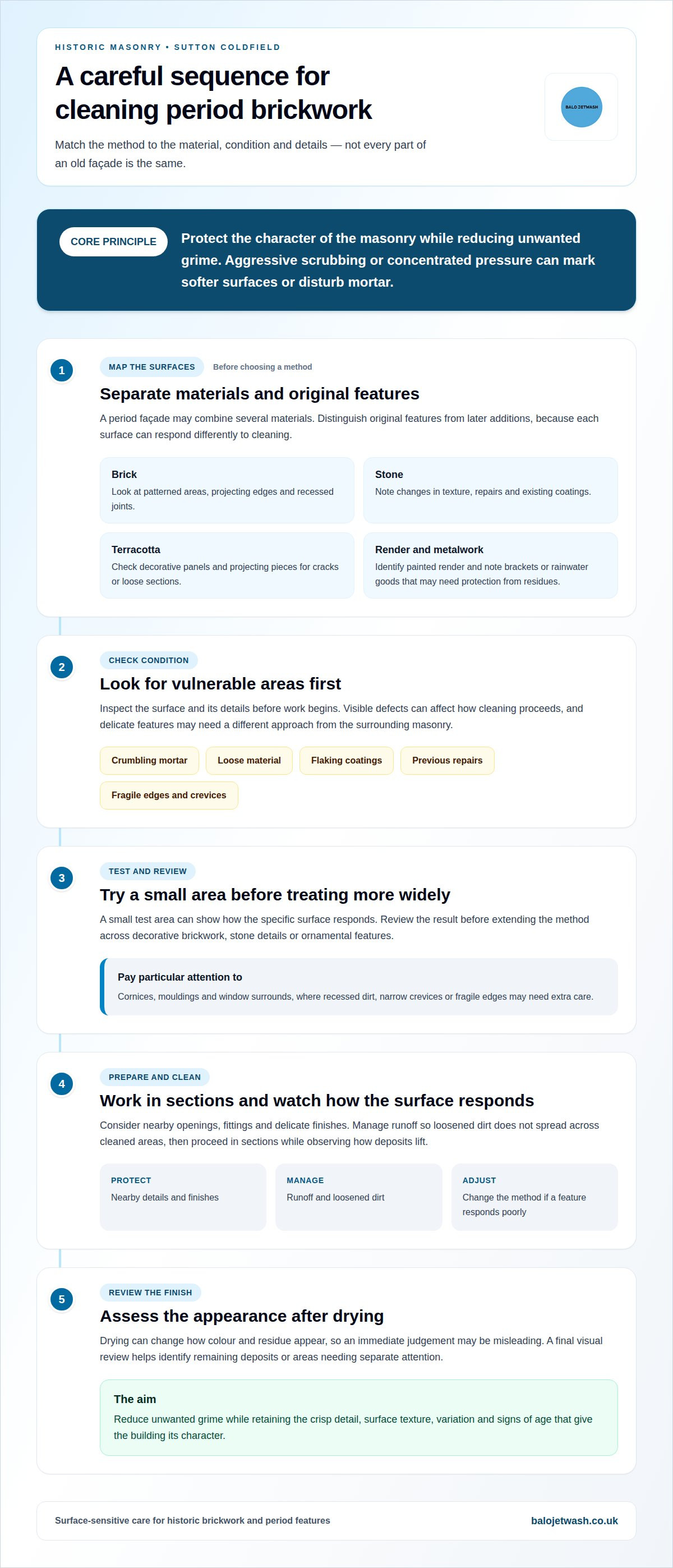
Victorian and Edwardian façades can combine brick, stone, render and decorative details. A single wall may include patterned brickwork, terracotta panels, stone lintels, carved surrounds and cast-iron rainwater goods. Each material responds differently to cleaning, so the surface and its condition should guide the method. Treating every feature alike can cause avoidable wear to delicate details.
A careful assessment starts by identifying the materials and noting visible defects. Crumbling mortar, loose material, flaking coatings and previous repairs can affect how cleaning proceeds. The inspection should also distinguish original features from later additions. For example, a painted render patch beside exposed brick may need a different approach from the surrounding masonry.
Decorative brickwork needs particular attention because its pattern depends on sharp edges, contrasting colours and clean joints. Aggressive scrubbing or concentrated pressure can mark softer surfaces or disturb mortar. A controlled method should remove surface deposits without making aged materials look newly installed. The aim is a cleaner appearance that retains the variation and character of the original work.
Ornamental details can hold dirt in recessed areas. Cornices, mouldings and window surrounds may also have fragile edges or narrow crevices. A professional cleaning plan should account for these shapes before work begins. It can include a small test area, followed by a review of the result before the method is used more widely. This helps show how the specific surface responds.
Brick patterns: inspect projecting edges, recessed joints and any visibly softened areas. Stone details: identify changes in texture, repairs and existing surface coatings. Terracotta features: check decorative panels and projecting pieces for cracks or loose sections. Metalwork: note brackets and rainwater goods that may need protection from cleaning residues.Preparation matters as much as the cleaning itself. Nearby openings, fittings and delicate finishes should be considered, and runoff managed to prevent loosened dirt spreading across cleaned areas. Work can then proceed in sections, with the cleaner observing the surface as deposits lift. If a feature responds poorly, the method can be adjusted instead of repeatedly applying the same treatment.
After cleaning, a final visual review helps identify remaining deposits and areas needing separate attention. Drying can change how colour and residue appear, so judging the finish immediately may be misleading. For a Victorian or Edwardian exterior, success means reducing unwanted grime while preserving the crisp detail, surface texture and signs of age that give the building its character.
Cleaning algae, moss and mildew
Algae, moss and mildew can leave render and masonry looking patchy, especially on shaded elevations. In Sutton Coldfield, a specialist cleaning assessment should identify the growth, the surface beneath it and any vulnerable details before treatment starts. A dark mark is not automatically biological growth, so the cleaner should distinguish deposits from staining or changes in the material itself.
For rendered walls, soft washing uses specialist cleaning solutions with low-pressure water. High-pressure washing is not recommended for render because it can crack, erode or strip the surface. Pressure, treatment and rinsing should suit the render’s condition, not simply aim to remove visible marks quickly. This is particularly relevant where older render has existing cracks, loose patches or a decorative finish.
The work begins with an inspection of the affected elevations. A specialist looks for shaded walls, sheltered corners, damp-looking patches and areas beneath gutters or ledges. These details can help explain why growth has collected in one place but not another. The surface material matters too: render, brick and stone may need different treatments, even on the same building.
Next, the cleaner selects a suitable treatment and applies it in a controlled way. Low-pressure rinsing helps limit stress on render, while the cleaning solution targets organic growth. The approach should also account for nearby window frames, vents, plants and decorative features. If a wall includes both render and historic brick, those surfaces should not automatically receive identical treatment.
After treatment, the professional assesses the result across the full elevation. Some growth may take time to respond to the solution, so immediate visual changes do not tell the whole story. The cleaner should also consider causes of recurring dampness, such as persistent shade or water running from a poorly directed downpipe. Cleaning removes growth, but it does not correct the conditions that encourage it.
Most homes benefit from render cleaning every one to two years. Homes in shaded or damp areas may need annual soft washing to help prevent algae and staining. Mild, dry weather, especially spring and early summer, is considered ideal for render cleaning. These conditions help the professional plan the treatment and drying period, though the surface and weather on the day still guide the work.
A maintenance plan should reflect the building rather than follow a rigid calendar. For example, a wall shaded by trees may show regrowth sooner than a sunny, exposed elevation. The specialist can use inspection findings and previous cleaning observations to set a sensible interval. This focuses attention on affected areas and avoids unnecessary treatment of clean surfaces.
Cleaning historic and listed brickwork
Historic brick, stone and lime mortar need a method suited to their condition. The aim is to remove unwanted deposits without wearing away the masonry or its joints.
Checking listed status and grade
A professional can confirm a property’s listed status by checking its address against the official heritage listing record. The entry identifies the listed building and gives its recorded grade, which should be read alongside the property details. Comparing the address and description helps avoid confusing a neighbouring building or separate structure with the property being assessed.
The listing entry can also help identify significant features, such as a distinctive façade or historic boundary wall. For cleaning listed brickwork in Sutton Coldfield, the professional should relate the record to the surfaces and features included in the proposed work. Any mismatch between the entry and the building’s present appearance deserves attention before choosing a cleaning method.
Safe methods for historic materials
Non-abrasive, masonry-safe methods are appropriate for historic or listed brickwork. The professional assesses the brick, stone and mortar first, then selects a controlled approach suited to those materials. A method suitable for sound brick may not suit softer stone or lime mortar, so the whole elevation should not be treated uniformly.
A small test area can show how a particular surface responds before work extends across a wall. The professional observes whether deposits lift and whether the brick face, stone detail or mortar joints change. If the result suggests the method is too harsh, the approach should be adjusted rather than repeatedly applied.
Mortar deserves close attention. Lime mortar can be softer than the surrounding masonry, and worn or open joints may be vulnerable during cleaning. A professional should note loose material, cracks and missing mortar before work begins. For example, a wall with sound brick but visibly eroded joints needs different care from a recently repaired section.
Historic brick also varies across a façade. Handmade bricks, later replacement units and repaired patches may differ in texture and strength. A specialist assessment should record these differences and identify decorative details, including patterned courses or projecting brickwork. This inspection helps prevent one setting from being used indiscriminately on surfaces that behave differently.
During cleaning, controlled application and observation matter more than speed. The professional works in manageable areas, watches how residue lifts and checks that runoff does not leave deposits elsewhere. Stone dressings, window surrounds and embedded metal fittings also need consideration, since water or loosened dirt can affect adjacent details.
Afterwards, the surface should be reviewed for remaining deposits and any changes that become clearer as it dries. Historic masonry is not expected to look like new brick: age, repairs and natural variation remain part of its appearance. A considered result lifts unwanted dirt while retaining the character of the brick, stone and mortar.
What approvals are needed to clean the exterior of a listed building in Sutton Coldfield?
There isn’t one approval process for every exterior cleaning project. The decision depends on the property and proposed work. Before arranging a date, clarify who can authorise work at the property and what written response is needed for the planned cleaning.
For a privately owned home, the owner can keep approval correspondence with the property records. For a rented or managed building, the person arranging the work should establish who has authority to approve it. A landlord, managing agent or property manager may need to be involved before dates or access arrangements are agreed.
Keep the approval request specific. A useful record can identify:
The property address and the contact responsible for the decision. The elevations and features covered by the proposed work. The method and materials described in the contractor’s proposal. Any conditions or limits included in the written response. The person responsible for communicating changes before work begins.Read the written response against the cleaner’s final proposal, not just the initial enquiry. For example, if the proposal later adds treatment to a stone entrance or painted section, that change may fall outside the original description. Pause scheduling until the relevant decision-maker has addressed the difference.
Keep related documents together: the enquiry, response, final cleaning specification and any later correspondence. This creates a clear record of what was discussed and what the approved work covers. It also helps the cleaning team follow the agreed limits on site, especially where several elevations or decorative features are involved.
Allow time for the approval conversation before booking equipment and access. If a response asks for more detail, provide the requested information through the same contact route and retain the reply. Don’t treat silence or an informal acknowledgement as a clear decision; use the written response that directly addresses the proposed work.
At the site briefing, the person overseeing the job can share the agreed scope with the cleaning team. Marking included and excluded areas on photographs can help prevent work beyond the proposal. If the actual surface differs from the description, the team can stop and seek direction rather than extend the work without agreement.
Once responsibilities, written decisions and the final scope align, the work can be scheduled with fewer uncertainties. This keeps the approval record connected to the practical plan and gives the property owner a clear reference if the scope needs further discussion.
Whether approval is needed depends on the property and proposed cleaning. Before scheduling, obtain a written response from the person authorised to approve the work and make sure it covers the final scope.
Balo Jetwash: commercial exterior cleaning
Balo Jetwash offers commercial exterior cleaning for businesses and property owners maintaining exterior surfaces. For a listed building, settle the cleaning scope and any required approvals before arranging the work.
For commercial premises, Balo Jetwash also cleans driveways and patios and removes graffiti. The right service depends on the surface and work required.
To discuss commercial exterior cleaning for your property, contact Balo Jetwash.
Plan the next step with care
Before arranging work, make the proposed cleaning scope clear: identify the surfaces, describe their condition and settle the approval position. This gives everyone involved a shared understanding of what will be treated and keeps decisions focused on the building’s character.
For broader exterior upkeep, Balo Jetwash offers driveway and patio cleaning, alongside commercial exterior cleaning. These services address specific exterior surfaces, while listed masonry needs a method suited to its materials and approved scope. A considered plan for cleaning a listed building’s exterior in Sutton Coldfield starts with these details, not a one-size-fits-all approach.
If you’re ready to discuss the exterior cleaning work your property needs, contact Balo Jetwash. Take the next step with a clear brief and move towards a well-cared-for exterior.
Frequently Asked Questions
Can you clean brick walls on listed or historic buildings?
Yes, cleaning may be possible, but the proposed work should respect the building’s protected character. Before arranging a clean, establish who is responsible for approving the work and keep the agreed scope in writing. Include the specific wall and any decorative elements in that description. This helps prevent a general instruction to clean brickwork from being mistaken for permission to treat every feature.
Do you treat efflorescence and black stains on brickwork?
Efflorescence and black stains should be identified before choosing a treatment. Their appearance alone may not explain what caused them, so a professional assessment should consider where each mark appears and whether it changes across the wall. For example, deposits concentrated around a joint may need a different assessment from an isolated dark patch. The findings help determine whether cleaning is appropriate and what outcome to expect.
Is render cleaning safe for painted or older surfaces?
Cleaning may be suitable, but the condition of the coating and render needs assessing first. Peeling paint, chalky patches or a brittle surface can affect how the work is planned. A practical discussion should establish whether the cleaning scope includes the painted finish and what appearance is expected afterwards. This avoids treating a coated wall as though its finish were the same as bare render.
What cleaning methods can damage listed buildings or remove historic fabric?
Methods that abrade, scrape or strip a surface can remove original finishes and details, particularly when the material is already fragile. The risk is not limited to the main wall: carved surrounds, decorative courses and old coatings can also be affected. Before work proceeds, identify which features must remain untouched and make those limits clear in the agreed scope. A cleaning plan should not assume every deposit must be removed.
How much does listed building exterior cleaning cost in Sutton Coldfield?
There is no single fixed cost for every listed building exterior clean in Sutton Coldfield. Request a personalised written quotation that states the work included, surfaces covered and any preparation or follow-up tasks. This makes the estimate easier to understand and compare against the same scope. Keep cleaning charges separate from repair or conservation work, which should be described separately in the proposal.
Which specialist heritage building cleaning companies serve Sutton Coldfield?
Look for heritage masonry cleaners and exterior-cleaning firms that work with historic brickwork in Sutton Coldfield. Compare their proposed method, the surfaces covered and their approach to vulnerable details.
Are there local conservation areas or additional restrictions in Sutton Coldfield?
A property’s location within a conservation area may affect what needs consideration alongside its listed status. Establish the property’s designation and describe the exact proposed cleaning work so relevant restrictions can be considered before arranging it.
{"@context":"https://schema.org","@type":"FAQPage","mainEntity":[{"@type":"Question","name":"Can you clean brick walls on listed or historic buildings?","acceptedAnswer":{"@type":"Answer","text":"Yes, cleaning may be possible, but the proposed work should respect the building’s protected character. Before arranging a clean, establish who is responsible for approving the work and keep the agreed scope in writing. Include the specific wall and any decorative elements in that description. This helps prevent a general instruction to clean brickwork from being mistaken for permission to treat every feature."}},{"@type":"Question","name":"Do you treat efflorescence and black stains on brickwork?","acceptedAnswer":{"@type":"Answer","text":"Efflorescence and black stains should be identified before choosing a treatment. Their appearance alone may not explain what caused them, so a professional assessment should consider where each mark appears and whether it changes across the wall. For example, deposits concentrated around a joint may need a different assessment from an isolated dark patch. The findings help determine whether cleaning is appropriate and what outcome to expect."}},{"@type":"Question","name":"Is render cleaning safe for painted or older surfaces?","acceptedAnswer":{"@type":"Answer","text":"Cleaning may be suitable, but the condition of the coating and render needs assessing first. Peeling paint, chalky patches or a brittle surface can affect how the work is planned. A practical discussion should establish whether the cleaning scope includes the painted finish and what appearance is expected afterwards. This avoids treating a coated wall as though its finish were the same as bare render."}},{"@type":"Question","name":"What cleaning methods can damage listed buildings or remove historic fabric?","acceptedAnswer":{"@type":"Answer","text":"Methods that abrade, scrape or strip a surface can remove original finishes and details, particularly when the material is already fragile. The risk is not limited to the main wall: carved surrounds, decorative courses and old coatings can also be affected. Before work proceeds, identify which features must remain untouched and make those limits clear in the agreed scope. A cleaning plan should not assume every deposit must be removed."}},{"@type":"Question","name":"How much does listed building exterior cleaning cost in Sutton Coldfield?","acceptedAnswer":{"@type":"Answer","text":"There is no single fixed cost for every listed building exterior clean in Sutton Coldfield. Request a personalised written quotation that states the work included, surfaces covered and any preparation or follow-up tasks. This makes the estimate easier to understand and compare against the same scope. Keep cleaning charges separate from repair or conservation work, which should be described separately in the proposal."}},{"@type":"Question","name":"Which specialist heritage building cleaning companies serve Sutton Coldfield?","acceptedAnswer":{"@type":"Answer","text":"Look for heritage masonry cleaners and exterior-cleaning firms that work with historic brickwork in Sutton Coldfield. Compare their proposed method, the surfaces covered and their approach to vulnerable details."}},{"@type":"Question","name":"Are there local conservation areas or additional restrictions in Sutton Coldfield?","acceptedAnswer":{"@type":"Answer","text":"A property’s location within a conservation area may affect what needs consideration alongside its listed status. Establish the property’s designation and describe the exact proposed cleaning work so relevant restrictions can be considered before arranging it."}}]}Information
Water available? - You don't need to be present for us to carry out the service. If required, we can supply water ourselves.
Insurance
Balo Jetwash is fully insured, We have £5,000,000 of public liability insurance. Balo Jetwash operatives are professional, reliable and endeavour to carry out the work to the highest standard with minimal fuss and upheaval.