
How to clean a new resin driveway in Four Oaks without risking damage

A jet wash can refresh resin, but concentrated pressure can put its finish at risk. If you’re wondering how to clean a new resin driveway in Sutton Coldfield, the safer approach is a controlled professional clean, using moderate pressure and an even spray suited to the surface’s condition. A new driveway also needs time to cure: keep foot traffic off for 24-48 hours after installation and vehicles off for 48-72 hours.
It’s sensible to be cautious. Resin can look tough, yet directing force too closely or repeatedly at one spot may leave marks or disturb loose areas. A careful clean tackles dirt, moss and algae without treating every driveway as though it were the same.
Here, you’ll learn what a professional clean involves, how resin compares with other driveway and patio surfaces, and what to consider when dealing with stains or pressure washing. The surface material, its condition and the cleaning method all matter when you want a tidy, moss-free finish without risking avoidable damage.
Key Takeaways
A resin driveway needs a surface-specific clean, with suitable treatments and tools chosen to limit the risk of damage. Condition and drainage checks help shape the cleaning method, especially when the surface is new or has loose areas. Rust marks and tyre scuffs call for careful assessment and targeted treatment, not aggressive scrubbing or unsuitable chemicals. Controlled jet washing and even coverage help reduce the risk of patchy results or damage to resin-bound surfacing. Professional cleaning can tackle mud, leaves, moss and algae, helping keep the driveway looking tidy and moss-free.What Should a Professional Clean Include to Keep Your Resin Driveway Clean?
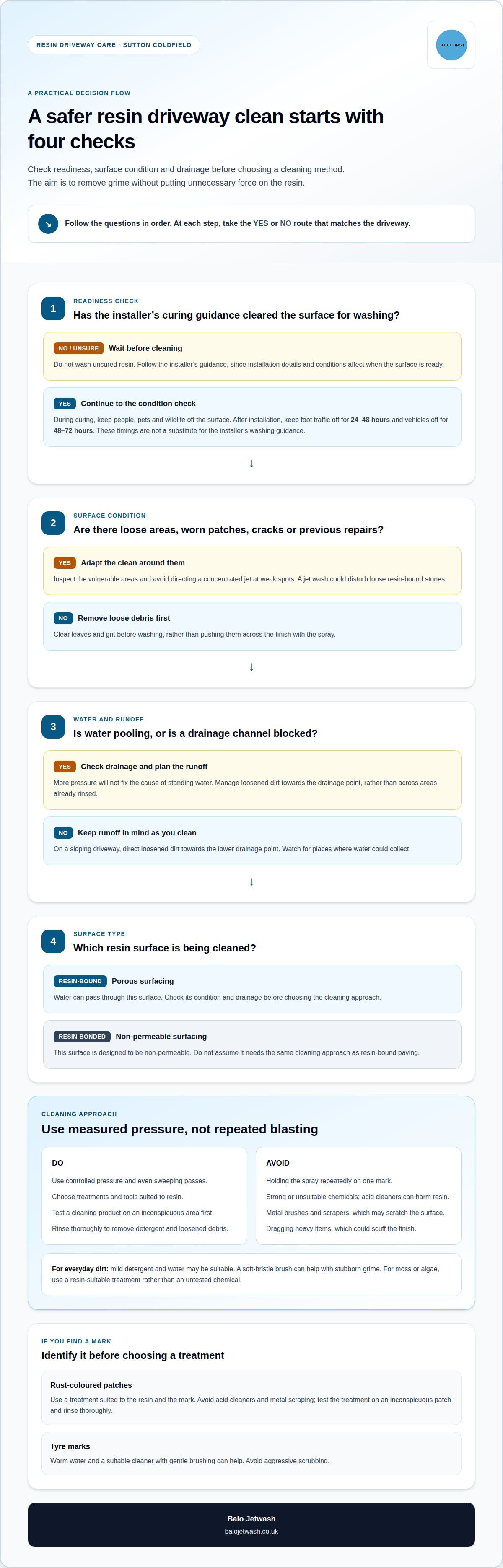
A careful clean starts with the surface, not the machine. The cleaner checks for loose areas, worn patches and visible debris before choosing a method. A jet wash aimed at a weak spot could disturb the resin-bound stones, so leaves and grit are removed first rather than pushed across the finish during washing.
Vehicle habits can also affect the surface. Turning a car’s wheels whilst stationary can dislodge stones from resin-bound paving, especially where the surface is already vulnerable. A professional cleaner can remove built-up dirt around turning areas without concentrating the spray on one patch. Move heavy items such as wheelie bins and planters carefully instead of dragging them, which could scratch or scuff the finish.
New resin needs particular care while it cures. Keep people, pets and wildlife off the surface during this period, as footprints cannot be removed. Avoid walking on it for 24-48 hours after installation and driving on it for 48-72 hours. Cleaning before the surface is ready could mark or disturb the finish, so the installation timing matters.
Cleaning products and tools should suit resin, not just the stain. A professional avoids strong or unsuitable chemicals that could affect the binder and tests a product on an inconspicuous area before wider use. For everyday dirt, mild detergent and water may be suitable. A soft-bristle brush can tackle stubborn grime, while metal brushes and scrapers are avoided because they may scratch the surface.
Pressure needs the same measured approach. A cleaner uses controlled pressure and even sweeping passes rather than repeatedly blasting one mark. This helps reduce patchy results and limits stress on the resin. For moss or algae, a resin-suitable treatment is preferable to an untested chemical. The cleaner also rinses thoroughly to remove detergent and loosened debris without leaving residue.
These checks help prevent avoidable wear, but they can’t reverse damage already caused by dragging heavy objects or turning stationary vehicle wheels. A professional clean focuses on removing grime while adapting the technique to the driveway’s condition, giving the surface a thorough clean without unnecessary abrasion or force.
Cleaning resin driveways and other surface types: what to expect from a professional
A professional begins by identifying the paving material, since resin-bound and resin-bonded surfaces behave differently. Resin-bound surfacing is porous, allowing water to pass through; resin-bonded surfacing is designed to be non-permeable. Block paving, concrete and patio slabs also differ in texture, joints and condition. These features help determine the cleaning method and how runoff should be managed.
The cleaner inspects the surface for loose sections, worn patches, cracks and previous repairs. They also look for standing water, blocked drainage channels and signs that runoff cannot escape freely. These checks help distinguish dirt from a drainage or wear issue. If water pools in one area, applying more pressure won’t fix the cause.
Cleaning should suit the surface. Resin may need controlled washing and a suitable treatment, while block paving can require attention to its joints. Where appropriate, kiln-dried sand is brushed into block-paving joints once the surface is sufficiently dry. Patio slabs need an approach suited to their material and finish. Don’t assume one pressure setting suits every surface.
A newly laid resin driveway needs protection from cleaning water while it cures. Washing should wait until the surface is ready, rather than allowing rinse water or cleaning treatments to reach uncured resin. This helps avoid disturbing the finish before it has set. The installer’s curing guidance determines when cleaning can begin, since conditions and installation details affect readiness.
Runoff also shapes the cleaning plan. On a sloping driveway, the cleaner directs loosened dirt towards the lower drainage point instead of across areas already rinsed. On a level patio, they pay close attention to channels and places where water might collect. If a resin-bound surface looks uneven in colour, they assess staining, wear and drainage before choosing a treatment.
These checks make the clean specific to the property. A professional can distinguish a porous surface from a non-permeable one, identify drainage concerns and adapt the work around repairs or worn patches. That preparation helps avoid residue and uneven results, while protecting a new surface from premature washing. The finish still depends on the material’s condition and the cause of any discolouration.
Professional treatment for rust stains and tyre marks
A professional first checks whether a mark is rust, tyre transfer or general dirt. Rust-coloured patches near metal furniture, gates or fixings need different treatment from dark tyre scuffs in turning areas. Identifying the mark helps prevent an unsuitable cleaner being applied across resin paving. The cleaner also considers the resin’s condition and tests a suitable treatment on an inconspicuous patch.
Rust stains can be stubborn, so a professional uses a treatment suited to the paving and the mark. Acid cleaners are avoided on resin because they can harm the surface. Instead of scraping at the stain with metal tools, the cleaner applies the chosen treatment carefully, follows its directions and rinses the area thoroughly. For stubborn marks, the treatment can be left for 15 minutes before rinsing.
Tyre marks often appear where vehicles turn or stop. A professional can treat the mark with warm water and a suitable cleaner, using gentle brushing rather than aggressive scrubbing. Hot water with detergent or steam cleaning may also be used on resin-bound surfacing. The approach depends on the mark and the resin’s condition, not simply how dark the scuff looks.
Treating only the visible mark can leave a noticeable clean patch. The cleaner assesses the surrounding paving and blends the treatment into the nearby area with even motions. A rinse removes loosened residue. If a stain remains, repeating the process with a compatible treatment is safer than sharply increasing pressure or reaching for a stronger, untested chemical.
Professional driveway pressure washing also takes account of the surface finish. Resin-bound paving has stones held within a resin mix, so forceful scraping or concentrated jetting can disturb vulnerable areas. A cleaner adjusts the method around edges, joints and any worn patches. This careful assessment helps remove surface marks while reducing the risk of creating fresh damage.
Some stains may have penetrated the resin or altered its colour, so cleaning might not erase every trace. The professional aims to treat the mark suitably, rinse away residue and leave the surrounding surface evenly cleaned. This measured approach is especially useful when a rust patch or tyre scuff stands out against a relatively new driveway.
Professional jet washing for resin-bound surfacing
Jet washing resin-bound surfacing takes more than choosing a pressure setting. A professional first checks the resin’s condition for loose stones, worn patches and repairs. They then use controlled pressure and a flat fan nozzle rather than directing a concentrated turbo jet at the finish. The aim is to lift grime evenly without forcing water against one small area. For homeowners in Sutton Coldfield considering how to clean a new resin driveway, these checks are a sensible starting point.
Distance and angle help control the spray. A lance held at 90 degrees and around 300 mm from the surface keeps the water directed consistently. The cleaner adjusts the pressure to suit the resin and its condition. If stones appear loose or the binder looks worn, they avoid aggressive washing and treat that area more cautiously.
Even coverage matters. The professional moves the lance in steady, overlapping passes across the visible driveway instead of spot-blasting one mark. This reduces the risk of tram lines or patchy colour. Edges need particular care, since a spray directed too closely at the boundary can disturb weaker sections or push debris into adjacent beds.
On a sloping driveway, washing begins at the highest point and progresses towards the lowest. This carries loosened dirt downhill instead of across areas already rinsed clean. On a large surface, the cleaner works in manageable sections and rinses before grime dries back onto the resin. A thorough final rinse removes detergent and suspended debris.
Water should leave through the surface or its drainage routes, rather than collecting against walls or at the driveway entrance. Resin-bound paving is porous, but the cleaner still observes how runoff moves during washing. Pooling, blocked drainage or a low spot can affect the process and may explain why a section stays wet or looks different afterwards.
The finish depends on more than jet washing. Existing wear, embedded marks, earlier repairs and the resin’s condition all affect the final appearance. Controlled cleaning can remove surface grime and algae, but it cannot replace missing stones or reverse discolouration within the resin. For anyone in Sutton Coldfield wondering how to clean a new resin driveway, match the pressure, nozzle, distance and washing pattern to the surface, then rinse evenly.
How professionals remove mud, leaves, algae and stains from a resin driveway
Leaves, berries and loose mud should be cleared before washing so they don’t spread across the resin. A professional uses a stiff, non-metal brush to gather debris without scraping the surface. This also reveals whether a mark is on top or has affected the resin itself. For homeowners considering how to clean a new resin driveway in Sutton Coldfield, that distinction helps guide treatment.
For dried mud, the cleaner first softens the deposit with water, then lifts it without digging into the surface. Mild detergent and water can help with remaining dirt, while a soft-bristle brush works on stubborn patches. Aggressive scrubbing is avoided because it could leave a visibly different area. The cleaner rinses loosened residue away rather than letting it dry back onto the driveway.
Moss and algae need a treatment suitable for resin paving. The professional applies it evenly to the affected growth, follows the product directions and rinses the area thoroughly. A shaded strip beside a wall may need attention beyond the obvious green patch, as damp conditions can encourage nearby growth. The cleaner checks the surrounding surface to avoid leaving a sharply defined clean spot.
Leaves and berries can leave organic marks if they remain on the driveway. A professional removes them and treats visible staining with a compatible cleaner, rather than scraping with metal tools or applying an untested chemical. The treatment is worked across the affected area and, where needed, blended into nearby paving. This helps the cleaned section sit more naturally against the rest of the surface.
On a large driveway, the cleaner works in manageable sections so loosened dirt can be rinsed away before it dries. Any remaining mark is assessed after washing; a stain that has penetrated the resin may not respond like surface grime. Cleaning can remove dirt and growth, but it can’t restore resin that has changed colour internally.
Regular sweeping helps prevent debris from accumulating. A weekly sweep removes leaves and dirt, while a monthly mild wash can clear dust and traffic film from frequently used areas. The right maintenance routine depends on shade, dampness and nearby vegetation. These practical steps help keep the driveway tidy and reduce the build-up that makes a later professional clean more involved.
Balo Jetwash driveway cleaning
Balo Jetwash provides professional driveway cleaning for homeowners who want built-up dirt, moss or algae removed without treating every surface alike. Resin-bound paving needs a different approach from block paving, concrete or patio slabs, so the material and its condition guide the cleaning method. For homeowners in Sutton Coldfield, professional driveway pressure washing offers a practical next step when routine maintenance hasn’t lifted the grime.
The cleaning process uses van-mounted, industrial-grade pressure washing equipment and suitable professional treatments. Pressure, application and coverage are adapted to the surface, rather than relying on one setting for every driveway. On resin, the cleaner can check for visible wear and loose areas before washing, then use a controlled method to address dirt and growth. The aim is a cleaner, more presentable finish, not a promise that every mark or colour change will disappear.
Block paving calls for different finishing work. Where applicable, the quoted service can include pressure washing, an appropriate detergent treatment and kiln-dried sand brushed into the joints once the surface is sufficiently dry. Re-sanding is specific to block paving. Resin and patio surfaces have different requirements, so sand isn’t a universal finishing step.
Patios can also be cleaned using a method suited to their material and condition. This is useful when paving has accumulated dirt, moss or algae, or when the patio needs attention alongside the driveway. The work focuses on the outdoor surfaces, with cleaning treatments selected to suit the job.
A free, no-obligation quotation lets homeowners describe the surface, its condition and the areas needing attention before deciding on the work. Helpful details include whether the driveway is resin-bound or block paved, where growth or staining appears, and whether patio cleaning is also needed. These details help shape a suitable quotation without assuming every surface needs the same treatment.
For a driveway that needs more than sweeping, professional cleaning can tackle grime and growth with a surface-led method. Contact Balo Jetwash to discuss your driveway or patio and request a free, no-obligation quotation, with no pressure to proceed.
Frequently Asked Questions
What does a professional driveway or patio clean actually involve?
A professional clean is tailored to the surface and areas needing attention. The cleaner assesses access, nearby drainage and visible marks, then plans where to start and how to manage runoff. Before finishing, they review the cleaned area for missed patches or lingering residue. For block paving, joint re-sanding may form part of the quoted work once the surface is sufficiently dry; other surfaces need different finishing steps.
How long will the job take?
Many domestic driveway and patio cleans take a few hours, while some jobs can take up to a day. The area, access, amount of growth and surface material all affect the pace. Block paving may need to dry before kiln-dried sand can be brushed into its joints. That follow-on work depends on the surface being ready, so cleaning time and the time before finishing aren’t always the same.
How long will the results last, and how often should I have it done?
A professional clean may need repeating every year or two, depending on shade, dampness and how much organic debris collects. A sheltered section beneath trees may develop growth sooner than an exposed area. Clearing leaves between cleans helps keep the driveway tidy. Cleaning removes existing grime and growth, but new debris and weather conditions can affect how quickly the surface needs attention again.
What is the best professional approach to keeping your resin driveway clean?
The most effective approach pairs a surface assessment with even cleaning across the visible driveway. A professional considers existing wear, repairs, drainage and growth before selecting pressure and treatment. They monitor how the surface responds during washing and adjust the method if stones appear loose. Between professional cleans, removing leaves and debris promptly helps limit organic marks and gives moss fewer damp patches to establish.
Will the cleaning harm my plants, lawn or borders?
Cleaning can involve water and treatments, so nearby planting and runoff need consideration. A professional can identify vulnerable borders, direct the spray towards the paved area and use treatments suited to the surface. Product choice and application matter, particularly where runoff could reach a lawn or planting bed. The cleaning method should account for the garden layout rather than treating the driveway as an isolated surface.
How long should a new resin driveway cure before cleaning?
Wait until the new resin has cured before arranging a clean or allowing water onto the surface. During curing, keep people, pets and wildlife off it because footprints can remain. Avoid walking on the driveway for 24-48 hours after installation and driving on it for 48-72 hours. Those are traffic restrictions; the installer’s curing guidance determines when the surface is ready for cleaning.
How can a professional clean a new resin-bound driveway safely?
A professional first considers the resin’s age, condition and any signs of loose stones or repairs. They use controlled washing, work evenly and observe how the surface responds instead of directing force repeatedly at one mark. Edges and drainage points also need attention, since they can be more vulnerable or collect debris. If the surface shows weakness, the cleaning method should be adjusted to limit unnecessary stress.
Which cleaning products do professionals use on resin driveways?
Product choice depends on the type of dirt and the resin’s condition. Mild detergent can suit general grime, while moss or algae calls for a treatment designed for resin paving. Professionals avoid using an untested strong chemical or applying a product across the whole driveway without assessing compatibility. A discreet test area helps reveal how the surface responds before treatment is extended.
{"@context":"https://schema.org","@type":"FAQPage","mainEntity":[{"@type":"Question","name":"What does a professional driveway or patio clean actually involve?","acceptedAnswer":{"@type":"Answer","text":"A professional clean is tailored to the surface and areas needing attention. The cleaner assesses access, nearby drainage and visible marks, then plans where to start and how to manage runoff. Before finishing, they review the cleaned area for missed patches or lingering residue. For block paving, joint re-sanding may form part of the quoted work once the surface is sufficiently dry; other surfaces need different finishing steps."}},{"@type":"Question","name":"How long will the job take?","acceptedAnswer":{"@type":"Answer","text":"Many domestic driveway and patio cleans take a few hours, while some jobs can take up to a day. The area, access, amount of growth and surface material all affect the pace. Block paving may need to dry before kiln-dried sand can be brushed into its joints. That follow-on work depends on the surface being ready, so cleaning time and the time before finishing aren’t always the same."}},{"@type":"Question","name":"How long will the results last, and how often should I have it done?","acceptedAnswer":{"@type":"Answer","text":"A professional clean may need repeating every year or two, depending on shade, dampness and how much organic debris collects. A sheltered section beneath trees may develop growth sooner than an exposed area. Clearing leaves between cleans helps keep the driveway tidy. Cleaning removes existing grime and growth, but new debris and weather conditions can affect how quickly the surface needs attention again."}},{"@type":"Question","name":"What is the best professional approach to keeping your resin driveway clean?","acceptedAnswer":{"@type":"Answer","text":"The most effective approach pairs a surface assessment with even cleaning across the visible driveway. A professional considers existing wear, repairs, drainage and growth before selecting pressure and treatment. They monitor how the surface responds during washing and adjust the method if stones appear loose. Between professional cleans, removing leaves and debris promptly helps limit organic marks and gives moss fewer damp patches to establish."}},{"@type":"Question","name":"Will the cleaning harm my plants, lawn or borders?","acceptedAnswer":{"@type":"Answer","text":"Cleaning can involve water and treatments, so nearby planting and runoff need consideration. A professional can identify vulnerable borders, direct the spray towards the paved area and use treatments suited to the surface. Product choice and application matter, particularly where runoff could reach a lawn or planting bed. The cleaning method should account for the garden layout rather than treating the driveway as an isolated surface."}},{"@type":"Question","name":"How long should a new resin driveway cure before cleaning?","acceptedAnswer":{"@type":"Answer","text":"Wait until the new resin has cured before arranging a clean or allowing water onto the surface. During curing, keep people, pets and wildlife off it because footprints can remain. Avoid walking on the driveway for 24–48 hours after installation and driving on it for 48–72 hours. Those are traffic restrictions; the installer’s curing guidance determines when the surface is ready for cleaning."}},{"@type":"Question","name":"How can a professional clean a new resin-bound driveway safely?","acceptedAnswer":{"@type":"Answer","text":"A professional first considers the resin’s age, condition and any signs of loose stones or repairs. They use controlled washing, work evenly and observe how the surface responds instead of directing force repeatedly at one mark. Edges and drainage points also need attention, since they can be more vulnerable or collect debris. If the surface shows weakness, the cleaning method should be adjusted to limit unnecessary stress."}},{"@type":"Question","name":"Which cleaning products do professionals use on resin driveways?","acceptedAnswer":{"@type":"Answer","text":"Product choice depends on the type of dirt and the resin’s condition. Mild detergent can suit general grime, while moss or algae calls for a treatment designed for resin paving. Professionals avoid using an untested strong chemical or applying a product across the whole driveway without assessing compatibility. A discreet test area helps reveal how the surface responds before treatment is extended."}}]}Information
Water available? - You don't need to be present for us to carry out the service. If required, we can supply water ourselves.
Insurance
Balo Jetwash is fully insured, We have £5,000,000 of public liability insurance. Balo Jetwash operatives are professional, reliable and endeavour to carry out the work to the highest standard with minimal fuss and upheaval.