
How to Clean a New Driveway Turning Green in Wylde Green

A new driveway does not simply turn green on its own. If you’re wondering why your new driveway is turning green in Sutton Coldfield, the usual cause is algae, moss or lichen growing where moisture lingers, especially in shaded spots. Algae can appear within weeks during wet weather. When green growth makes the driveway slippery in the rain, it’s more than an appearance issue.
It’s frustrating to see green patches on a driveway that still looks new, but growth doesn’t necessarily mean the paving is damaged. Damp conditions, limited sunlight, standing water and leaf debris can all help it take hold. The right cleaning method depends on the driveway material: too much pressure or an unsuitable treatment can mark some surfaces or disturb block-paving joints.
This guide explains how to identify likely causes, decide whether to clean the driveway yourself or seek professional help, and remove green growth safely. You’ll also learn how regular maintenance and managing lingering moisture can slow regrowth while helping protect the surface.
Key Takeaways
Green growth is usually algae, moss or lichen taking hold where a driveway stays damp; it doesn’t automatically mean the new surface has failed. Notice where shade, standing water and trapped leaves keep the surface wet to identify conditions that may encourage regrowth. Choose a cleaning method suited to the driveway material, as excessive pressure or unsuitable treatments can damage some surfaces. Clear leaves and other debris regularly, and address poor drainage to help reduce persistent damp patches. For widespread growth or a surface that needs careful treatment, professional driveway cleaning can help tackle the build-up appropriately.Can you clean a green driveway yourself?
Often, yes, if the growth is light and you choose a method suited to the driveway material. First identify what is growing, then avoid treatments or pressure that could damage the surface.
Identify the green growth
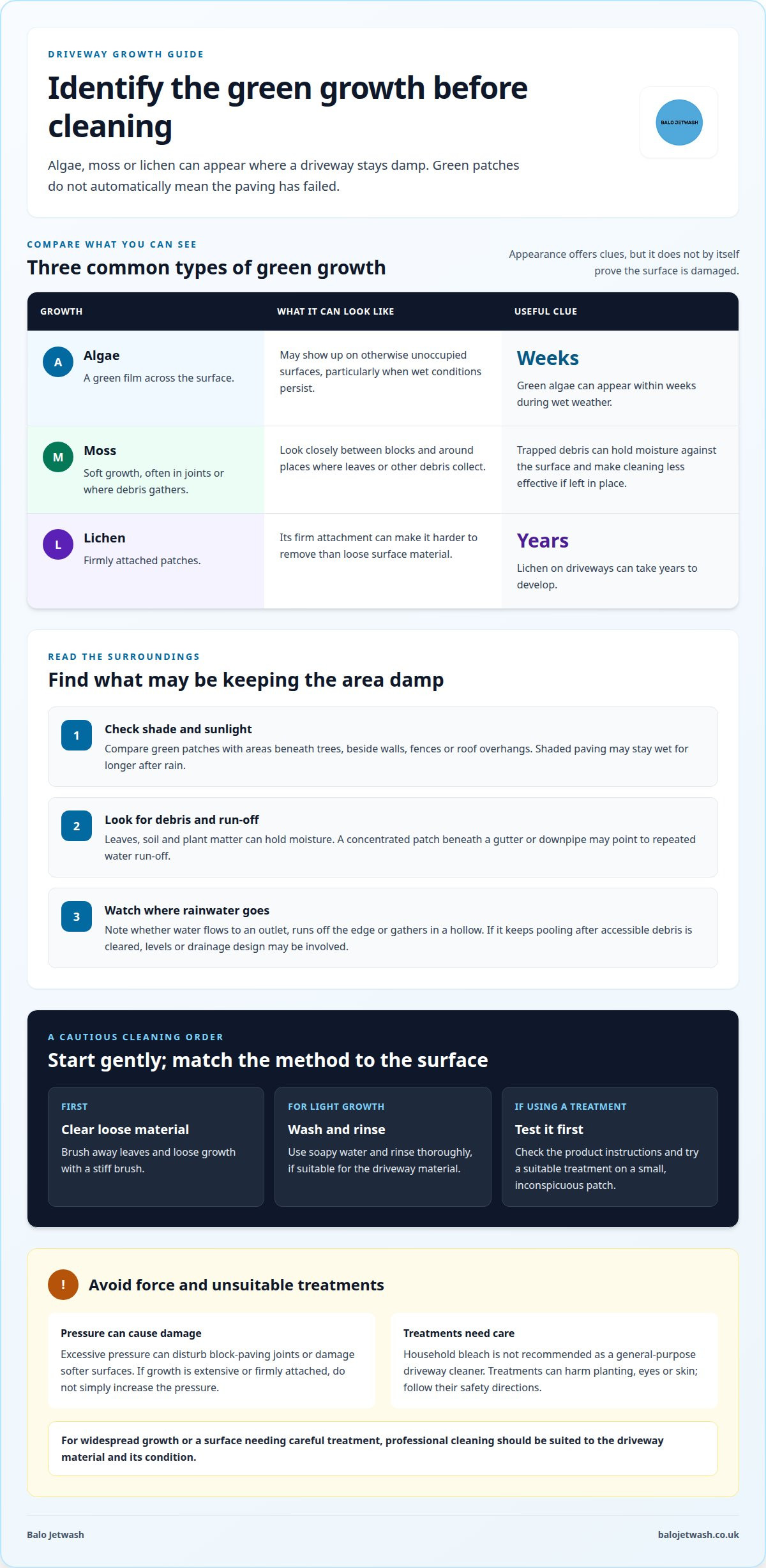
Look closely at the affected patches before choosing a cleaning method. Algae can form a green film, while moss may appear as soft growth, especially in joints or where debris gathers. Lichen can form firmly attached patches. These organisms can affect driveways and patios, but their appearance alone doesn’t prove the paving has failed.
Green algae can appear within weeks during wet weather, while lichen on driveways can take years to develop. The UK Government notes that green spots on otherwise unoccupied surfaces can be algae, which photosynthesise using rainwater. Check whether the growth is a surface film, a thicker clump or a firmly attached patch. That distinction helps you judge whether gentle brushing is practical.
Check for damp, shaded conditions
Inspect where the growth is strongest, such as beneath a tree, beside a wall or near a persistently damp area. Shade reduces direct sunlight and can slow evaporation after rain, leaving paving wet for longer. These conditions let algae thrive on hard surfaces, while moss and lichen can establish where moisture and debris remain.
Look for leaves, soil and plant matter lodged along edges or between blocks. They can hold moisture against the surface and make cleaning less effective if left in place. Clear loose debris first with a stiff brush. If patches return in the same shaded or damp spots, the surroundings may be sustaining growth even after the visible coating has been removed.
Choose a treatment for the growth
Start with the least aggressive suitable cleaning method. For light growth, brush away loose material, wash the area with soapy water and rinse thoroughly. Avoid forcefully scraping lichen or using a treatment just because it worked on another surface. Check the driveway material and product instructions before applying a specialist algae treatment.
Test a suitable treatment on a small, inconspicuous patch first. Household bleach isn’t recommended as a general-purpose driveway cleaner: it can harm nearby planting and produce uneven results. Chemical algae treatments can also have a pungent smell and harm eyes or skin, so follow the product’s safety directions. Keep pressure washing controlled and follow the equipment guidance. Excessive pressure can disturb block-paving joints or damage softer surfaces. If growth is extensive or firmly attached, don’t increase the pressure; consider professional cleaning suited to the surface.
Shade, moisture, drainage and porous surfaces
Trace where rainwater flows across the driveway and note which areas stay wet. The water’s route can reveal more than the green patches alone.
Could poor drainage or installation cause green growth on a new driveway? Yes. Persistent pooling can encourage recurring growth, and the driveway’s levels or drainage layout may contribute.
Assess shade and sunlight
Map the affected areas against fixed features such as walls, fences and roof overhangs. Look for a clear boundary where paving changes from exposed to covered, then compare the green marks on either side. This can show whether the pattern follows the site layout rather than the paving material.
Check whether nearby gutters or downpipes discharge beside the driveway. A concentrated strip of growth beneath an outlet may point to repeated water run-off, rather than a general issue across the surface. Note the outlet’s position and the affected patch before deciding what to address.
Don’t cut branches or alter structures based on a single observation. Record where sunlight reaches the paving at different times of day, then compare that with the location of the growth.
Check moisture and drainage
After rain, watch the water rather than just inspecting the green areas. Note whether it flows towards an outlet, runs off the edge or gathers in a hollow. Check the same locations after the rain stops and compare how quickly visible surface water disappears.
Look along channel drains, gully edges and the driveway boundary for leaves, soil or other blockages. Clear loose debris from accessible surfaces, then observe the next rainfall. If water still gathers in the same spot, the issue may relate to levels or drainage design, not simply debris.
Porous paving can absorb water, while other finishes direct it across the surface. Observe how the material responds instead of assuming all paving drains alike. Don’t drill, lift blocks or change a drain as a test: these actions may disturb the surface without identifying the cause.
Reduce shade and standing water
Once you’ve identified the pattern, choose a low-impact response. Remove loose leaves from drainage channels, clear debris from the driveway edge and keep downpipe outlets unobstructed. These steps address visible obstructions without changing the paving or its falls.
If a tree or shrub casts a distinct shadow over the affected section, consider whether careful pruning is appropriate. Don’t remove established planting before checking other likely water sources, such as a downpipe or a blocked channel.
If pooling persists after you clear accessible debris, record its location and discuss the surface levels with the installer. Don’t add a coating or change the slope before understanding how water is meant to leave the driveway. Identifying the water’s route helps address the cause rather than treating only the visible mark.
Preventing regrowth through drainage, maintenance and sealing
Plan upkeep around the driveway’s material and condition. A simple routine helps you spot changes early and choose suitable care.
Set a regular inspection routine. Walk the full driveway after cleaning and check the surface, edges and joints. Note changes in colour, loose blocks, worn pointing or areas that look different from the surrounding paving. A yearly clean is recommended as easier than waiting for major restoration, but the appropriate maintenance depends on the surface and its condition.Keep a brief record of cleaning dates and treatments used. For example, note whether you applied detergent to block paving or used sealant on concrete. This history helps prevent unsuitable products being applied later and makes changes between cleans easier to spot.
Keep the surface and joints in good order. After cleaning block paving, check whether the joints remain filled and stable. If joint re-sanding is appropriate, apply kiln-dried sand only once the surface is sufficiently dry. This applies to block paving, not every driveway material.Use cleaning methods suited to the paving. Excessive pressure can disturb block-paving joints, roughen tarmac or damage softer materials. For routine care, don’t treat every surface identically: a method suitable for one finish may be unsuitable for another.
Consider sealing only when the surface is ready. A suitable sealant can provide a protective coating after cleaning, but the material, condition and preparation all matter. Apply it to a clean, sufficiently dry surface and follow the product instructions. Sealing isn’t a substitute for repairing damaged paving or keeping drainage features in working order.Applying sealant after cleaning can extend the time between driveway cleans from 1-2 years to 3-5 years. This is a possible interval, not a fixed schedule for every driveway. Exposure, surface type and how the area is used can affect when further cleaning is needed.
Review drainage as part of planned upkeep. During routine inspections, look over visible channels and outlets and note any changes in how water leaves the driveway. Record recurring issues and where they appear. This gives you a clearer maintenance history than making changes based on a single inspection.Don’t alter paving levels or apply a new coating to mask a persistent problem. First identify whether the surface needs cleaning, attention to the joints or a separate drainage assessment. A measured maintenance plan helps protect the driveway’s finish and avoid unnecessary work.
Why patios and driveways develop green growth
Green growth reflects conditions on the paving, not necessarily a fault in the material. Use these checks to understand why it appears and what it means.
Compare the affected paving with a cleaner area. Green growth often appears in patches rather than spreading evenly across a driveway or patio. Compare a sheltered corner with an open section, or block-paving joints with the centre of a concrete slab. These differences can reveal where moisture, shade or trapped material creates better conditions for growth.Patios and driveways are exposed to rain, airborne spores and everyday debris. Their surfaces can stay damp after rainfall, particularly where they receive less sunlight. Growth may appear first beside a wall, beneath overhanging branches or between blocks. The location offers useful clues: a green patch alone doesn’t mean the paving has failed.
Look at the surface texture and joints. Block paving has joints where fine soil and plant debris can collect. This material can retain moisture and give algae or moss a sheltered place to establish. Smooth concrete has fewer joints, but can still develop a green film where water and shade persist.Patio slabs have joints and edges that may collect leaves or dirt. Compare those spots with the exposed centre of a slab. If growth follows the joints, trapped debris may contribute; if it covers a damp, shaded slab, the surface conditions may matter more than the paving pattern.
Separate the appearance issue from the practical risk. Green algae can make concrete slippery, especially when wet, so take care on a green walking route. Algae can create a hazard without harming concrete’s physical properties. This explains why the surface may look neglected or feel unsafe even when the underlying concrete remains intact.Check the route people actually use, including the path from a door to a gate. Growth on a rarely used edge may mainly affect appearance; a slick patch across a regular walkway needs prompt attention. Don’t assume every green mark presents the same risk. Wetness, location and how the area is used all matter.
Use the pattern to guide your next step. Growth returning along one border suggests a local condition needs attention, while scattered patches may reflect several surface conditions. Note whether the colour follows joints, shaded edges or areas where water lingers. This simple comparison helps distinguish a recurring cause from a one-off build-up.Cleaning removes visible growth, but the paving’s setting affects what happens afterwards. A surface exposed to rain and spores can turn green again if conditions continue to favour growth. Assess both the mark and its surroundings: identify the material, the walking risk and the pattern before choosing further cleaning.
Why is a new driveway turning green?
Green growth on newly laid paving is a reason to inspect the surface, not proof of a faulty installation. Before cleaning, record what you can see and when it first appeared.
Record when you first noticed the change. Write down whether the green appearance showed soon after installation or developed later. If you’re asking why a new driveway is turning green in Sutton Coldfield, a simple timeline can help distinguish an early surface concern from changes that appeared during use.Take clear photographs before brushing or washing the area. Use the same viewpoint and lighting for later pictures so you can compare the affected patch fairly. Keep installation paperwork and product details together, as the paving material can influence which cleaning methods are suitable.
Describe exactly what has changed. Note whether the colour appears across the whole drive or in separate patches, and whether it is on the surface or concentrated around particular details. Avoid scraping or applying chemicals while documenting it: these actions can alter the appearance and make later comparisons harder.Check the area in daylight and after it has dried. This gives you a clearer record than judging the paving immediately after rain or washing. Include the date and conditions in your notes, without assuming colour alone identifies the cause.
Review the cleaning and maintenance so far. Record any washing, brushing or treatment already used, including where you applied it. This prevents you from repeating a method that may have affected the finish and helps you choose a sensible next step. If you haven’t cleaned the surface yet, document its original appearance first.For block paving, note whether changes are limited to the blocks or also appear around the joints. Avoid disturbing the joints while checking. For other paving types, record any visible change in finish or colour after previous cleaning.
Use your notes to decide what needs attention. If the concern is limited to visible growth, choose a cleaning approach suited to the paving material. If you also notice changes to the surface, such as loose or uneven units, include those details when discussing the issue with the installer.Keep the photographs and timeline together, then compare them after cleaning. This gives you a practical record of what changed and whether the same areas are affected again, helping guide future care without assuming the driveway has failed.
Balo Jetwash: driveway Cleaning
Balo Jetwash cleans driveways affected by green growth that’s difficult to remove safely yourself. The method depends on the driveway material, its condition and the risk of disturbing joints or damaging the surface. Professional pressure washing and suitable cleaning treatments can tackle algae and moss build-up without treating every driveway the same way.
For block paving, cleaning can include pressure washing, a suitable detergent treatment and kiln-dried joint re-sanding once the surface is sufficiently dry. Re-sanding applies to block paving, not every driveway. If growth keeps returning or you’re unsure how to clean a new surface, professional cleaning can address the visible build-up with the material in mind.
For a free, no-obligation quotation, contact Balo Jetwash about driveway cleaning.
Take the next step towards a cleaner driveway
If you’re aiming for a moss free driveway and still asking why your new driveway is turning green in Sutton Coldfield, use the change to decide what needs attention next. A simple note of where growth returns can help distinguish a surface-cleaning job from an ongoing drainage or shade concern. That makes it easier to plan suitable maintenance for your paving, rather than treating every green patch alike.
If the build-up is stubborn, widespread or awkward to tackle safely, Balo Jetwash offers driveway cleaning across Wolverhampton and Sutton Coldfield. The business also cleans patios.
Contact Balo Jetwash about driveway cleaning to discuss the surface and request a free, no-obligation quotation. A clear next step can help you move from worrying about the green patches to making a practical plan for your driveway.
Frequently Asked Questions
Is a green driveway a problem or just an appearance issue?
It can be both: green growth affects appearance and may become slippery when wet. On concrete, algae can create a slip hazard without harming the concrete’s physical properties. Check where people walk, especially near doors and gates, and take care on damp patches. The risk depends on the surface and how it’s used, so don’t judge safety by colour alone.
How do you remove green algae from stone?
Start with a gentle clean: wash the stone with soapy water, brush away loosened growth and rinse. Avoid vigorous scraping, which may mark softer surfaces or disturb pointing between slabs. If using a specialist algae treatment, check that its label identifies the stone as suitable, then test a discreet patch first. Follow the product directions rather than assuming one cleaner suits every stone.
Why does the floor go green?
An outdoor paved floor can turn green when algae grows on a damp surface. The UK Government notes that green spots on otherwise unoccupied surfaces can be algae, which photosynthesise using rainwater. For example, a patio beneath a shaded wall may retain moisture and show green patches before a sunnier area. The colour usually indicates surface growth, not automatically a defect in the paving.
Is green growth on a new driveway algae, moss, or lichen?
It may be any of these, and appearance offers clues. Algae often looks like a thin green film; moss forms softer, raised growth, while lichen can appear as firmly attached patches. Algae can show up within weeks in wet weather, whereas driveway lichen can take years to develop. If you’re unsure, avoid scraping the patch: aggressive removal could mark the surface.
How does damp weather and shade cause green growth on driveways in the UK?
Rain supplies moisture, while shade reduces direct sunlight and slows drying. A driveway beside a wall or beneath overhanging branches can stay damp longer than an exposed section. Algae thrives on shaded, damp hard surfaces, and wet spells can help it appear quickly. Compare a shaded edge with an open patch after rainfall to see whether the green growth follows the slower-drying area.
Is green algae harmful to new block paving or resin driveways?
Green growth alone doesn’t prove a new driveway is damaged, but it can make a wet surface slippery. On concrete, algae can create a hazard without harming its physical properties. For block paving, excessive pressure washing may disturb the joints. Resin surfaces need a method suited to their material and condition; don’t assume a cleaner or washing technique safe for concrete is suitable for resin.
How do you remove green algae from a new driveway safely?
Start by identifying the surface, then brush away loose leaves and dirt. Use a cleaning treatment labelled as suitable for that material and test a small, discreet area first. If pressure washing, follow the equipment instructions and use controlled pressure: a forceful jet can disturb block-paving joints or damage some surfaces. Keep people off slippery patches until the area is clean and dry.
Which driveway cleaners are safe for block paving, resin, and concrete?
Choose a treatment whose label names your specific surface, and test it on an inconspicuous patch before wider use. A product suitable for concrete may not suit resin or block paving. Household bleach isn’t recommended as a general-purpose driveway cleaner because it can harm nearby planting and produce uneven results. When pressure washing, match the technique to the material and avoid force that could disturb joints or damage the surface.
{"@context":"https://schema.org","@type":"FAQPage","mainEntity":[{"@type":"Question","name":"Is a green driveway a problem or just an appearance issue?","acceptedAnswer":{"@type":"Answer","text":"It can be both: green growth affects appearance and may become slippery when wet. On concrete, algae can create a slip hazard without harming the concrete’s physical properties. Check where people walk, especially near doors and gates, and take care on damp patches. The risk depends on the surface and how it’s used, so don’t judge safety by colour alone."}},{"@type":"Question","name":"How do you remove green algae from stone?","acceptedAnswer":{"@type":"Answer","text":"Start with a gentle clean: wash the stone with soapy water, brush away loosened growth and rinse. Avoid vigorous scraping, which may mark softer surfaces or disturb pointing between slabs. If using a specialist algae treatment, check that its label identifies the stone as suitable, then test a discreet patch first. Follow the product directions rather than assuming one cleaner suits every stone."}},{"@type":"Question","name":"Why does the floor go green?","acceptedAnswer":{"@type":"Answer","text":"An outdoor paved floor can turn green when algae grows on a damp surface. The UK Government notes that green spots on otherwise unoccupied surfaces can be algae, which photosynthesise using rainwater. For example, a patio beneath a shaded wall may retain moisture and show green patches before a sunnier area. The colour usually indicates surface growth, not automatically a defect in the paving."}},{"@type":"Question","name":"Is green growth on a new driveway algae, moss, or lichen?","acceptedAnswer":{"@type":"Answer","text":"It may be any of these, and appearance offers clues. Algae often looks like a thin green film; moss forms softer, raised growth, while lichen can appear as firmly attached patches. Algae can show up within weeks in wet weather, whereas driveway lichen can take years to develop. If you’re unsure, avoid scraping the patch: aggressive removal could mark the surface."}},{"@type":"Question","name":"How does damp weather and shade cause green growth on driveways in the UK?","acceptedAnswer":{"@type":"Answer","text":"Rain supplies moisture, while shade reduces direct sunlight and slows drying. A driveway beside a wall or beneath overhanging branches can stay damp longer than an exposed section. Algae thrives on shaded, damp hard surfaces, and wet spells can help it appear quickly. Compare a shaded edge with an open patch after rainfall to see whether the green growth follows the slower-drying area."}},{"@type":"Question","name":"Is green algae harmful to new block paving or resin driveways?","acceptedAnswer":{"@type":"Answer","text":"Green growth alone doesn’t prove a new driveway is damaged, but it can make a wet surface slippery. On concrete, algae can create a hazard without harming its physical properties. For block paving, excessive pressure washing may disturb the joints. Resin surfaces need a method suited to their material and condition; don’t assume a cleaner or washing technique safe for concrete is suitable for resin."}},{"@type":"Question","name":"How do you remove green algae from a new driveway safely?","acceptedAnswer":{"@type":"Answer","text":"Start by identifying the surface, then brush away loose leaves and dirt. Use a cleaning treatment labelled as suitable for that material and test a small, discreet area first. If pressure washing, follow the equipment instructions and use controlled pressure: a forceful jet can disturb block-paving joints or damage some surfaces. Keep people off slippery patches until the area is clean and dry."}},{"@type":"Question","name":"Which driveway cleaners are safe for block paving, resin, and concrete?","acceptedAnswer":{"@type":"Answer","text":"Choose a treatment whose label names your specific surface, and test it on an inconspicuous patch before wider use. A product suitable for concrete may not suit resin or block paving. Household bleach isn’t recommended as a general-purpose driveway cleaner because it can harm nearby planting and produce uneven results. When pressure washing, match the technique to the material and avoid force that could disturb joints or damage the surface."}}]}Information
Water available? - You don't need to be present for us to carry out the service. If required, we can supply water ourselves.
Insurance
Balo Jetwash is fully insured, We have £5,000,000 of public liability insurance. Balo Jetwash operatives are professional, reliable and endeavour to carry out the work to the highest standard with minimal fuss and upheaval.