
How to prevent slips on green paving slabs in Wylde Green

Pressure washing can make green paving look clean, but it may not prevent slippery growth from returning. Algae thrives where slabs stay damp and shaded, so preventing slips means addressing the conditions behind the green film as well as the visible deposits.
It’s frustrating when a freshly cleaned patio turns green again, especially when the paving feels slick after rain. A better approach combines careful cleaning with ongoing prevention: clear leaves and debris, improve airflow and drainage, and use a suitable patio treatment where needed.
This guide explains why algae and moss settle on paving, how patio cleaners and hard-surface treatments can help, and what to consider before pressure washing. You’ll also learn how sealing may help protect the surface, and why the right method depends on the paving material and its condition.
Key Takeaways
Spot the difference between green algae, moss and stubborn dark growth so you can choose a suitable cleaning approach. Use a patio cleaner that suits your paving and follow its dilution and application instructions. Pressure washing can clear deposits, but the right technique matters to protect paving and its joints. Reduce damp, shaded conditions by clearing debris and improving airflow and drainage around the paving. Find out how seasonal treatments and sealing can support longer-term patio upkeep.Treating algae and spores on driveway paving
Use patio cleaner only as its label directs, and keep chemical wash-off away from drains and water features because drainage arrangements differ. Wear suitable protective clothing, keep pets off wet paving, and shield nearby plants from spray and runoff.
Identify algae, moss and lichen
Inspect the driveway in daylight before choosing a treatment. Green film usually indicates algae; moss forms soft, raised clumps, while lichen often appears as stubborn, firmly attached spots. Algae becomes particularly slippery when wet, so keep people and pets off affected paving during cleaning. Don’t assume one treatment suits every deposit: check the cleaner’s label for the growth and paving surface it covers.
Dilute and apply algae remover
Read the product label first, then measure the concentrate and water accurately. One example dilution is 250 ml of concentrate in 8 litres of water, enough to cover 25 square metres; use these proportions only when they match your product’s instructions. Apply the solution evenly with a garden sprayer, following the stated coverage and contact time. Keep the spray away from plants, and don’t let cleaner pool or run into drains.
Prevent algae and moss regrowth
Improve conditions around the paving after treatment. Sweep away leaves and organic debris, clear weeds from their roots, and address places where water pools. Algae and moss thrive where surfaces stay damp and shaded, so trim overhanging branches where practical to help paving dry faster. Regular sweeping helps stop debris settling into the surface, but persistent moisture can still encourage growth to return.
Remove loosened growth and rinse according to the cleaner’s label. Direct wash-off towards a suitable drainage point, not onto turf, plants or a water feature. Avoid leaving sludgy water on the paving, where it can dry into a film. Keep pets away until the surface is rinsed and dry, and follow any further re-entry guidance printed on the product. Don’t leave moss and algae untreated. Wet algae can make driveway paving slippery, while moss holds water and may push joints apart during freeze-thaw cycles. After cleaning, check the surface for loosened jointing or remaining deposits. If green growth returns quickly, look for persistent shade, standing water or leaf build-up, then address those conditions alongside suitable cleaning.Treatments for green deposits on driveways
Choose a treatment suited to the paving material and the deposit you need to remove. For a garden path, textured paving can provide a lasting slip-resistant surface, while compatible anti-slip coatings may also suit some slabs.
Treat stubborn black spots and lichen
Apply a dedicated patio cleaner to stubborn black spots, then follow its label for coverage, contact time and rinsing. Some products need 15 to 20 minutes before rinsing; established marks may need a specialist remover left for longer, according to its instructions. Lichen can cling firmly, so avoid aggressive scrubbing that could mark the paving. Test any treatment on an inconspicuous area first.
Apply preventive treatments to shaded paving
Treat shaded sections where dampness lingers, especially beneath overhanging shrubs or trees. An algae-inhibiting biocidal wash can help manage biological growth, but choose one labelled for your paving and apply it as directed. Keep spray and wash-off away from plants, drains and water features. Trimming low branches can increase light and airflow, helping the surface dry more quickly between wet spells.
Plan treatment around the season. Autumn is a useful time to address high-risk shaded paving before heavier winter rain, which can leave surfaces damp for longer. Clear leaves first, then apply a suitable treatment in line with its label and weather guidance. Don’t apply it just before rain if that could wash the product away before it has worked. Check the paving after treatment rather than judging it only by its colour. Some algae treatments work gradually, so visible improvement may take several days. If green deposits return quickly, look for persistent shade, pooling water or debris that holds moisture against the surface. Regular sweeping and improved drainage can support treatment by reducing the damp conditions where algae and moss thrive. Compare anti-slip coatings with textured paving before choosing a long-term option. A coating is suitable only when designed for the paving material and outdoor use; surface preparation and application affect its performance. In the UK, the price depends on the area, paving material, coating and preparation, and is provided after a quote request. Follow the coating maker’s maintenance instructions.For deposits covering a large driveway, professional driveway pressure washing can remove surface growth as part of a broader cleaning approach.
Cleaning driveway paving with a pressure washer
Clear the driveway before starting. Sweep away leaves, loose dirt and garden debris so the washer can reach the paving surface. Move outdoor furniture and protect nearby plants from spray. Check for loose joints or damaged slabs first, as concentrated water can worsen existing defects. Choose a pressure and nozzle suited to the paving material. For most patio slabs, a suggested setting is 1300-2300 PSI, but fragile or worn surfaces need a gentler approach. A 25° or 40° nozzle spreads the water more broadly than a narrow jet. Test the washer on an inconspicuous patch before cleaning the full driveway. Hold the nozzle 20 to 30 cm from the surface and watch for changes to the finish or joints. Move closer only if the paving tolerates the pressure; don’t direct a concentrated jet at mortar. Work in steady, overlapping passes across a small area at a time. Keep the nozzle moving rather than holding it in one place, and aim at a consistent angle. This helps avoid streaks and reduces the chance of roughening the surface, which can give algae more places to return. Take care around paving joints. Jet washing block paving can wash out jointing sand, while strong water can dislodge mortar or pointing. If material begins lifting, stop and reduce the pressure or increase the nozzle distance. Don’t continue simply to remove a stubborn mark. Control the wash water as you clean. Avoid directing detergent or dirty runoff into drains or garden water features. Use only a surface cleaner or detergent suitable for the paving, following its label for dilution and application. Rinse away loosened deposits without leaving sludgy water behind. Let the driveway dry completely before judging the finish or walking across it. Pressure washing can remove visible growth without treating spores beneath the surface, so green deposits may return. A suitable follow-up treatment can help address remaining growth; follow its instructions rather than increasing washer pressure.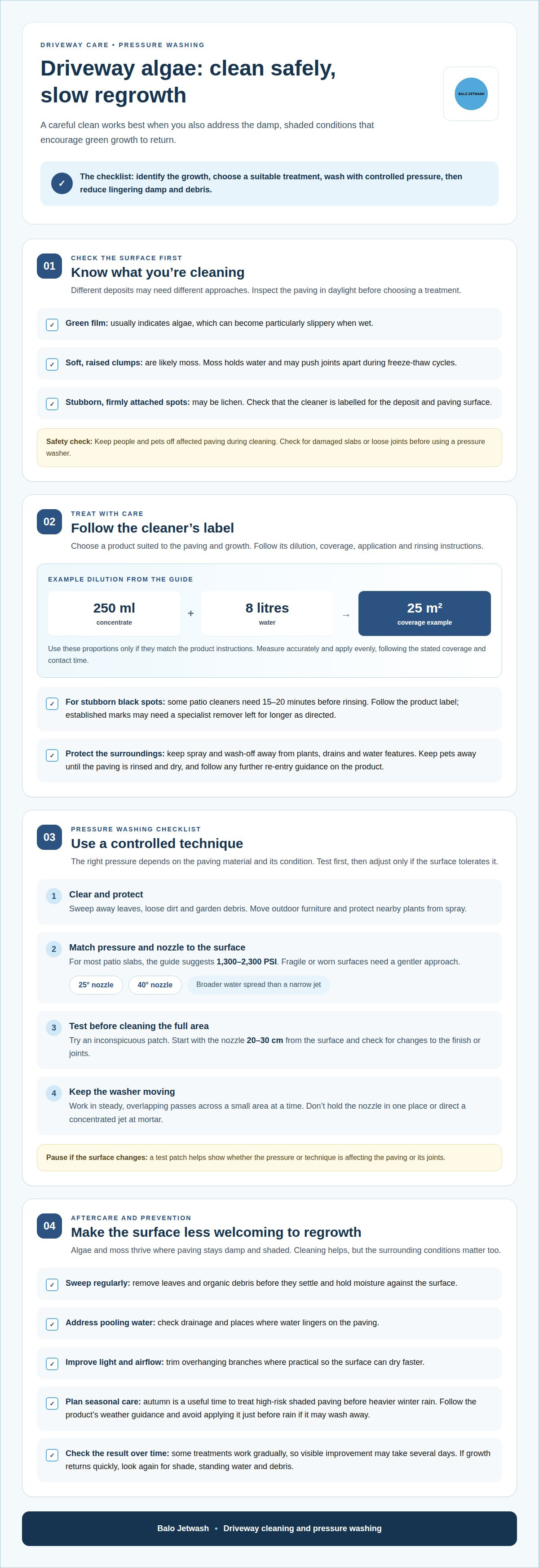
What is the safest way to remove algae and moss from driveway paving?
Keep people and pets off the affected driveway before cleaning. Wet algae can make paving especially slippery, so block access while the surface is damp. Move plant pots and garden furniture away from the work area. Choose a dry period if practical, giving the paving time to dry before anyone walks across it. Clear loose leaves and organic debris with a stiff broom. This exposes the green film and moss, making it easier to treat the growth rather than simply shifting dirt around. Check for loose slabs, damaged joints or crumbling pointing before adding water. Avoid directing a strong stream at any weak area. Match the cleaner to the paving material and the deposit. Follow the product label for dilution, application and contact time, and wear the protective clothing it recommends. Keep children and pets away from treated paving. Protect nearby plants from spray and wash-off, and don’t mix cleaning products. Test a small, inconspicuous patch before applying a treatment across the driveway. White vinegar can stain paving and may etch natural stone, including limestone or sandstone, leaving dull patches. If using a compatible cleaner, apply it only as directed. This small test can reveal unwanted colour or surface changes first. For small areas that need brushing, use a stiff brush and work diagonally across the paving. This can help avoid potential surface damage. Keep your footing secure, since loosened algae makes the area slick. Don’t scrub aggressively at lichen or embedded marks if the paving starts to scratch or break down. Use a pressure washer cautiously, choosing a broad fan spray and steady movement rather than a concentrated jet. Excessive pressure can roughen paving, creating more places for algae to grow back. It can also remove sand, mortar or pointing from joints. Stop if the surface begins to pit or joint material lifts. Manage rinse water and finish the clean carefully. Don’t let dirty wash-off flow into drains or water features, and avoid leaving sludge on the driveway or lawn. Rinse away loosened deposits according to the cleaner’s instructions, then keep the area clear until it dries. Check the dry surface for remaining growth or disturbed joints.Which patio cleaners work best on green driveway paving in the UK?
Identify the paving material before choosing a cleaner. Concrete, natural stone and block paving can react differently to treatments. Look for a product labelled for your surface and for green algae or moss. A cleaner designed for one material may mark another, so don’t choose by strength alone. Choose a dedicated patio cleaner for widespread green growth. Some biological cleaners soak into paving and target the spores behind visible deposits. Check the label for suitable surfaces, dilution, application method and contact time. A product’s instructions matter more than a guessed mix, especially across mixed or older paving. Measure the dilution exactly as the product directs. One example concentrate specifies 250 ml mixed with 8 litres of water, covering 25 square metres. Those quantities apply only when the cleaner’s label gives the same mix and coverage. Use a marked container, and never combine different cleaning products. Apply the solution evenly with a garden sprayer if the label permits spraying. Work across a manageable area and follow the stated contact time before rinsing. For heavy algae or moss, some patio cleaners advise 15 to 30 minutes. Don’t leave cleaner longer unless its instructions specifically say so. Use extra care with natural stone. White vinegar can etch limestone or sandstone and leave dull patches, so avoid it on those materials. If a label-approved treatment is suitable, test it on a discreet patch first. Check the dry surface for colour changes before treating the rest of the driveway. Keep the treatment controlled around the garden. Protect plants from spray, keep pets away from the work area, and prevent wash-off reaching drains or water features. Rinse as directed, then let the surface dry before walking on it. Follow any product instructions about protective clothing and access after application. For a broad driveway or stubborn deposits, a suitable cleaner can be paired with careful pressure washing. Pressure alone may roughen paving or disturb joint material, so choose a surface-appropriate method. For help with a thorough clean, arrange professional driveway cleaning as a practical next step.Balo Jetwash
Balo Jetwash helps tackle paving affected by algae, moss and slippery deposits through driveway and patio cleaning. If growth covers a broad area or makes the surface harder to use safely, professional cleaning can be a practical next step. The cleaning approach takes account of the paving and the deposits present.
Different surfaces need different techniques. Older slabs, natural stone and block paving may respond differently to pressure washing. Balo Jetwash uses modern, industrial van-built equipment and specialised cleaning detergent to address dirt, algae and moss. Careful technique matters because excessive pressure can damage paving or disturb its joints.
After cleaning, damp shade and standing water can still encourage growth. Clearing leaves and improving drainage can support ongoing care. For block-paved areas, Balo Jetwash includes FREE re-sanding with Klin dried sand, where applicable, and FREE specialised cleaning detergent.
To discuss a suitable approach, describe the paving type, the affected area and any concerns, such as loose joints or delicate slabs. This helps focus the conversation on the surface that needs attention and the deposits causing difficulty.
If algae or moss has made your paving slippery or harder to maintain, contact Balo Jetwash to discuss your cleaning needs.
Make your next step a safer, cleaner surface
Make paving easier to care for by including it in your regular outdoor maintenance. Notice where dampness and shade linger, and attend to those areas before slippery deposits build up again. A clear, well-maintained surface can make everyday access more comfortable, while prompt attention to loose joints or damaged slabs helps you spot issues that cleaning alone won’t address.
If growth covers a broad area or you’re unsure which approach suits your paving, professional cleaning can take the guesswork out of the next step. Balo Jetwash provides exterior cleaning for driveways, patios and roofs, using equipment and methods suited to the surface. Choose support that fits the area needing attention, then keep up simple maintenance to help your outdoor space stay welcoming.
Get in touch with Balo Jetwash to discuss your paving. A cleaner, more cared-for surface is a practical place to start.
Frequently Asked Questions
Why does my patio go green?
Green growth usually appears when paving stays damp, particularly in shaded spots. A north-facing corner, a section beneath dense shrubs or an area beside a persistently damp wall may dry more slowly than open paving. Compare these patches with sunnier parts of the patio. If growth follows the same damp pattern, addressing the source of lingering moisture can help alongside cleaning.
Why do paving slabs turn green and slippery?
Algae forms a green film on paving and can become slippery when wet. Damp weather can leave outdoor slabs wet, while shade and limited airflow slow drying. Look for a pattern: green deposits near a covered entrance may reflect reduced sunlight, while growth beside a low garden edge may point to pooled water. Identifying where deposits collect helps target maintenance.
Can pressure washing damage paving slabs or wash out jointing sand?
Yes. A concentrated jet can mark vulnerable paving, loosen mortar or remove sand from block-paving joints. The risk of damage depends on the surface condition and how pressure is applied. After cleaning, inspect joints for gaps and slabs for a roughened finish. If sand has washed away, replenish the joints with suitable material before relying on the paving as a stable walking surface.
How can I prevent algae returning on outdoor paving?
Reduce the time paving stays damp and clear debris before it builds up. For example, remove fallen leaves from a shaded path after they collect, and trim plants that block airflow over slabs. Check where rainwater settles after wet weather, especially beside borders or at low points. Treating recurring trouble spots as part of regular garden upkeep can help limit fresh growth.
{"@context":"https://schema.org","@type":"FAQPage","mainEntity":[{"@type":"Question","name":"Why does my patio go green?","acceptedAnswer":{"@type":"Answer","text":"Green growth usually appears when paving stays damp, particularly in shaded spots. A north-facing corner, a section beneath dense shrubs or an area beside a persistently damp wall may dry more slowly than open paving. Compare these patches with sunnier parts of the patio. If growth follows the same damp pattern, addressing the source of lingering moisture can help alongside cleaning."}},{"@type":"Question","name":"Why do paving slabs turn green and slippery?","acceptedAnswer":{"@type":"Answer","text":"Algae forms a green film on paving and can become slippery when wet. Damp weather can leave outdoor slabs wet, while shade and limited airflow slow drying. Look for a pattern: green deposits near a covered entrance may reflect reduced sunlight, while growth beside a low garden edge may point to pooled water. Identifying where deposits collect helps target maintenance."}},{"@type":"Question","name":"Can pressure washing damage paving slabs or wash out jointing sand?","acceptedAnswer":{"@type":"Answer","text":"Yes. A concentrated jet can mark vulnerable paving, loosen mortar or remove sand from block-paving joints. The risk of damage depends on the surface condition and how pressure is applied. After cleaning, inspect joints for gaps and slabs for a roughened finish. If sand has washed away, replenish the joints with suitable material before relying on the paving as a stable walking surface."}},{"@type":"Question","name":"How can I prevent algae returning on outdoor paving?","acceptedAnswer":{"@type":"Answer","text":"Reduce the time paving stays damp and clear debris before it builds up. For example, remove fallen leaves from a shaded path after they collect, and trim plants that block airflow over slabs. Check where rainwater settles after wet weather, especially beside borders or at low points. Treating recurring trouble spots as part of regular garden upkeep can help limit fresh growth."}}]}Information
Water available? - You don't need to be present for us to carry out the service. If required, we can supply water ourselves.
Insurance
Balo Jetwash is fully insured, We have £5,000,000 of public liability insurance. Balo Jetwash operatives are professional, reliable and endeavour to carry out the work to the highest standard with minimal fuss and upheaval.