
How to Clean Slippery Patio Slabs Safely in Sutton Coldfield

A pressure washer isn’t always the best first step for slippery patio slabs. If you’re wondering how to clean slippery patio slabs safely in Sutton Coldfield, start by identifying the growth and sweeping away loose dirt with a stiff broom. Warm water with a little washing-up liquid can lift everyday grime, but it won’t remove algae, moss or lichen.
It’s understandable to want a quick, thorough clean, especially when damp paving feels unsafe underfoot. Choose a method suited to the slab surface, brush gently where possible and avoid force that could mark the paving or disturb its joints.
This guide explains how to identify slippery growth, clean slabs carefully and keep runoff away from drains and water features. You’ll also learn when soapy water may help, when an outdoor cleaner is more suitable and how regular sweeping keeps your patio tidier between cleans.
Key Takeaways
Learn to spot moss, algae and everyday dirt on a driveway, and understand how routine sweeping can help limit build-up. See why pressure and technique should suit the driveway surface, rather than relying on a harsh, concentrated jet. Find out how cleaning and re-sanding with kiln-dried sand can help refresh block paving joints. Understand how to manage wash water and debris so runoff stays away from drains, plants and water features. Discover when warm soapy water can help with surface grime, and when a different cleaning approach may be needed.Identifying Moss, Algae and Dirt on Driveways
Test a suspect patch carefully: press a shoe sole gently against the damp surface and shift your weight slightly. If the sole slips or struggles to grip, treat the area as slippery. Keep foot traffic off it until it has been cleaned and dried.
Look for different types of growth. Moss forms raised, soft clumps, often in joints or shaded edges. Algae usually appears as a thin green film across paving. Lichen can show as pale, grey or dark spots that cling tightly to the surface. Identifying the growth helps you choose a suitable cleaning approach. Separate growth from ordinary dirt. Leaves, grit and mud often collect where water drains slowly or paving meets a wall. Sweep them away with a stiff broom, then inspect the exposed surface. Green staining that remains may be algae; stubborn, crusted patches may be lichen rather than loose dirt. Brush away loose moss and algae. Use a stiff broom to remove as much surface growth as possible before applying an outdoor cleaner intended for paving. Work carefully around joints so you don’t dislodge their material. For green film or slippery algae patches, a fungicidal outdoor cleaner can be suitable; follow its label. Deal with stubborn patches gently. Brush the affected area again after loose growth has been cleared, then apply a suitable cleaner as directed. Avoid attacking one spot with a concentrated jet: pressure can mark some surfaces or disturb joints. Black spots that remain may be lichen, which can need a dedicated paving treatment. Reduce the conditions that encourage regrowth. Sweep leaves and garden debris away regularly, especially during damp periods when they hold moisture against paving. Check shaded corners and slow-draining edges as part of routine upkeep. Spring is a useful time to clear winter build-up, while a dry summer spell can help cleaned paving dry thoroughly.Pressure Washing Driveways Safely
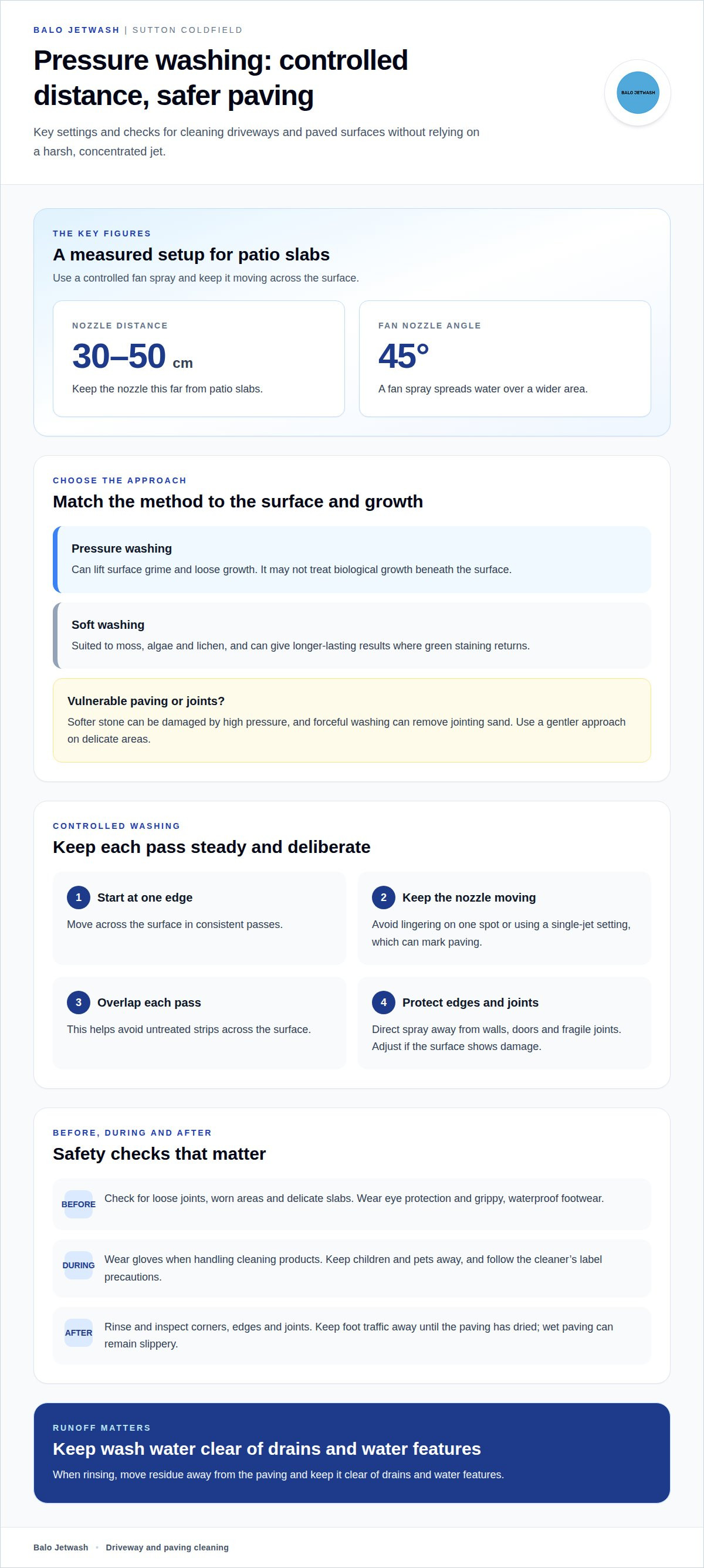
Wear eye protection and grippy, waterproof footwear. Use gloves when handling cleaning products, keep children and pets away from the work area, and follow the cleaner’s label precautions.
Choose the method to suit the growth. Pressure washing can lift surface grime and loose growth, but it may not treat biological growth beneath the surface. Soft washing is suited to moss, algae and lichen, and can give longer-lasting results where green staining returns. Match the cleaning method to the paving and the problem. Check the paving before using a pressure washer. Softer stone can be damaged by high pressure, while forceful washing can remove jointing sand. Look for loose joints, worn areas and delicate slabs first. Use a gentler approach on vulnerable sections instead of directing a powerful jet at every surface. Set up for controlled washing. For patio slabs, keep the nozzle 30-50 cm from the surface and use slow, steady movements. A fan nozzle set at 45 degrees spreads the water over a wider area. Avoid a single-jet setting, which can leave marks on paving. Work methodically across the surface. Begin at one edge and move in consistent passes, keeping the nozzle moving rather than lingering over one spot. Overlapping each pass helps avoid untreated strips. Direct the spray away from walls, doors and fragile joints, and adjust your technique if the surface starts to show damage. Use detergents carefully. A suitable outdoor cleaner can help with remaining biological growth, while a pressure washer alone may only remove visible surface material. Apply cleaning products according to their label, and keep people and pets away until the area has been rinsed and is safe to approach. Rinse and inspect before reopening the area. Check corners, edges and joints for leftover residue or displaced sand. Remember that wet paving can remain slippery after washing, so keep foot traffic away until it has dried. Choose soft washing for recurring growth, or controlled pressure washing where the paving can withstand it.Cleaning and Re-Sanding a Driveway
Choose a cleaner that suits the paving, then sweep, apply, scrub and rinse in that order. Stone, concrete, porcelain and block paving each require appropriate products and tools.
Choose a Suitable Patio Cleaner
Choose an outdoor cleaner labelled as suitable for your paving material. For sandstone, use a stone-safe cleaner and gentle brushing. Avoid acidic products unless the manufacturer approves them, and never use vinegar or acidic cleaners on limestone, as they can damage the stone. For porcelain, brush gently and avoid wire brushes or abrasive tools. On concrete and block paving, follow the cleaner’s label and don’t let liquid dry on the surface.
Sweep the Patio Slabs
Sweep away leaves, loose grit and garden debris before adding water or cleaner. Start at the highest point and work towards the edge, gathering debris instead of pushing it into the joints. Check corners and gaps between blocks for trapped material. Clearing the surface first lets the cleaning solution reach dirt and growth rather than coating loose debris.
Apply Cleaner and Scrub
Apply the cleaner according to its label, treating a manageable section at a time. Keep it within the area you’re cleaning, and don’t let it dry unless the instructions say otherwise. Scrub with a suitable stiff brush, using gentler strokes on softer stone and porcelain. For stubborn patches, repeat careful brushing rather than switching to an abrasive tool that could scratch or mark the paving.
Rinse the Slabs
Rinse each scrubbed section with clean water, moving residue away from the paving and clear of drains and water features. Check joints and slab edges for cleaner, loosened dirt or displaced material. Remove excess surface water after washing, as standing water can leave deposits and make paving slippery. Keep children and pets away from cleaning solutions until rinsing is complete.
For block paving, replace lost jointing sand before sealing. Re-sanding uses Klin dried sand and should be done only after the paving has been cleaned and dried. Apply sealant only when the surface is clean, dry and suitable for sealing. Check the paving and product instructions first.
Managing Runoff During Driveway Cleaning
In Sutton Coldfield, keep runoff from patio and driveway cleaning out of drains and water features. Control the flow before washing begins and use cleaning products according to their labels.
Clear debris before adding water. Sweep away leaves, loose soil and grit so pressure washing doesn’t carry them towards a drain. Check the driveway edges, channel grates and nearby planting beds. Collect the debris for disposal rather than washing it into a gully or garden pond. Identify where water will flow. Look for slopes, low points and channels before starting. A driveway that falls towards a drain can carry cleaner and loosened dirt straight into it. Note nearby plants and water features too, then plan the washing direction to move water away from them. Limit the area being washed. Work in manageable sections instead of soaking the whole surface at once. This makes it easier to monitor runoff and redirect water before it reaches a drain. During pressure washing, keep the spray directed across the paving, not towards drain openings, flowerbeds or a pond. Use cleaning products carefully. Follow the product label for application and rinsing, and avoid using more liquid than the paving needs. Keep concentrated cleaner and leftover solution away from drains and water features. If a product spills, deal with it promptly using the label’s instructions rather than rinsing it into the nearest gully. Protect plants from wash water. Move pots out of the immediate cleaning area where practical, and shield delicate planting beside the driveway. Rinse accidental splashes from leaves with clean water. Don’t direct dirty runoff through a border, where loosened debris and cleaning solution could collect around roots. Check drainage as you finish. Pause if runoff starts pooling or approaching a drain, then adjust the washing direction and clear any debris blocking the flow. Keep an eye on water features during rinsing. Once the surface is clean, remove remaining loose dirt instead of sweeping it into a drain.Cleaning Driveways with Warm Soapy Water
Use soapy water for light surface grime. Half-fill a bucket with warm water and add a couple of squirts of washing-up liquid. This simple mixture can help lift everyday dirt from paving. For slippery growth, use a cleaner intended for outdoor paving rather than relying on soapy water alone. Sweep before washing. Clear leaves, loose grit and garden debris with a broom before wetting the driveway. This stops loose material spreading across the surface as you scrub. Check the joints and edges too, where debris can collect and make cleaning less effective. Work in manageable sections. Dip a suitable brush into the soapy water and apply it to one small area. Scrub with steady strokes, paying attention to visible dirt and marks. Rinse the brush as it picks up grime, so you’re not simply moving loosened dirt around. Rinse away the liquid. Use clean water to remove the washing-up liquid and loosened residue before it dries. A pressure washer isn’t essential for this simple cleaning process. If using one to rinse, choose a controlled setting and keep the spray moving across the paving. Check the result once rinsed. Inspect the cleaned section in good light, including edges and joints. Repeat the soapy-water and brushing process on remaining light dirt, then rinse again. If green growth remains, washing-up liquid won’t address it; use a suitable outdoor paving cleaner instead. Let the surface dry before using it. Remove standing water where practical, as surface water can leave mineral deposits and make paving slippery. Drying time depends on the weather and how much water remains. Keep people and pets away from the wet area until the slabs have dried.Balo Jetwash Driveway Cleaning
Balo Jetwash provides professional pressure washing for driveways and patios, removing stubborn dirt, moss and algae from exterior paving. It can be a useful option when slippery growth covers a wider area, careful cleaning hasn’t cleared it or the surface needs a thorough refresh.
Driveway surfaces and conditions vary, so the cleaning method should suit the paving rather than rely on excessive pressure. Balo Jetwash uses modern, van-built industrial equipment and specialised cleaning detergent for exterior cleaning. The aim is to lift built-up grime and growth while treating the surface with care.
On block paving, cleaning can displace jointing sand. Balo Jetwash includes FREE re-sanding with Klin dried sand to replenish the joints after cleaning. FREE Licensed Industrial Cleaning Detergent is also included. These details are useful when planning a full refresh rather than simply sweeping away leaves and loose debris.
Professional pressure washing can be practical for a large driveway with built-up dirt or green growth, or when hand-scrubbing would take considerable effort. The equipment and technique should suit the surface and its condition. Delicate patio stone may need a different approach from a robust driveway, so cleaning methods shouldn’t be treated as one-size-fits-all.
Slippery patches on a patio? Balo Jetwash also offers professional patio pressure washing. This can help address algae and moss on outdoor paving, with cleaning carried out using equipment suited to the job. Keeping runoff away from drains, plants and water features remains an important part of planning any wash.
Before arranging a clean, note what needs attention: widespread grime, recurring growth or loose sand in block-paving joints. Sharing these details helps focus the work on your surface and the result you want. Balo Jetwash provides a free, no-obligation quote for driveway and patio cleaning. Contact Balo Jetwash to discuss your paving.
Plan a Safer, Cleaner Outdoor Space
Slippery paving can limit how you use your garden, not just affect its appearance. When deciding how to clean slippery patio slabs safely in Sutton Coldfield, consider the surface, the type of growth and whether careful cleaning at home is enough for the area.
For a larger or heavily soiled area, professional cleaning can take the hard work off your hands. Balo Jetwash offers driveway cleaning, patio cleaning and roof cleaning, with pressure washing suited to the task. Focus on the surface you want refreshed and the result you’re aiming for.
A cleaner, more inviting exterior can make it easier to enjoy your outdoor space again. If you’d like to discuss a suitable clean for your property, contact Balo Jetwash. Take the next step towards a fresher-looking finish.
Frequently Asked Questions
What causes patio slabs to become slippery in Sutton Coldfield?
Moss and algae thrive where paving stays damp, making slabs slick underfoot. Shaded corners, overhanging plants and areas that hold rainwater are especially prone to green growth. Leaves also retain moisture and can hide slippery patches. If you’re considering how to clean slippery patio slabs safely in Sutton Coldfield, notice where dampness lingers after rain, such as beside walls or beneath dense planting.
What is the safest step-by-step way to clean slippery patio slabs?
Start by identifying the slab material and the type of growth, then choose a compatible cleaner. Test it on a discreet patch before treating the wider area, and rinse thoroughly afterwards. Keep children and pets away from the work area and cleaning solution. If you’re learning how to clean slippery patio slabs safely in Sutton Coldfield, follow the product label and let the paving dry before walking on it.
Can you use a pressure washer on patio slabs without causing damage?
Yes, but use a controlled technique and consider the slab material and condition. Pressure can erode soft stone, mark a surface or loosen pointing, especially where joints are already worn. Test a discreet patch before cleaning the full patio, then check for changes. If slabs are cracked, loose or particularly delicate, use gentle brushing and a suitable cleaner instead.
How do you remove moss, algae and lichen from patio slabs safely?
Brush away loose moss first, then use a cleaner suited to the paving and the growth. A fungicidal cleaner may help with green film, while dark lichen spots may need a dedicated paving treatment. Use a stone-safe product on sandstone, avoid acidic cleaners on limestone and brush porcelain gently. Follow the product directions and rinse treated areas thoroughly.
How can you keep patio slabs from becoming slippery again?
Don’t let leaves and garden debris sit on the paving, especially in shaded areas where surfaces dry slowly. After wet weather, check for green growth and pooled water. Clear nearby drainage paths and address persistent pooling, as standing moisture encourages regrowth. If the paving is sealed, regular maintenance may mean an annual clean is enough to keep it looking its best.
What are local water-use or chemical-disposal rules for patio cleaning in Sutton Coldfield?
Keep cleaning runoff and leftover solutions out of drains and water features. Follow the cleaner’s label and direct wash water away from drains, plants and ponds.
How much does professional patio cleaning cost in Sutton Coldfield?
{"@context":"https://schema.org","@type":"FAQPage","mainEntity":[{"@type":"Question","name":"What causes patio slabs to become slippery in Sutton Coldfield?","acceptedAnswer":{"@type":"Answer","text":"Moss and algae thrive where paving stays damp, making slabs slick underfoot. Shaded corners, overhanging plants and areas that hold rainwater are especially prone to green growth. Leaves also retain moisture and can hide slippery patches. If you’re considering how to clean slippery patio slabs safely in Sutton Coldfield, notice where dampness lingers after rain, such as beside walls or beneath dense planting."}},{"@type":"Question","name":"What is the safest step-by-step way to clean slippery patio slabs?","acceptedAnswer":{"@type":"Answer","text":"Start by identifying the slab material and the type of growth, then choose a compatible cleaner. Test it on a discreet patch before treating the wider area, and rinse thoroughly afterwards. Keep children and pets away from the work area and cleaning solution. If you’re learning how to clean slippery patio slabs safely in Sutton Coldfield, follow the product label and let the paving dry before walking on it."}},{"@type":"Question","name":"Can you use a pressure washer on patio slabs without causing damage?","acceptedAnswer":{"@type":"Answer","text":"Yes, but use a controlled technique and consider the slab material and condition. Pressure can erode soft stone, mark a surface or loosen pointing, especially where joints are already worn. Test a discreet patch before cleaning the full patio, then check for changes. If slabs are cracked, loose or particularly delicate, use gentle brushing and a suitable cleaner instead."}},{"@type":"Question","name":"How do you remove moss, algae and lichen from patio slabs safely?","acceptedAnswer":{"@type":"Answer","text":"Brush away loose moss first, then use a cleaner suited to the paving and the growth. A fungicidal cleaner may help with green film, while dark lichen spots may need a dedicated paving treatment. Use a stone-safe product on sandstone, avoid acidic cleaners on limestone and brush porcelain gently. Follow the product directions and rinse treated areas thoroughly."}},{"@type":"Question","name":"How can you keep patio slabs from becoming slippery again?","acceptedAnswer":{"@type":"Answer","text":"Don’t let leaves and garden debris sit on the paving, especially in shaded areas where surfaces dry slowly. After wet weather, check for green growth and pooled water. Clear nearby drainage paths and address persistent pooling, as standing moisture encourages regrowth. If the paving is sealed, regular maintenance may mean an annual clean is enough to keep it looking its best."}},{"@type":"Question","name":"What are local water-use or chemical-disposal rules for patio cleaning in Sutton Coldfield?","acceptedAnswer":{"@type":"Answer","text":"Keep cleaning runoff and leftover solutions out of drains and water features. Follow the cleaner’s label and direct wash water away from drains, plants and ponds."}}]}Information
Water available? - You don't need to be present for us to carry out the service. If required, we can supply water ourselves.
Insurance
Balo Jetwash is fully insured, We have £5,000,000 of public liability insurance. Balo Jetwash operatives are professional, reliable and endeavour to carry out the work to the highest standard with minimal fuss and upheaval.