
How to pressure wash a patio safely in Sutton Coldfield

Can pressure washing damage a driveway? Yes, if the pressure is too strong or the nozzle is too narrow. Safe driveway pressure washing in Sutton Coldfield means choosing a method that suits the surface, rather than blasting every area with the same force. A controlled clean can lift built-up grime while helping protect the driveway’s finish and joints.
Moss and algae need more than a quick rinse, especially in shaded, damp areas. The right approach tackles this growth alongside ingrained dirt, while careful rinsing helps protect nearby plants. The material and condition of the driveway also matter, so the safest method varies from driveway to driveway.
Here, you’ll learn how pressure washing affects different driveway surfaces, how moss and algae are treated, and what a free, individually assessed, no-obligation quote involves. Balo Jetwash uses modern, van-built industrial equipment and specialised cleaning detergent to tackle stubborn dirt, algae and moss. Driveway cleaning also includes free re-sanding with Klin dried sand. Read on for a clear idea of what to expect before deciding whether professional driveway cleaning is right for your home.
Key Takeaways
Match the cleaning method to the driveway surface and condition to help protect paving and joints. Thorough rinsing helps clear loosened grime and cleaning treatment from the surface. Moss and algae may need an appropriate treatment as well as pressure washing, especially in shaded, damp areas. A free, individually assessed quote gives you a clearer idea of the work your driveway needs before you decide. Find out how careful pressure washing can refresh driveway surfaces without using the same approach everywhere.Driveway Pressure Washing in Sutton Coldfield
Driveway pressure washing in Sutton Coldfield starts with identifying the paving and assessing its condition. Concrete, block paving and natural stone can respond differently to pressure and cleaning products. A cleaner suitable for one material may mark another, so the product should suit the paving and be used according to its instructions.
For wastewater, UK Government advice is to collect it for disposal where possible, or direct it to water drains. Always use cleaning products as instructed, including any stated dilution and application guidance.
Choose protective equipment suited to the task, including eye protection against splashes and sturdy, grippy footwear. Keep people away from the wet work area, and protect nearby plants, doors and property from spray before cleaning begins.
Inspect the driveway and surrounding area. Identify concrete, block paving or stone, then note loose joints, fragile edges and delicate planting. Close nearby doors and move outdoor items out of the work area. This helps the cleaning approach account for the surface and anything that could be affected by spray. Choose a material-appropriate cleaner. Apply it only as directed on its label, and avoid letting it dry during its stated working time. Test an inconspicuous area first if the surface’s response is uncertain. Different finishes and levels of soiling may need different treatment, rather than a stronger concentration. Work in manageable sections. Clean one area at a time so the treatment and rinse remain controlled. Keep the spray directed away from doors, planting and nearby property. A consistent overlap between sections helps avoid missed strips and uneven-looking patches across the driveway. Rinse each section thoroughly. Clear loosened dirt and cleaner before moving on. Watch where water flows, particularly near thresholds, planted borders and adjoining surfaces. Wet paving can become slippery, so keep foot traffic away until the cleaned area has drained and dried. Set a sensible cleaning interval. Shade and dampness affect how quickly grime and organic growth return. Some householders find that cleaning every year or two keeps a driveway looking its best; a once-a-year deep clean is another general recommendation. Domestic driveways and commercial exterior areas both benefit from an approach tailored to their surface, use and exposure.Removing Moss and Algae and Reducing Regrowth
Moss, algae, mildew and embedded grime call for a considered cleaning sequence. Remove visible growth first, deal with the remaining residue, then address conditions that could encourage it to return.
Remove moss, algae and surface grime
Lift thick moss before pressure washing, then brush debris from the joints. This removes loose growth without relying on water pressure alone. Apply a treatment suited to the driveway surface and remaining grime, following its instructions. Check for fragile areas or loose joints first, and avoid directing a concentrated jet at vulnerable spots.
Algae and mildew can leave green or dark patches on damp driveways. Treat affected areas evenly instead of repeatedly blasting one spot. This helps loosen growth while reducing the risk of marking the surface. Rinse away loosened residue so you can assess the cleaned area clearly.
Reduce moss and algae regrowth
After washing, inspect shaded corners, edges and joints where moisture and debris can linger. These areas may need further treatment to tackle remaining algae and help limit its return. Follow the cleaner’s directions and avoid using more product than the surface needs.
Prevent leaves and loose organic matter from building up between cleans. Check beneath parked items and along borders, where airflow is limited and dampness can persist. Regular light maintenance removes debris that allows growth to take hold, without treating every patch as if it needs the same intervention.
Match the approach to the growth. A light film of grime may lift with washing, while established moss needs attention before the main clean. After rinsing, look for remaining patches, especially where the driveway stays shaded. Treat stubborn biological growth appropriately instead of increasing pressure across the whole surface. Let the surface dry before judging the finish. Wet driveway surfaces can make colour and remaining marks harder to assess. Once dry, check whether dark areas are leftover growth or natural variations in the surface. This helps you avoid unnecessary repeat cleaning and protect the driveway from excessive treatment. Choose a suitable cleaning approach for persistent growth. A professional driveway pressure washing service can combine controlled washing with an appropriate treatment. The surface, growth and damp conditions all shape the method. That focused approach can refresh the driveway while addressing the causes of recurring patches.Free, Individually Assessed Quotes
A driveway quote should reflect the surface and the cleaning it needs. Balo Jetwash provides a free, written quote with no obligation to book, so you can consider the proposed pressure washing in Wolverhampton or Sutton Coldfield before deciding.
Describe the driveway and the result you want. For example, explain whether you want to lift general grime, clear visible algae or refresh the entrance to your home. Mention the surface type if you know it, such as concrete, block paving or natural stone. These details help shape an individual assessment rather than relying on a one-size-fits-all estimate. Assess the driveway’s size, condition and access. The area to be cleaned affects the work involved, while loose joints, delicate edges and heavy growth influence the suitable approach. Clear access also matters. An assessment considers these practical details together, so the quote reflects the particular driveway rather than an assumed standard job. Set out the pressure washing approach clearly. The proposed work should account for the driveway material and visible soiling. A surface with light dirt may need a different approach from one with established moss or ingrained grime. Knowing what the cleaning is intended to address helps you understand how it may restore the driveway’s appearance. Review what the quote includes. Read the written details for the areas and cleaning work covered. If the driveway adjoins another paved area, make sure the proposed scope distinguishes each surface. A clear description helps you decide whether the work matches your priorities, whether that is refreshing the main driveway or treating a broader paved area. Decide without pressure to book. The quote is free and carries no obligation, so you can weigh the proposed cleaning against your needs. Consider the driveway’s current condition and the improvement you want. The assessment gives you a specific basis for that decision, instead of relying on a generic price or assumed treatment. Use the assessment to plan the next step. Once you understand the scope, decide whether driveway cleaning is right for your property. A refreshed surface can make the driveway look cleaner and more inviting, but the result depends on its material, condition and the marks present. The individual quote sets out the work proposed for your driveway.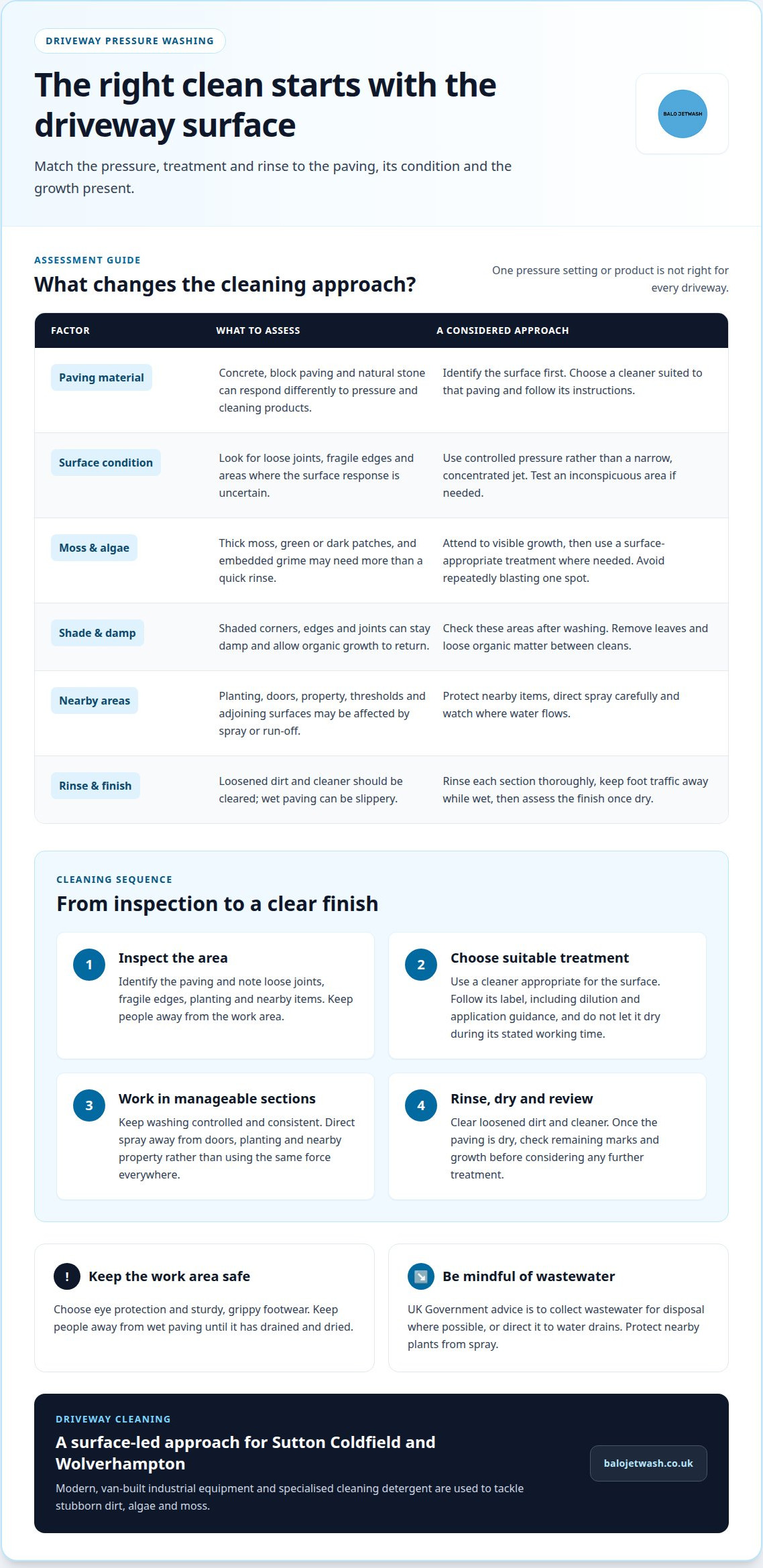
Insurance and Satisfaction Guarantee
Clear expectations matter as much as a clean driveway. Before work begins, understand how the team will protect the surface and what finish to expect from professional cleaning.
Confirm the team’s insurance and training. Balo Jetwash’s cleaning professionals are fully insured and trained, giving you reassurance before work starts. Make sure the work area and driveway surface are clearly understood. A careful assessment helps the team choose an approach suited to the paving’s material and condition. Agree which areas need attention. Identify the driveway and any adjoining paved sections included in the work. For example, a section with green algae may need a different focus from cleaner paving near the entrance. Agreeing the scope helps set expectations about the areas treated and the result the cleaning aims to achieve. Understand the expected finish. Pressure washing can remove surface grime, algae and moss, leaving a cleaner-looking driveway. The final appearance also depends on the paving’s existing condition, colour and texture. Cleaning doesn’t replace repairs or change worn materials, so expect a refreshed surface, not a new driveway. Review the result after cleaning. Once the work is complete, look over the agreed driveway area and note any section you’re unhappy with. Check the surface in good light, including edges and corners where grime may remain. This makes it easier to identify the area and explain your concern clearly. Make use of the Shine Guarantee if needed. If you’re unhappy with the cleaning result, Balo Jetwash’s Shine Guarantee means the team will return and reclean the driveway free of charge. Explain what concerns you, such as a remaining patch or an uneven-looking area, so the team can give it further attention. Keep the surface’s character in mind. Paving materials show cleaning results differently. Textured stone, concrete and block paving each have their own appearance, and existing wear remains visible after washing. A successful clean means the agreed area has been treated and looks refreshed, not that every section becomes identical.Pressure Washing Driveways in Sutton Coldfield
Safe driveway cleaning depends on the paving material, its condition and the equipment used. A specialist approach helps protect driveways by taking these factors into account.
Inspect the driveway before washing. Identify whether the area is concrete, natural stone or block paving. Look for loose joints, cracks, worn patches and slabs that may already move. These details affect the cleaning method. Pressure washing can force water beneath slabs, so the surface’s condition and construction matter as much as visible dirt. Match pressure and technique to the driveway paving. Excessive pressure can damage slabs or remove jointing sand from block paving. A specialist adjusts the approach to the surface instead of treating every area alike. Preserving the joints helps keep block paving stable, while fragile or weathered surfaces need particular care. Choose a suitable spray pattern or attachment. A wide fan nozzle or patio cleaner attachment can help clean broad driveway areas evenly. A patio cleaner has rotating jets beneath a covered head, helping spread the cleaning action and reduce splashback. Keep the cleaning action controlled. Work steadily across the driveway, avoiding prolonged pressure on one slab, joint or edge. Consistent movement helps reduce visible stripes and concentrated wear. Take extra care around borders and paving joints, where forceful spray can disturb soil or dislodge material. Rinse away loosened grime as you go. Check the result and protect the joints. After cleaning block paving, let it dry before assessing the joints. Kiln-dried sand may need brushing back into them to help keep the blocks stable. The finished appearance depends on the paving’s condition, so compare cleaned and uncleaned sections in similar light. Give each paved area the right care. Driveways and patios may look similar, but their material, jointing and condition can differ. Adjust the pressure and equipment for each area instead of using one setting for both. A controlled specialist method targets grime while reducing the risk of damaging slabs, disturbing sand or forcing water beneath paving.Balo Jetwash: Driveway Cleaning
Balo Jetwash provides driveway cleaning when moss, algae or ingrained grime dulls a paved entrance. Its modern, industrial van-built equipment tackles stubborn surface dirt, and specialised cleaning detergent is included. The approach takes account of the driveway’s material and condition, helping refresh the surface without treating every driveway alike.
Describe the driveway and its condition. Note whether the paving is concrete, block paving or stone, and point out visible growth, worn areas or loose joints. These details help shape an individual assessment. A shaded driveway with algae needs a different focus from a well-kept area with light surface grime. Set out the areas you want cleaned. Identify the driveway boundaries and any adjoining paved space, such as a patio. This helps clarify the scope before work begins. Balo Jetwash also provides patio pressure washing, using professional equipment to address accumulated dirt and organic growth. Expect the method to reflect the surface. The condition and material guide the pressure-washing technique. Fragile slabs and block paving joints need a considered approach, while established moss or ingrained grime can call for detergent alongside washing. The aim is a cleaner, brighter finish suited to the driveway, not unnecessary force. Consider block paving. If the driveway includes block paving, kiln-dried sand can be brushed back into the joints after cleaning. Balo Jetwash includes free re-sanding with kiln-dried sand. This finishing step helps replenish the joints after washing and gives the paved area a neater appearance. Plan for the whole outdoor space. A refreshed driveway can make an entrance feel more inviting, while a cleaned patio can complement it. For commercial premises, Balo Jetwash also provides commercial exterior cleaning. Each area can be considered according to its surface, use and visible soiling. Use the quote to understand the proposed work. Balo Jetwash offers free, individually assessed quotes, with no obligation to book. The assessment gives you a clearer picture of the areas covered and the cleaning approach. You can then decide whether driveway cleaning suits the condition and appearance you want to improve.Contact Balo Jetwash to discuss driveway cleaning for your Sutton Coldfield property.
Get Your Driveway Ready to Enjoy
A freshly cleaned driveway can make your home feel more welcoming. If you’re considering driveway pressure washing in Sutton Coldfield, choose a method suited to your driveway and the finish you want. Balo Jetwash uses professional pressure washing to clean driveways, and you can discuss the areas you’d like refreshed.
Start with the surface that matters most to you. Discuss your driveway’s condition and priorities with Balo Jetwash to shape an approach that suits your needs, with no obligation to book. A considered clean can make a visible difference to your driveway.
Contact Balo Jetwash for a free quote and take the first step towards a cleaner, more inviting driveway.
Frequently Asked Questions
Can Pressure Washing Damage Patio Slabs?
Yes, excessive pressure or an unsuitable nozzle can mark slabs or disturb their joints. For example, a narrow jet held close to one spot concentrates force on a small area. The slab’s material, age and condition affect how vulnerable it is. Moving the spray steadily helps clean the surface without applying the same intensity everywhere.
Do you offer free quotations?
Yes, Balo Jetwash offers free, individually assessed quotes for patio cleaning. The assessment takes account of the patio’s size, paving type and work required. For example, a small concrete terrace and a large paved space with established growth have different cleaning needs. The written quote carries no obligation to book, so you can consider the proposed work.
Which areas do you serve?
Balo Jetwash provides patio cleaning in Sutton Coldfield and Wolverhampton. When requesting a quote, describe your patio and the cleaning it needs. Mention details such as paving material, access and visible growth so the assessment relates to your property. Balo Jetwash also cleans driveways and roofs in Sutton Coldfield and Wolverhampton.
What is the safest way to pressure wash a patio?
Use a method suited to the paving, keep the spray moving and avoid concentrating force on one spot. Clear furniture and pots first, then protect nearby surfaces from splashes. For example, textured stone may need a different approach from concrete. Keep people away from wet paving during cleaning, as water and loosened grime can make it slippery.
What pressure setting is suitable for patio slabs and paving?
There isn’t one suitable pressure setting for every patio. Slab material, surface condition and joint stability all affect the appropriate setting. A specialist assesses these factors and tests the approach carefully, rather than assuming a higher setting cleans better. Fragile stone or loose joints call for particular care; robust concrete may tolerate a different technique.
How to pressure wash a patio without damaging pointing or jointing sand?
Keep the spray controlled and avoid directing a concentrated jet into joints. Block paving can lose jointing sand under forceful washing, while weak pointing may already be cracked or loose. Assess the joints before cleaning and adjust the technique to suit. After washing, let block paving dry before brushing kiln-dried sand back into gaps where needed.
What are the risks of pressure washing paving stones, decking and natural stone?
Strong or poorly directed spray can roughen vulnerable stone, loosen paving joints or force water beneath slabs. Timber decking can also suffer surface damage if a concentrated jet lifts its fibres. Check for cracks, loose sections and worn finishes before cleaning. The right pressure and spray pattern depend on the material, so don’t use one setting across every surface.
Do Sutton Coldfield patio cleaners offer low-pressure or soft-washing options?
Balo Jetwash provides professional pressure washing for patio cleaning. The pressure and technique are suited to the paving’s material and condition, rather than applied uniformly. For example, weathered slabs and stable concrete may need different handling. Request a free, individually assessed quote to find out the proposed approach for your patio.
{"@context":"https://schema.org","@type":"FAQPage","mainEntity":[{"@type":"Question","name":"Can Pressure Washing Damage Patio Slabs?","acceptedAnswer":{"@type":"Answer","text":"Yes, excessive pressure or an unsuitable nozzle can mark slabs or disturb their joints. For example, a narrow jet held close to one spot concentrates force on a small area. The slab’s material, age and condition affect how vulnerable it is. Moving the spray steadily helps clean the surface without applying the same intensity everywhere."}},{"@type":"Question","name":"Do you offer free quotations?","acceptedAnswer":{"@type":"Answer","text":"Yes, Balo Jetwash offers free, individually assessed quotes for patio cleaning. The assessment takes account of the patio’s size, paving type and work required. For example, a small concrete terrace and a large paved space with established growth have different cleaning needs. The written quote carries no obligation to book, so you can consider the proposed work."}},{"@type":"Question","name":"Which areas do you serve?","acceptedAnswer":{"@type":"Answer","text":"Balo Jetwash provides patio cleaning in Sutton Coldfield and Wolverhampton. When requesting a quote, describe your patio and the cleaning it needs. Mention details such as paving material, access and visible growth so the assessment relates to your property. Balo Jetwash also cleans driveways and roofs in Sutton Coldfield and Wolverhampton."}},{"@type":"Question","name":"What is the safest way to pressure wash a patio?","acceptedAnswer":{"@type":"Answer","text":"Use a method suited to the paving, keep the spray moving and avoid concentrating force on one spot. Clear furniture and pots first, then protect nearby surfaces from splashes. For example, textured stone may need a different approach from concrete. Keep people away from wet paving during cleaning, as water and loosened grime can make it slippery."}},{"@type":"Question","name":"What pressure setting is suitable for patio slabs and paving?","acceptedAnswer":{"@type":"Answer","text":"There isn’t one suitable pressure setting for every patio. Slab material, surface condition and joint stability all affect the appropriate setting. A specialist assesses these factors and tests the approach carefully, rather than assuming a higher setting cleans better. Fragile stone or loose joints call for particular care; robust concrete may tolerate a different technique."}},{"@type":"Question","name":"How to pressure wash a patio without damaging pointing or jointing sand?","acceptedAnswer":{"@type":"Answer","text":"Keep the spray controlled and avoid directing a concentrated jet into joints. Block paving can lose jointing sand under forceful washing, while weak pointing may already be cracked or loose. Assess the joints before cleaning and adjust the technique to suit. After washing, let block paving dry before brushing kiln-dried sand back into gaps where needed."}},{"@type":"Question","name":"What are the risks of pressure washing paving stones, decking and natural stone?","acceptedAnswer":{"@type":"Answer","text":"Strong or poorly directed spray can roughen vulnerable stone, loosen paving joints or force water beneath slabs. Timber decking can also suffer surface damage if a concentrated jet lifts its fibres. Check for cracks, loose sections and worn finishes before cleaning. The right pressure and spray pattern depend on the material, so don’t use one setting across every surface."}},{"@type":"Question","name":"Do Sutton Coldfield patio cleaners offer low-pressure or soft-washing options?","acceptedAnswer":{"@type":"Answer","text":"Balo Jetwash provides professional pressure washing for patio cleaning. The pressure and technique are suited to the paving’s material and condition, rather than applied uniformly. For example, weathered slabs and stable concrete may need different handling. Request a free, individually assessed quote to find out the proposed approach for your patio."}}]}Information
Water available? - You don't need to be present for us to carry out the service. If required, we can supply water ourselves.
Insurance
Balo Jetwash is fully insured, We have £5,000,000 of public liability insurance. Balo Jetwash operatives are professional, reliable and endeavour to carry out the work to the highest standard with minimal fuss and upheaval.