
Chewing Gum Removal from Pavements in Sutton Coldfield

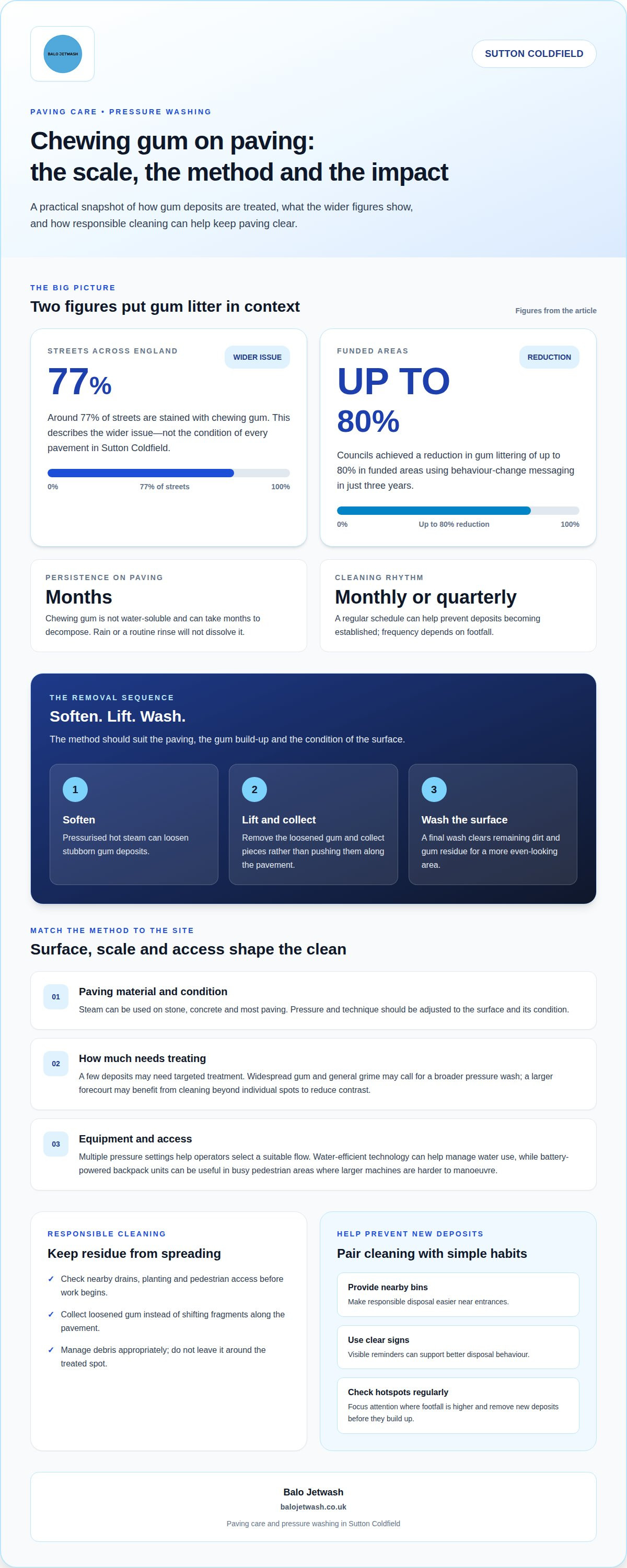
Chewing gum won’t simply wash away with rain. Chewing gum removal from pavement in Sutton Coldfield generally involves softening and lifting the gum, then washing the surface to clear residue and dirt. Pressurised hot steam can loosen stubborn deposits, with the method adjusted to suit the paving.
Gum is a frustrating sight on an otherwise tidy pavement, and scraping alone can leave residue or dark marks. It isn’t water-soluble and can take months to decompose, so careful removal matters for both appearance and the surrounding environment.
This guide explains how steam and pressure washing can help remove gum, what to consider when choosing equipment, and which factors affect the work. You’ll also learn how paving material, the size of the affected area and the need for a wider clean shape the job. This will help you understand the process before arranging a clean.
Key Takeaways
Removal methods should suit the paving, gum build-up and surrounding surface, helping avoid unnecessary marks or damage. Responsible cleaning considers where loosened residue and wash water go, not just how the pavement looks afterwards. Specialist equipment can make stubborn spots easier to treat, but the right technique matters as much as the machine. The work involved, affected area and need for a wider pavement clean can all influence the quote. For commercial exterior cleaning or other outdoor surface-cleaning needs in Sutton Coldfield, Balo Jetwash offers services including graffiti removal, driveway cleaning and patio cleaning.How do you remove chewing gum from pavement?
For chewing gum removal from pavements in Sutton Coldfield, the practical sequence is to soften and lift the gum, then wash the surface. Pressurised hot steam loosens the deposit so it can be removed from paving. A final wash clears remaining dirt and gum residue, helping the cleaned area look more even.
The method needs to suit the surface. Steam can be used on stone, concrete and most paving, while pressure and technique should be adjusted to the material and its condition. Scraping alone can leave residue or dark marks. On a larger forecourt, cleaning the wider area as well as individual spots can reduce the contrast between treated and untreated sections.
Some specialist equipment has several pressure settings, allowing the operator to choose a suitable flow for the task. Water-efficient technology can also help manage water use. Battery-powered backpack units are useful for carrying equipment through busy pedestrian areas, where a larger machine may be harder to manoeuvre. These are different equipment options, not a single method for every pavement.
For commercial premises and local-authority pavements, the work can be planned around the affected area, footfall and access. A small number of spots outside a shop may need targeted treatment; widespread gum and general grime may call for a broader pressure wash. This figure is not a price for an individual job.
Can residents or businesses be fined for chewing gum litter in Sutton Coldfield? Someone who discards gum can receive a fixed penalty notice and fine under littering provisions. Gum stuck outside premises does not, by itself, identify who dropped it.
How can I report chewing gum on a pavement in Sutton Coldfield? Report its location through the council’s street-cleaning or highways reporting channel, including the street name and a nearby landmark. A clear photograph can help show whether the problem is one spot or a wider area.
How can businesses prevent chewing gum building up outside their premises? Provide a nearby bin, keep the entrance area under observation and display clear signs encouraging responsible disposal. A regular cleaning schedule, such as monthly or quarterly depending on footfall, can help stop deposits becoming an established build-up.
Surface choice matters in other exterior cleaning too. For example, roof cleaning and moss removal in Sutton Coldfield also depends on matching the approach to the material and condition.
Gum removal and environmental considerations
Chewing gum is not water-soluble, so rain or a routine rinse won’t dissolve it. It can remain on paving for months before decomposing, leaving a persistent mark and a potential hazard for wildlife. That slow breakdown is one reason gum litter needs to be physically removed rather than simply washed away. A responsible clean loosens and collects the gum, then treats any remaining residue without spreading it across nearby paving.
Cleaning also means considering where loosened gum and dirty water go. Before work begins, assess the affected area for nearby drains, planting and pedestrian access. During treatment, collect removed pieces rather than pushing them along the pavement with the rinse. This helps prevent fragments becoming litter elsewhere. The treated surface can then be washed, with debris managed appropriately rather than left around the original spot.
Gum stains affect more than appearance. A cluster outside a shop entrance, for example, can make otherwise clean paving look neglected. Across England, around 77% of streets are stained with chewing gum. That figure describes the wider issue, not the condition of every pavement in Sutton Coldfield. Targeted removal can improve the appearance of a particular entrance or walkway, while regular checks help spot new deposits before they accumulate.
Prevention matters too. People who chew gum should put it in a bin or wrap it and take it home. Businesses can make disposal easier by placing bins near entrances and using clear signs that encourage responsible behaviour. Councils achieved a reduction in gum littering of up to 80% in funded areas using behaviour-change messaging in just three years. This shows how cleaning and public reminders can work together: removal tackles existing deposits, while signage addresses the habits that create new ones.
For a site manager, a practical environmental routine is straightforward: identify gum hotspots, remove deposits before they spread, collect the waste and keep disposal messages visible. A pavement outside a busy doorway may need closer attention than a quieter boundary. Pairing focused cleaning with bins and signs helps maintain the surface and reduces the chance of discarded gum remaining in the environment for months.
Careful collection matters because chewing gum is not water-soluble and takes months to decompose, which can make it harmful to wildlife. A rinse alone does not address the problem; removed gum should be collected and disposed of rather than shifted elsewhere on the site. This keeps the focus on removing the discarded material, not merely moving it. Careful collection also helps limit persistent gum on the surface and prevents fragments being left behind.
The advice for people using these spaces is straightforward: put chewing gum in a bin or wrap it up and take it home. Clear guidance alongside cleaning makes the environmental aim practical: remove gum already on the paving and encourage responsible disposal afterwards. A consistent approach tackles both existing deposits and disposal habits.
Removal from pavements and other surfaces
Steam treatment can remove chewing gum from stone, concrete and most paving, but the surface needs assessing first. A smooth concrete slab, textured stone entrance and jointed block paving each respond differently to water and pressure. The aim is to loosen the gum while preserving the surrounding finish, joints and edges.
On stone paving, the operator considers the stone’s condition and texture. Rough surfaces can hold gum in small recesses, so treatment needs to reach the deposit rather than simply pass over it. Concrete can also have a textured or worn finish. Controlled cleaning helps avoid leaving one patch noticeably different from the surrounding area.
On block paving, gum can sit on a block’s surface or close to its joints. The cleaning approach should target the gum without dislodging jointing material. On a large paved forecourt, treating isolated spots alone may leave a patchy appearance. Washing a wider area can blend the cleaned section with nearby paving and clear general dirt at the same time.
Before choosing a method, assess these practical details:
Material: identify whether the paving is stone, concrete or another common paving type. Condition: look for worn, cracked or loose sections that need gentler treatment. Texture: check whether gum is caught in surface texture, joints or shallow recesses. Extent: decide whether the work covers a few spots or a larger paved area.Steam removal can also be considered for paved areas such as shop entrances and concrete forecourts. The same surface checks apply: material, condition and the gum’s position guide the technique. Where paving meets another material, cleaning can focus on the affected section and limit unnecessary washing beyond it.
Scraping alone can leave residue and dark marks, especially when gum is firmly bonded to paving. Steam softens the deposit so it can be lifted, followed by washing to clear remaining traces. After cleaning, inspect the spot from different angles. A remaining shadow may be staining rather than gum, so any further treatment should reflect what is actually on the surface.
For premises in Sutton Coldfield, describing the paving accurately helps plan the clean. Mention whether it is stone, concrete or block paving, and whether gum is concentrated near joints or spread across a forecourt. These details help determine the working area and technique without assuming every surface needs the same treatment.
Specialist equipment for chewing gum removal
Specialist gum-removal equipment combines a heat source, controlled delivery and a way to lift loosened deposits. Pressurised hot steam softens gum so it can be removed from the pavement, then the area is washed to clear residue. This differs from using a standard pressure washer alone, which may move surface dirt without effectively loosening firmly bonded gum.
Equipment choice depends on the setting. A compact unit can be easier to position around a shop entrance, while larger equipment may suit open commercial paving. On a busy walkway, access, pedestrian movement and the size of the affected area influence where the machine is positioned. Battery-powered backpack equipment can be easier to manoeuvre in confined or active areas, but still requires a suitable cleaning method and careful operation.
The Gum Blaster weighs 2 kg. That figure describes the named equipment, not the weight of a complete cleaning setup or the amount of gum it can remove. A lightweight tool may be easier to carry between isolated spots, while a steam machine and water supply remain important parts of the wider process. The equipment must match the task, rather than being selected by portability alone.
Before treating a pavement, an operator can consider:
Surface: stone, concrete, block paving or tarmac may need different pressure and handling. Deposit: fresh, softened or firmly attached gum can call for different treatment time. Access: a narrow entrance or busy footpath may favour compact, mobile equipment. Cleaning area: isolated deposits and a gum-spotted forecourt require different coverage.These details also matter if you are considering buying specialist gum-removal equipment. A machine’s weight alone does not show whether it suits a particular pavement. The cleaning method, surface compatibility, water requirements, mobility and need to wash the surrounding area all affect its usefulness. Specialist equipment may be more than occasional spots require, while regular commercial cleaning presents a different use case.
Tarmac needs particular care because heat and pressure affect both the gum and the surrounding surface. Avoid concentrating treatment on one point for too long. Testing a discreet section can help assess how the material responds before cleaning a wider patch. The same principle applies to older paving, where wear or loose edges can influence the approach.
Good equipment supports a controlled process, but it does not replace sound judgement. Matching the machine, heat and pressure to the paving helps remove gum without treating every surface as identical.
Difficulty and cost of pavement gum removal
Chewing gum can be difficult to remove because it bonds to pavement and settles into its texture. A smooth concrete path may be quicker to treat than rough paving with many deposits. Older gum can also need more attention than a fresh piece. The work depends on more than the visible number of spots.
Several practical factors affect the time and effort involved:
Amount of gum: scattered spots require less treatment than a gum-covered forecourt. Surface condition: worn, uneven or jointed paving needs careful handling. Deposit age: firmly attached gum can take longer to soften and lift. Cleaning area: removing surrounding dirt may involve washing beyond individual spots. Access: a busy entrance may need work arranged around safe pedestrian movement.The same factors affect the cost of cleaning. The area’s size, gum coverage, paving material and need for a wider wash all influence the work involved. A small entrance with a few deposits is different from a long pavement dotted with gum. The price depends on the individual job and is provided after a quote request, based on these factors.
How long does pavement chewing gum removal take? There is no fixed duration for every pavement. A few deposits on accessible concrete need less work than widespread gum on textured paving, especially if the surrounding surface also needs washing.
For an assessment in Sutton Coldfield, describe the paving type, the approximate affected area and whether gum is concentrated in one spot or spread along a walkway. A photograph can show the distribution and access conditions. These details help distinguish targeted treatment from a broader clean, without assuming every mark is gum.
Time on site includes preparation and finishing, not just applying steam to each deposit. The operator needs to position the equipment, work around access points, lift softened gum and wash away residue. A commercial entrance with steady footfall may need a more considered work sequence than an empty paved area, so pedestrians can keep a clear route during cleaning.
For premises managers, recording recurring hotspots can help plan future maintenance. Note, for example, whether deposits gather near a doorway or seating area, then focus attention there. Regular removal can prevent a small cluster becoming a larger cleaning task, while a wider wash can tackle surrounding grime at the same time.
Balo Jetwash: Graffiti Removal
Graffiti on exterior surfaces can affect a property’s appearance. If gum removal is part of a broader clean-up, the surface and work required will shape the next step. For businesses managing several exterior areas, commercial exterior cleaning can help address wider presentation needs. Driveway and patio cleaning are also available for those surfaces.
Choose the service that matches the issue: graffiti removal for unwanted markings, or commercial exterior cleaning for a broader area. Share the location in Sutton Coldfield, the surface involved and what needs attention. This is a clear starting point for discussing the work.
Contact Balo Jetwash to discuss the exterior cleaning you need.
Plan your next step for cleaner paving
Make the next step practical: note where gum has collected, what the paving is made from and whether nearby surfaces also need attention. These details help you describe the issue clearly and consider a suitable approach. For chewing gum removal from pavements in Sutton Coldfield, consider whether you need help with isolated deposits or a wider exterior clean.
Balo Jetwash offers driveway, patio and roof cleaning for those looking to refresh other exterior surfaces. Each is a separate cleaning need, so explain which area you want to improve when you get in touch.
Contact Balo Jetwash to discuss the next step for your pavement. A clearer, tidier entrance can be a satisfying place to start.
Frequently Asked Questions
Who is responsible for removing chewing gum from pavements in Sutton Coldfield?
Responsibility depends on whether the pavement is public or part of private premises. For a public footway, report the location to the council responsible for street maintenance. For paving within a shop’s boundary, the property owner or manager can arrange cleaning. Include a nearby landmark when reporting a public pavement, or identify the entrance area when arranging work on private premises.
What does professional chewing gum removal cost in Sutton Coldfield?
There is no standard cost for every pavement-cleaning job. The quote depends on the area to be treated, how widely gum is spread, the paving material and whether surrounding surfaces also need cleaning. A short entrance with isolated deposits differs from a larger forecourt with widespread spotting. Describe the location and extent of the affected area when requesting a quote, so the work can be assessed appropriately.
Which contractors remove chewing gum from pavements in Sutton Coldfield?
Commercial exterior-cleaning businesses are the relevant choice for pavement cleaning at shops and other premises. Balo Jetwash provides commercial exterior cleaning for businesses planning a wider clean. For a pavement-only issue, describe the surface and affected area when discussing the work. This helps establish whether the task is limited to an entrance or forms part of broader commercial exterior cleaning.
What methods are used to remove chewing gum from pavement?
Professional cleaners commonly use pressurised hot steam to soften chewing gum, then lift it from the paving and wash the treated area. The technique can be adjusted for surfaces such as concrete walkways or stone entrances. An isolated deposit can be treated on its own; a gum-spotted forecourt may need wider cleaning for a more consistent appearance.
Are there environmental or surface-damage risks when removing chewing gum?
Yes. Gum can remain in the environment for months, and careless washing may spread loosened residue rather than collect it. Unsuitable pressure or aggressive scraping can leave marks or affect vulnerable areas. A careful approach considers drains, nearby planting, joints and surface condition before work starts. For example, older block paving needs attention around its joints as well as the gum itself.
{"@context":"https://schema.org","@type":"FAQPage","mainEntity":[{"@type":"Question","name":"Who is responsible for removing chewing gum from pavements in Sutton Coldfield?","acceptedAnswer":{"@type":"Answer","text":"Responsibility depends on whether the pavement is public or part of private premises. For a public footway, report the location to the council responsible for street maintenance. For paving within a shop’s boundary, the property owner or manager can arrange cleaning. Include a nearby landmark when reporting a public pavement, or identify the entrance area when arranging work on private premises."}},{"@type":"Question","name":"What does professional chewing gum removal cost in Sutton Coldfield?","acceptedAnswer":{"@type":"Answer","text":"There is no standard cost for every pavement-cleaning job. The quote depends on the area to be treated, how widely gum is spread, the paving material and whether surrounding surfaces also need cleaning. A short entrance with isolated deposits differs from a larger forecourt with widespread spotting. Describe the location and extent of the affected area when requesting a quote, so the work can be assessed appropriately."}},{"@type":"Question","name":"Which contractors remove chewing gum from pavements in Sutton Coldfield?","acceptedAnswer":{"@type":"Answer","text":"Commercial exterior-cleaning businesses are the relevant choice for pavement cleaning at shops and other premises. Balo Jetwash provides commercial exterior cleaning for businesses planning a wider clean. For a pavement-only issue, describe the surface and affected area when discussing the work. This helps establish whether the task is limited to an entrance or forms part of broader commercial exterior cleaning."}},{"@type":"Question","name":"What methods are used to remove chewing gum from pavement?","acceptedAnswer":{"@type":"Answer","text":"Professional cleaners commonly use pressurised hot steam to soften chewing gum, then lift it from the paving and wash the treated area. The technique can be adjusted for surfaces such as concrete walkways or stone entrances. An isolated deposit can be treated on its own; a gum-spotted forecourt may need wider cleaning for a more consistent appearance."}},{"@type":"Question","name":"Are there environmental or surface-damage risks when removing chewing gum?","acceptedAnswer":{"@type":"Answer","text":"Yes. Gum can remain in the environment for months, and careless washing may spread loosened residue rather than collect it. Unsuitable pressure or aggressive scraping can leave marks or affect vulnerable areas. A careful approach considers drains, nearby planting, joints and surface condition before work starts. For example, older block paving needs attention around its joints as well as the gum itself."}}]}Information
Water available? - You don't need to be present for us to carry out the service. If required, we can supply water ourselves.
Insurance
Balo Jetwash is fully insured, We have £5,000,000 of public liability insurance. Balo Jetwash operatives are professional, reliable and endeavour to carry out the work to the highest standard with minimal fuss and upheaval.