
Fixing Tiger Stripes on a Driveway: A Practical Guide

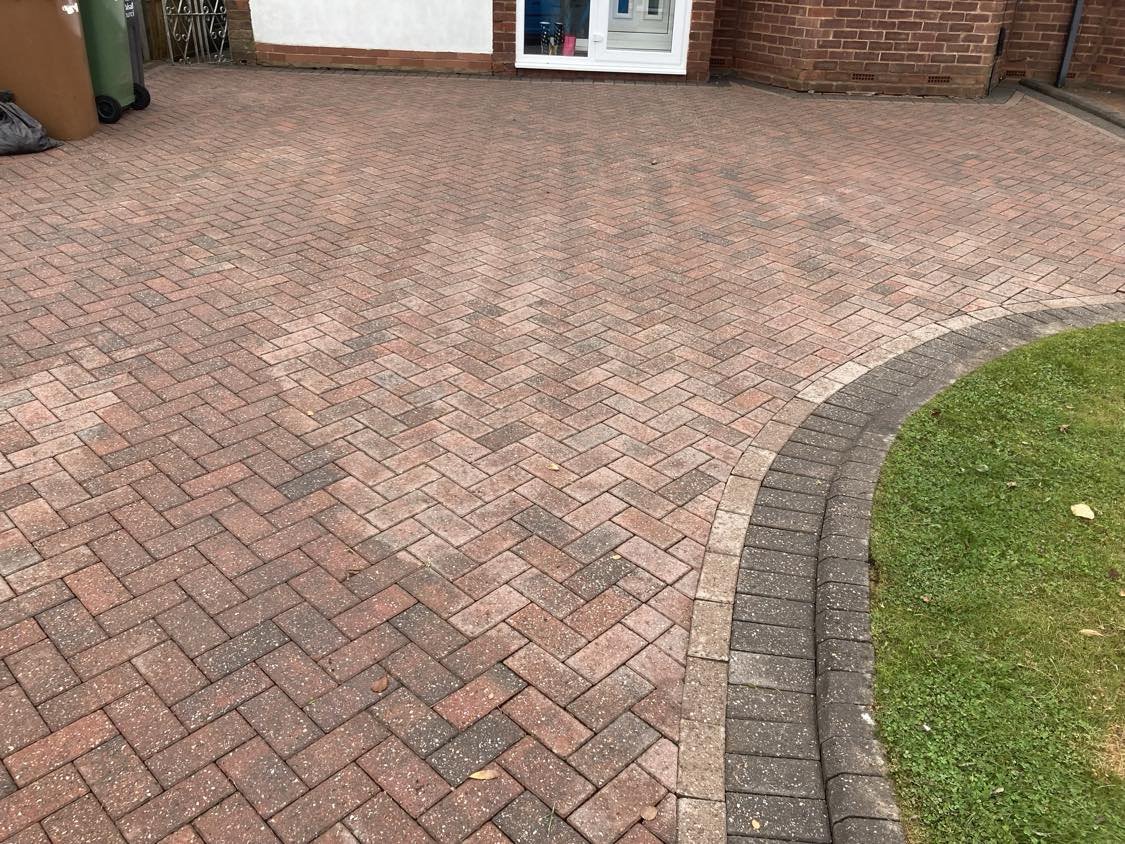
If you’re searching for “fixing tiger stripes on driveway Boldmere”, it’s tempting to make another pressure-washing pass straight away. But if the bands are caused by uneven cleaning or the surface has already been affected, repeating the same approach could make the finish less even. First, take a moment to check what you’re seeing.
Repeated light-and-dark bands can spoil an otherwise tidy drive, but they don’t always have the same cause. They may be leftover dirt, patchy cleaning or a lasting change to the surface. Before trying a quick fix, check the driveway’s material and condition, and consider whether another wash is likely to help.
This guide explains common causes of tiger stripes, what to inspect and how to choose proportionate next steps for different surfaces. It also covers when to stop DIY attempts and ask a professional to assess the driveway. Balo Jetwash provides driveway cleaning for residential customers in Sutton Coldfield and Wolverhampton. First, let’s look at what those stripes may be telling you.
Key Takeaways
Learn why repeated light-and-dark bands may appear after driveway cleaning, and why the pattern alone can’t confirm the cause. Find out what to photograph and check, including the driveway material, its condition and any loose or damaged areas. Compare a cautious small-area rinse with pausing work and asking an experienced cleaner to assess the surface. Follow a measured plan before attempting a remedy, and stop if a small test makes the appearance or surface condition worse. See when professional driveway cleaning in Sutton Coldfield may help, and what to discuss with Balo Jetwash about the surface and work needed.Tiger stripes on a driveway: what the marks mean and why they appear
Tiger stripes are repeated light-and-dark bands that remain visible after a driveway has been cleaned. They may follow the route of a washer or cleaning tool, leaving the surface looking patchy. That pattern can suggest uneven cleaning, but it doesn’t prove a single cause. Residue, natural colour variation, wear and changes to the surface can look similar.
Check the marks before making another cleaning pass. Consider whether you’re seeing grime that remains, ordinary variation or a possible change to the driveway surface. Washing again without understanding the difference may not improve the finish and could affect a vulnerable area.
How to recognise pressure-washing stripes
Look for repeated bands or arcs that seem to follow a cleaning path across the driveway. Note whether they appear on one material, such as block paving, or continue across different areas. These observations can help you decide what to investigate, but they aren’t proof of the cause. Appearance alone can’t confirm whether a mark is permanent.
Why tiger stripes may appear after a driveway wash
Uneven movement, inconsistent overlap between passes or changing the distance from the surface can leave some areas cleaner than others. A surface cleaner may also leave lines if it’s used unevenly or isn’t suited to the surface. These are possible explanations, not a diagnosis of every striped driveway.
Remaining grime or organic growth may account for some darker areas. In other places, cleaning can make pre-existing colour differences or wear more noticeable. Pressure may also have altered the surface itself. These possibilities call for different responses: further cleaning might address residue, but it shouldn’t be assumed to reverse a lasting change. The driveway’s material and condition are important clues.
Consider where the marks appear, too. A pattern that follows a washing route may point towards the cleaning process, while discolouration beneath a roof edge could have another source. For background on what asphalt shingles are made of, see Wikipedia’s overview. It may be relevant if you’re investigating material carried down from a roof, but it won’t diagnose marks on a driveway.
Before deciding how to tackle the stripes, establish what the surface is made of and what may have caused the pattern. A careful diagnosis is a more sensible starting point than guessing with another wash.
What to check before trying to fix driveway tiger stripes
Before choosing a remedy, make a clear record of the marks and check what surface you’re dealing with. These simple steps can help you avoid an unsuitable test or another wash that leaves the finish less even.
Check the driveway material and condition first
Photograph the stripes in consistent daylight, ideally from the same position and angle each time. This gives you a fair comparison if you later test a remedy. Identify whether the driveway is concrete, block paving or another material, as a method that suits one surface may not suit another.
Inspect for loose joints, flaking, cracks and worn-looking patches. If you know the driveway’s age or previous repairs, note those too. A stripe pattern is a clue, not a diagnosis. If you can’t identify the material or the surface seems fragile, pause and ask an experienced cleaner to assess it before trying a remedy.
Tell removable dirt from possible surface damage
If the surface is known and appears sound, a small test in a discreet area may help you judge whether a gentle rinse changes the appearance. Compare the patch with the surrounding driveway once it has dried. A difference while wet may not reflect how the surface will look afterwards, so wait until it is dry before deciding what to do next.
If the stripes remain unchanged, or the test makes the colour or texture look worse, stop. Repeated concentrated washing may not reveal the cause and could affect a vulnerable surface. Fixed colour or texture differences may relate to wear or surface alteration. Don’t assume another wash, detergent or fresh jointing sand will reverse those changes.
Before any further cleaning, consider where the water and loosened debris will go, and follow relevant local guidance for managing them. If you’re unsure how to handle runoff or protect the surrounding area, ask an experienced cleaner what precautions are appropriate for the job.
Still uncertain? A professional assessment can help clarify the surface, its condition and a suitable next step. Balo Jetwash provides professional driveway cleaning, with the approach depending on the material and its condition.
Comparing ways to correct tiger stripes on a driveway
The right next step depends on the driveway material, its condition and whether the marks may be leftover grime or a surface change. A cautious test might help if the surface is known and looks sound. If you’re uncertain, pause and arrange an experienced cleaner’s assessment instead of risking another uneven result.
| Option | When it may suit | Limit and main caution |
|---|---|---|
| Cautious small-area rinse | The material is known, the surface appears sound and the rinse is suitable for it. | It may show whether some residue shifts, but it won’t confirm the cause. Stop if the appearance or surface worsens. |
| Professional assessment | The driveway is unfamiliar, valuable, damaged or marked unevenly. | A cleaner can assess the surface and discuss suitable options, but cleaning can’t be guaranteed to reverse lasting changes. |
When a cautious DIY test may be reasonable
Limit any test to a discreet patch and use only a method appropriate for the known surface. Avoid repeating high-pressure passes over the whole driveway or applying unverified chemicals in the hope of blending the bands. Check the test area once it has dried. If the texture changes, material loosens or the contrast becomes more noticeable, stop and reassess rather than continuing.
When professional driveway cleaning is the better next step
Ask for an assessment if the driveway is fragile, damaged, unfamiliar or unevenly marked. Before work begins, ask the cleaner to explain the proposed method and how it suits the surface’s material and condition. Professional re-cleaning may improve residual dirt, but fixed colour or texture changes may remain. A careful cleaner should discuss realistic outcomes rather than promise every mark will disappear.
For anyone weighing up ways to address striped wash marks, choosing the right approach matters more than rushing into another pass. Balo Jetwash offers driveway cleaning in Sutton Coldfield and Wolverhampton. Read about its professional driveway pressure washing and ask how the work may be adapted to your driveway.
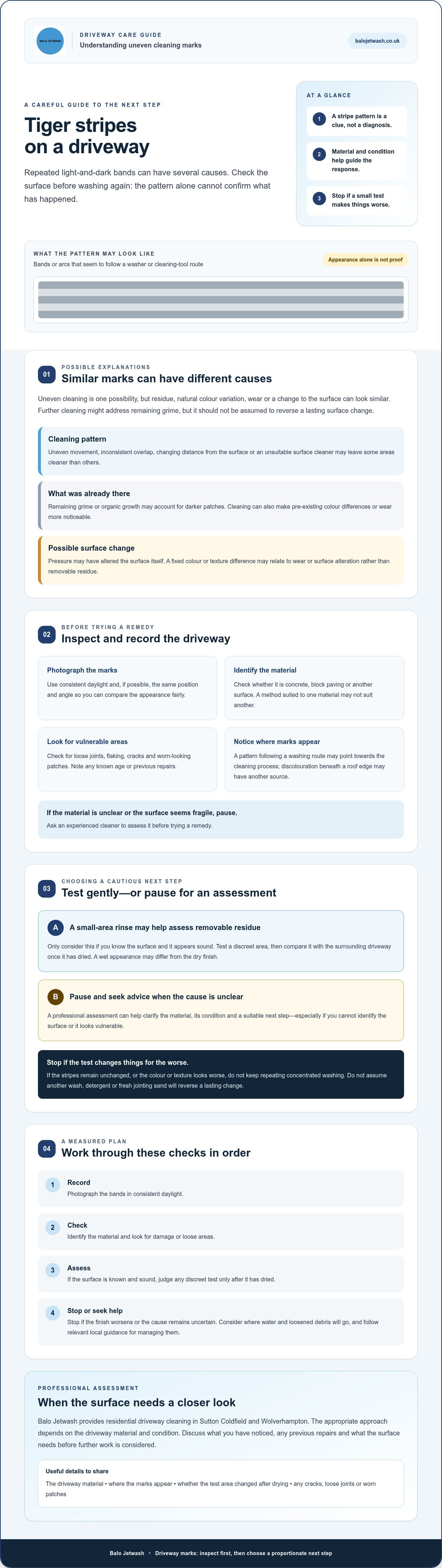
A safer step-by-step plan for fixing driveway tiger stripes
A striped finish can be frustrating, but another full wash isn’t automatically the answer. Use this sequence to decide whether a cautious check is appropriate or whether it’s time to pause and get help.
Let the driveway dry. Inspect it in consistent daylight once the surface is dry, as water can temporarily change how colour and marks appear. Document the pattern. Take clear photographs from a few angles. Note where the bands appear and whether they follow the route used during cleaning. Identify the material. Work out whether the driveway is concrete, block paving or another surface. Note its condition, including any loose joints, cracks or worn patches. Record what happened. Write down the cleaning method and any changes you noticed, such as material loosening or the stripes becoming more visible. Choose a proportionate next step. If the material is known and appears sound, consider only a discreet test using a suitable method. If the cause or surface condition is uncertain, pause and seek a professional assessment.
What to do after a DIY wash leaves stripes
Don’t rush into another whole-driveway attempt. Compare the dry surface with your photographs and check whether the pattern has changed. If you carry out a small test, stop and reassess if it makes the contrast more obvious, changes the texture or loosens any material. A worsening result is a clear reason not to continue with the same approach.
The right cleaning method depends on the driveway type and its condition. Joint-sand replacement is relevant to some block-paved drives, but not every surface. Don’t assume adding sand or applying detergent will correct marks caused by a lasting surface change.
How to brief a driveway-cleaning professional
Share your photographs, the surface material, any damage you’ve noticed and what you did before the stripes appeared. Ask how the proposed cleaning approach will be adapted to the driveway’s material and current condition, and what it may or may not improve. If the drive is block paving, ask whether re-sanding is suitable and included in the proposed work.
If you’re considering how to fix tiger stripes on your driveway, a clear account of what happened helps an experienced cleaner assess the next step. Explore Balo Jetwash driveway cleaning and ask about an approach suited to your surface.
Getting professional help with driveway tiger stripes in Sutton Coldfield
If the marks remain after the surface has dried, or you’re unsure what the driveway can safely tolerate, a professional assessment is a sensible next step. Balo Jetwash provides residential driveway cleaning in Sutton Coldfield and Wolverhampton. The approach should take the driveway’s material and condition into account.
What a professional assessment should clarify
Before work begins, ask the cleaner to identify the surface and explain what might be causing the stripes. The pattern could point to uneven cleaning, but residue, natural colour differences, wear or a surface change may need different responses. Ask what cleaning may improve, what might remain and whether any areas are unlikely to respond. A clear explanation helps set realistic expectations, without assuming every mark can be removed.
Check which parts of the service apply to your particular driveway and the work proposed. Re-sanding, for example, is relevant only where the surface and work make it suitable, so confirm whether it applies to your driveway before treating it as part of the job.
Arrange a local driveway-cleaning assessment
When enquiring, describe the driveway material, its current condition and what cleaning method you used before the stripes appeared. Have clear photographs ready to show the pattern, and ask how the proposed approach would be adapted to your surface. These details can support a more informed discussion before any work starts.
If you’re unsure how to fix stripes left by a previous wash, there’s no need to risk worsening the finish with repeated attempts. Talk through the marks, driveway condition and possible next steps with Balo Jetwash. Contact Balo Jetwash and include what you’ve observed so the conversation can start with your driveway’s needs. An assessment can help clarify what cleaning may achieve, although a particular result can’t be guaranteed.
Choose a careful next step for a cleaner-looking driveway
Tiger stripes can come from uneven cleaning, leftover grime or changes to the surface. The pattern alone can’t confirm the cause, so photograph the marks, identify the driveway material and check its condition before trying another wash. If a small, cautious test worsens the appearance or surface, stop and ask a professional to assess it.
For homeowners researching fixing tiger stripes on driveway Boldmere, Balo Jetwash offers professional residential driveway cleaning in Sutton Coldfield and Wolverhampton. Cleaning may improve residual dirt, but lasting surface changes may remain.
Share photographs and details of your previous cleaning attempt when you enquire. Contact Balo Jetwash to discuss your driveway and a suitable approach before work begins. A careful assessment is a positive first step towards a driveway you can feel proud of.
Frequently Asked Questions
What causes tiger stripes on a driveway?
Tiger stripes usually describe repeated light-and-dark bands left visible after cleaning, but the pattern alone can’t confirm the cause. Uneven movement, inconsistent overlap or changing the distance from the surface may clean some areas more thoroughly than others. A surface cleaner used unevenly could also contribute. Remaining grime, natural colour differences, wear or surface changes can look similar, so assess the material and condition before deciding to wash again.
Can tiger stripes be removed from a concrete driveway?
They may improve if the bands are caused by grime left behind, but there’s no guarantee that every mark on concrete can be removed. First check whether the surface appears worn, cracked or otherwise changed. If it seems sound and you understand the cleaning method, test a small, discreet area. Stop if the test affects the texture or makes the contrast more obvious, and ask an experienced cleaner to assess uncertain or fragile concrete.
Should I pressure wash my driveway again to remove tiger stripes?
Not before you’ve checked the surface and considered what may have caused the stripes. Another pass could help with some remaining grime, but repeating the same technique may leave a similarly uneven finish or affect a vulnerable area. Let the driveway dry, photograph the marks and identify the material first. If a suitable small test makes the marks or surface condition worse, stop and seek professional advice rather than washing the whole drive again.
How do I know whether driveway stripes are dirt or surface damage?
Appearance alone can’t reliably distinguish dirt from surface damage. Photograph the dry driveway in consistent daylight, then note whether the marks appear to change after a cautious rinse on a small, inconspicuous patch. A change may suggest removable residue, but it doesn’t prove the cause. Fixed differences in colour or texture may relate to wear or surface alteration. If the pattern stays the same or the test worsens it, stop and arrange an assessment.
Can a professional driveway cleaner fix marks left by a previous wash?
A professional cleaner may improve marks if they’re caused by residual dirt and the driveway is suitable for further cleaning. First, they should assess the material and condition, then explain the proposed approach and realistic limits. Marks caused by lasting surface changes may remain, so don’t expect a guaranteed stripe-free finish. Share photographs and describe the earlier cleaning method to help the cleaner understand what happened before recommending a next step.
Is it safe to use detergent on a striped driveway?
Only use a cleaning detergent if it’s appropriate for the driveway material and you understand how it should be applied. An unsuitable product or method could affect the surface, and detergent won’t necessarily correct marks caused by wear or surface changes. Don’t apply an unverified chemical across the whole driveway as a trial. If the material is unfamiliar or the stripes remain unexplained, ask an experienced cleaner to assess the surface first.
What should I tell a driveway cleaner before asking for an assessment in Sutton Coldfield?
Tell the cleaner what the driveway is made from, what condition it’s in and when the stripes appeared. Describe the pressure-washing method or equipment used, any detergent applied and changes you noticed during cleaning. Clear photographs taken in daylight can help show the pattern. Mention loose joints, cracks or worn patches too. This information gives a cleaner a better basis to assess the driveway and discuss a suitable approach and its limitations.
{"@context":"https://schema.org","@type":"FAQPage","mainEntity":[{"@type":"Question","name":"What causes tiger stripes on a driveway?","acceptedAnswer":{"@type":"Answer","text":"Tiger stripes usually describe repeated light-and-dark bands left visible after cleaning, but the pattern alone can’t confirm the cause. Uneven movement, inconsistent overlap or changing the distance from the surface may clean some areas more thoroughly than others. A surface cleaner used unevenly could also contribute. Remaining grime, natural colour differences, wear or surface changes can look similar, so assess the material and condition before deciding to wash again."}},{"@type":"Question","name":"Can tiger stripes be removed from a concrete driveway?","acceptedAnswer":{"@type":"Answer","text":"They may improve if the bands are caused by grime left behind, but there’s no guarantee that every mark on concrete can be removed. First check whether the surface appears worn, cracked or otherwise changed. If it seems sound and you understand the cleaning method, test a small, discreet area. Stop if the test affects the texture or makes the contrast more obvious, and ask an experienced cleaner to assess uncertain or fragile concrete."}},{"@type":"Question","name":"Should I pressure wash my driveway again to remove tiger stripes?","acceptedAnswer":{"@type":"Answer","text":"Not before you’ve checked the surface and considered what may have caused the stripes. Another pass could help with some remaining grime, but repeating the same technique may leave a similarly uneven finish or affect a vulnerable area. Let the driveway dry, photograph the marks and identify the material first. If a suitable small test makes the marks or surface condition worse, stop and seek professional advice rather than washing the whole drive again."}},{"@type":"Question","name":"How do I know whether driveway stripes are dirt or surface damage?","acceptedAnswer":{"@type":"Answer","text":"Appearance alone can’t reliably distinguish dirt from surface damage. Photograph the dry driveway in consistent daylight, then note whether the marks appear to change after a cautious rinse on a small, inconspicuous patch. A change may suggest removable residue, but it doesn’t prove the cause. Fixed differences in colour or texture may relate to wear or surface alteration. If the pattern stays the same or the test worsens it, stop and arrange an assessment."}},{"@type":"Question","name":"Can a professional driveway cleaner fix marks left by a previous wash?","acceptedAnswer":{"@type":"Answer","text":"A professional cleaner may improve marks if they’re caused by residual dirt and the driveway is suitable for further cleaning. First, they should assess the material and condition, then explain the proposed approach and realistic limits. Marks caused by lasting surface changes may remain, so don’t expect a guaranteed stripe-free finish. Share photographs and describe the earlier cleaning method to help the cleaner understand what happened before recommending a next step."}},{"@type":"Question","name":"Is it safe to use detergent on a striped driveway?","acceptedAnswer":{"@type":"Answer","text":"Only use a cleaning detergent if it’s appropriate for the driveway material and you understand how it should be applied. An unsuitable product or method could affect the surface, and detergent won’t necessarily correct marks caused by wear or surface changes. Don’t apply an unverified chemical across the whole driveway as a trial. If the material is unfamiliar or the stripes remain unexplained, ask an experienced cleaner to assess the surface first."}},{"@type":"Question","name":"What should I tell a driveway cleaner before asking for an assessment in Sutton Coldfield?","acceptedAnswer":{"@type":"Answer","text":"Tell the cleaner what the driveway is made from, what condition it’s in and when the stripes appeared. Describe the pressure-washing method or equipment used, any detergent applied and changes you noticed during cleaning. Clear photographs taken in daylight can help show the pattern. Mention loose joints, cracks or worn patches too. This information gives a cleaner a better basis to assess the driveway and discuss a suitable approach and its limitations."}}]}
Information
Water available? - You don't need to be present for us to carry out the service. If required, we can supply water ourselves.
Insurance
Balo Jetwash is fully insured, We have £5,000,000 of public liability insurance. Balo Jetwash operatives are professional, reliable and endeavour to carry out the work to the highest standard with minimal fuss and upheaval.