
Soft Washing vs Pressure Washing Roof: Which Is Best for Your Home?

What if the quickest looking roof clean is also the one that puts your tiles at risk? If moss is tumbling into your gutters, it can be tempting to reach for high pressure washing. But a forceful jet can crack tiles, wear away their protective surface, damage mortar and force water beneath the roof covering. So, is pressure washing likely to damage your roof, or is soft washing just a sales pitch? The difference matters.
It’s understandable to feel unsure when contractors give conflicting advice, especially when the last thing you want is a leak or costly damage. In the soft washing vs pressure washing roof debate, the right method depends on how the cleaning works and what your roof can safely withstand. Soft washing uses low pressure and a cleaning solution to treat organic growth, whilst pressure washing relies on a forceful stream of water.
This guide explains how the methods differ, what risks to look out for and what to ask before arranging a clean. Balo Jetwash provides roof cleaning and moss removal, as well as driveway and patio cleaning, for customers in Wolverhampton and Sutton Coldfield.
Key Takeaways
Learn how moss, lichen and algae affect a roof’s appearance and why the cleaning method should suit the tiles. Compare soft washing and pressure washing, including how each approach treats organic growth. Understand the risks of high pressure, from displaced tiles to water getting beneath them. Find out what to ask about preparation, debris and drainage before a roof clean. Explore Balo Jetwash’s roof cleaning and moss removal service in Wolverhampton and Sutton Coldfield.The Roof Cleaning Dilemma: Understanding the Best Approach for Your Home
Before choosing a roof cleaning method, take stock of what you can see safely from the ground. Note where growth appears, whether it is limited to a few areas or spread across a slope, and whether loose debris is collecting near the gutters. Photos taken from the ground can help you describe the issue when asking for an assessment. There is no need to climb up and inspect the tiles yourself.
For homes in Wolverhampton and Sutton Coldfield, roof materials and property features vary, so a visual check is only a starting point. A professional assessment can help establish what is on the surface and whether the tiles need special consideration. The soft washing overview offers background on one roof cleaning approach, but the right choice for an individual home depends on its materials and condition.
Common Roof Contaminants in Wolverhampton and Sutton Coldfield
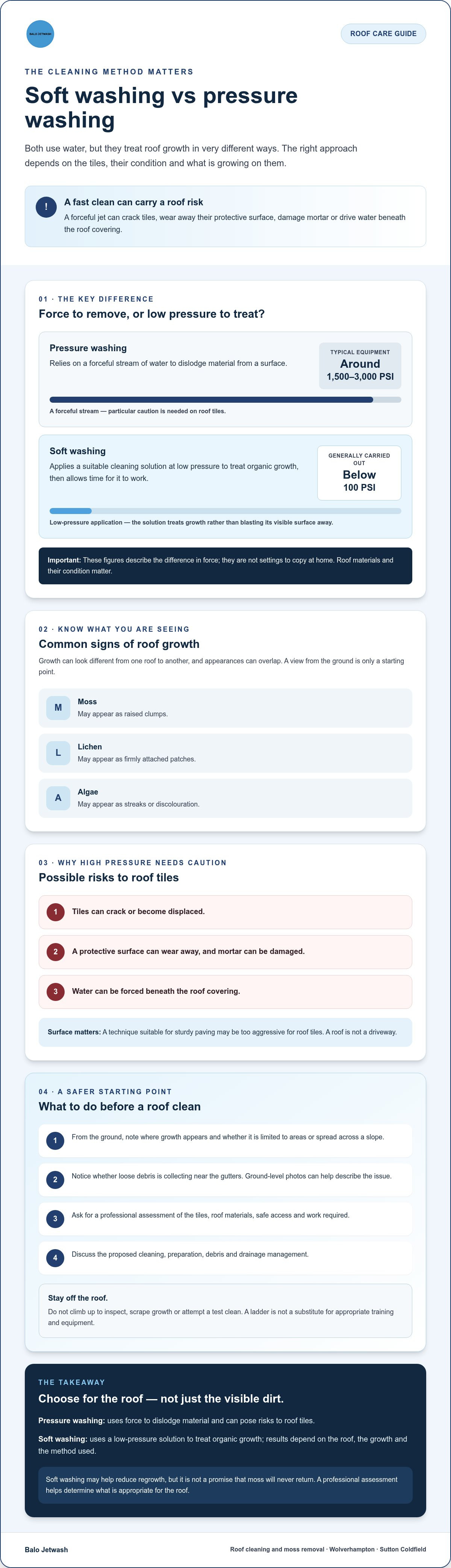
Moss may appear as raised clumps, lichen as firmly attached patches, and algae as streaks or discolouration. Their appearance can overlap, so it is not always possible to identify the growth from ground level. Rather than scraping or washing a test patch yourself, record where the marks are and ask a professional to assess them. This gives you a practical starting point for discussing the cleaning plan.
Why Doing It Yourself Often Leads to Trouble
Working at roof height involves risks, and a ladder is not a substitute for appropriate training and equipment. Avoid climbing up to investigate or attempting a small test clean. A professional assessment can consider the tile condition, safe access and work required before recommending a method. Ask what the proposed cleaning involves and how the team will manage debris around your property.
Balo Jetwash provides roof cleaning and moss removal, alongside driveway and patio cleaning. If you are comparing exterior cleaning services, you can also view its driveway pressure washing service.
Contact Balo Jetwash to discuss roof cleaning in Wolverhampton or Sutton Coldfield.
Soft Washing vs Pressure Washing Roof: What Is the Real Difference?
Both methods use water, but they clean in different ways. Pressure washing relies on a forceful jet to dislodge material from a surface. Soft washing uses low pressure to apply a cleaning solution that treats organic growth. The right choice depends on the surface: a method that can refresh sturdy paving may be too aggressive for roof tiles.
Typical pressure washing equipment can operate at around 1,500 to 3,000 PSI, whilst soft washing is generally carried out below 100 PSI. These figures describe the difference in force, not settings to copy at home. Roof materials vary, and their condition matters just as much as the cleaning method.
High Pressure Washing: Power Over Precision
On a suitable hard surface, a concentrated water jet can lift stubborn dirt and algae. That makes pressure washing a common approach for driveways, where the paving can be assessed and the technique adjusted to suit it. Balo Jetwash offers driveway cleaning, but roof tiles are not a driveway. A forceful jet can dislodge tiles, wear away a protective surface or drive water beneath the covering, so high pressure demands particular caution on a roof.
Soft Washing: Treating Organic Growth
Soft washing aims to treat organic growth rather than simply blast its visible surface away. A suitable cleaning solution is applied at low pressure and given time to work. This waiting period is sometimes called dwell time. The treatment may help reduce regrowth, though results depend on the roof, the growth and the method used. It is not a promise that moss will never return.
Balo Jetwash specialises in roof cleaning and moss removal. The product and process should suit the roof, rather than relying on force alone. That distinction is central to soft washing vs pressure washing roof: one approach treats organic growth with a low pressure application, whilst the other uses physical force to remove material. A professional assessment helps determine what is appropriate for your tiles.
To discuss a roof clean, contact Balo Jetwash about its roof cleaning and moss removal service in Wolverhampton and Sutton Coldfield.
Why High-Pressure Washing Can Damage Your Roof Tiles
A roof is not a flat, seamless surface. Its tiles overlap to shed rain, and that design can be vulnerable to water aimed upwards or beneath the edges. A powerful jet may shift or crack a tile, disturb pointing or push water under the roof covering. If moisture reaches the loft and remains there, it can contribute to damp and, over time, mould or timber decay. The risk depends on the roof’s material, age and condition, as well as the way it is cleaned.
That is why the soft washing vs pressure washing roof choice is about more than how quickly visible moss disappears. Force can remove growth from the surface, but it may also affect the tiles themselves. A low pressure approach avoids the same forceful jet, although the cleaning solution and process still need to be suitable for the roof.
Stripping the Protective Layer
Some concrete tiles have a granular finish that forms part of their outer surface. Aggressive washing can dislodge this material, leaving the finish worn or uneven and exposing more of the tile beneath. That can make the roof look older and may reduce the protection the surface provides. A rougher surface can also hold moisture and organic debris, creating conditions where growth may take hold again. Clay tiles differ in material and finish, so they need their own assessment rather than a one method fits all approach.
Water Ingress and Structural Risks
Tiles work by directing water downwards and over the rows below. A jet aimed against this direction can drive water beneath the overlaps, where it may reach the underlay or loft space. A displaced or cracked tile can create another route for rain to enter. If you notice damp patches, a musty smell or signs of moisture in the loft after cleaning, arrange an inspection rather than assuming the roof will dry without issue.
Soft washing uses low pressure to apply a suitable cleaning solution, reducing the risk associated with a forceful water stream. It still calls for care: the roof should be assessed, and the method should suit its tiles and condition. Pressure washing has a place on suitable driveways too, but the cleaning method for paving should not automatically be transferred to a roof.
For roof cleaning and moss removal in Wolverhampton or Sutton Coldfield, contact Balo Jetwash to discuss your property.
The Professional Soft Washing Process: Transforming Your Roof Safely
A careful roof clean is more than applying detergent and hoping for the best. The roof’s tiles, existing condition, moss coverage and drainage all affect the approach. A professional process considers the surface, manages loose growth and uses a suitable treatment without relying on a forceful jet.
Manual Moss Removal and Preparation
Where appropriate, the first step is to remove heavier moss by hand with tools suited to the tiles. Taking away loose clumps before applying a cleaning solution can help prevent debris from washing straight into gutters and downpipes. The surrounding area should also be considered. A professional can plan how to manage falling material and protect nearby surfaces and planting during the work.
Gutters and downpipes need attention as part of preparation, so accumulated moss does not obstruct drainage during cleaning. Ask whether the proposed service includes checking or clearing debris from the gutters. The exact steps should be based on the property and roof condition, rather than treated as a routine that suits every home.
Applying the Cleaning Solution
Next, a suitable cleaning solution is applied at low pressure. The appropriate product and method depend on the roof. Black marks or firmly attached lichen may not disappear instantly, so do not assume that more pressure is the answer. Ask the cleaner what they think is causing the marks and what result is realistic for your tiles.
The solution may need time to work, a stage often called dwell time. Its duration depends on the product and conditions, so it should be handled according to its instructions rather than guessed. Biocides can help keep a roof cleaner for longer by treating organic growth that may otherwise encourage regrowth.
After treatment, the roof may receive a gentle rinse where appropriate, followed by a visual check of the treated areas and drainage. A final inspection can identify remaining visible growth or issues that need further attention. It should not be presented as a guarantee that every mark will vanish immediately.
This measured process is one reason the soft washing vs pressure washing roof decision deserves care: the aim is to treat growth whilst limiting unnecessary force on the tiles. Before work starts, ask what stages are planned and how the method will be adapted to your roof.
Contact Balo Jetwash to discuss a roof clean in Wolverhampton or Sutton Coldfield.
Revitalise Your Property with Balo Jetwash’s Roof Care
A roof clean should leave you clearer about your property’s condition, not guessing what was done. Balo Jetwash offers roof cleaning and moss removal in Wolverhampton and Sutton Coldfield. Before arranging work, ask what the service includes, which method is proposed and how the team will manage debris around your property.
Choose a Method That Suits Your Roof
The important question is not simply whether a contractor uses pressure washing or soft washing. Ask how the roof will be assessed and why the proposed method suits its tile type and condition. Professional tools can support a controlled approach, but the cleaning method still needs to be appropriate for the surface.
A cleaner roof can make a noticeable difference to the look of your home. The final appearance depends on the roof’s material, condition and type of growth, so a realistic assessment is more useful than a promise of a particular finish or lasting result.
Your Local Exterior Cleaning Service
Homes in Wolverhampton and Sutton Coldfield can differ in roof style, exposure and surrounding shade. When discussing a roof clean, explain where growth is appearing and whether you have noticed loose debris or drainage problems. Ask how the proposed work will address those details and what will be checked when it is complete.
For a separate exterior refresh, Balo Jetwash also offers driveway pressure washing.
Contact Balo Jetwash about roof cleaning and moss removal in Wolverhampton or Sutton Coldfield.
Choose a Safer Clean for a Fresher Looking Roof
Choosing a roof cleaning service is a chance to ask practical questions: what method suits your tiles, how will the work be carried out, and what result can you reasonably expect? A clear plan should explain how the roof will be assessed, how loose debris will be managed and whether gutters or downpipes need attention.
Balo Jetwash serves homeowners in Sutton Coldfield and Wolverhampton with roof cleaning and moss removal. Describe what you have noticed from the ground and ask the team to explain the proposed approach before work begins.
Ready to discuss your roof? Contact Balo Jetwash to enquire about its roof cleaning service. A considered first step can help you choose a method that is appropriate for your home.
Frequently Asked Questions
Is soft washing safe for my garden plants and pets?
It can be carried out with care, but do not assume every cleaning solution is harmless to plants or pets. Ask the cleaner which product will be used and what precautions are needed around your garden. Move pets indoors and relocate vulnerable pots or outdoor items before work begins, following the contractor’s guidance. Make sure you understand any site specific precautions before the cleaning starts.
How long does a professional roof clean actually take?
There is no single reliable time estimate for every roof. The duration depends on factors such as roof size, access, tile condition and the amount of moss or lichen present. Preparation and clearing loose debris can also affect the visit. Ask the contractor for an estimate after they have assessed your property, and check what the proposed work includes so you know what to expect.
Will soft washing remove the black spots on my tiles?
Soft washing may help treat organic growth, but black spots can have different causes and may not disappear immediately. Lichen, for example, can cling firmly to tiles, and the visible result depends on the roof’s condition and the treatment used. Ask the cleaner to identify the marks and explain what result is realistic before work starts. Be wary of promises that every mark will vanish straight away.
Can I pressure wash my roof if I am very careful with the nozzle?
It is still risky, even if you try to control the nozzle. A high pressure jet can displace or crack tiles, wear their surface and force water beneath overlapping rows. Changing the angle does not remove those risks, particularly on older or weakened tiles. Before choosing a method, have the roof assessed and discuss a low pressure approach designed for the tile type and existing condition.
How often should I have my roof professionally cleaned?
A general guide is to consider professional roof cleaning every three to five years, though the right interval varies with the property. North facing or tree shaded roofs may need attention sooner, around every two to three years, because limited sunlight and lingering moisture can encourage growth. Do not clean to a fixed calendar alone; look at the roof’s condition and seek an assessment if moss or lichen is building up.
What happens if a tile is broken during the moss removal process?
If you notice a broken tile during or after cleaning, contact the contractor promptly and ask them to assess it. Before work starts, clarify how existing damage will be recorded and what steps they will take if a tile is damaged during the job. Do not assume roof repairs are included in a cleaning service. If water is entering the loft, arrange a prompt inspection by a suitable roofing professional.
Do you provide a guarantee that the moss won't return immediately?
A guarantee that moss will not return immediately should not be assumed. Regrowth can depend on shade, moisture, nearby trees, roof condition and the treatment used. Ask the cleaner what outcome they expect, whether any treatment terms apply and what could affect regrowth at your property. Get clear details before relying on any promise about how long the roof will remain free of moss.
Is it necessary to clear the gutters after a roof clean?
It is sensible to check the gutters after roof cleaning, especially if loose moss has been removed, as debris can collect and affect drainage. Ask the contractor whether gutter condition and debris created during the work will be checked. Do not assume gutter clearing is included in a roof cleaning service. If you see a blockage or overflow, arrange for the gutters to be assessed and cleared appropriately.
{"@context":"https://schema.org","@type":"FAQPage","mainEntity":[{"@type":"Question","name":"Is soft washing safe for my garden plants and pets?","acceptedAnswer":{"@type":"Answer","text":"It can be carried out with care, but do not assume every cleaning solution is harmless to plants or pets. Ask the cleaner which product will be used and what precautions are needed around your garden. Move pets indoors and relocate vulnerable pots or outdoor items before work begins, following the contractor’s guidance. Make sure you understand any site specific precautions before the cleaning starts."}},{"@type":"Question","name":"How long does a professional roof clean actually take?","acceptedAnswer":{"@type":"Answer","text":"There is no single reliable time estimate for every roof. The duration depends on factors such as roof size, access, tile condition and the amount of moss or lichen present. Preparation and clearing loose debris can also affect the visit. Ask the contractor for an estimate after they have assessed your property, and check what the proposed work includes so you know what to expect."}},{"@type":"Question","name":"Will soft washing remove the black spots on my tiles?","acceptedAnswer":{"@type":"Answer","text":"Soft washing may help treat organic growth, but black spots can have different causes and may not disappear immediately. Lichen, for example, can cling firmly to tiles, and the visible result depends on the roof’s condition and the treatment used. Ask the cleaner to identify the marks and explain what result is realistic before work starts. Be wary of promises that every mark will vanish straight away."}},{"@type":"Question","name":"Can I pressure wash my roof if I am very careful with the nozzle?","acceptedAnswer":{"@type":"Answer","text":"It is still risky, even if you try to control the nozzle. A high pressure jet can displace or crack tiles, wear their surface and force water beneath overlapping rows. Changing the angle does not remove those risks, particularly on older or weakened tiles. Before choosing a method, have the roof assessed and discuss a low pressure approach designed for the tile type and existing condition."}},{"@type":"Question","name":"How often should I have my roof professionally cleaned?","acceptedAnswer":{"@type":"Answer","text":"A general guide is to consider professional roof cleaning every three to five years, though the right interval varies with the property. North facing or tree shaded roofs may need attention sooner, around every two to three years, because limited sunlight and lingering moisture can encourage growth. Do not clean to a fixed calendar alone; look at the roof’s condition and seek an assessment if moss or lichen is building up."}},{"@type":"Question","name":"What happens if a tile is broken during the moss removal process?","acceptedAnswer":{"@type":"Answer","text":"If you notice a broken tile during or after cleaning, contact the contractor promptly and ask them to assess it. Before work starts, clarify how existing damage will be recorded and what steps they will take if a tile is damaged during the job. Do not assume roof repairs are included in a cleaning service. If water is entering the loft, arrange a prompt inspection by a suitable roofing professional."}},{"@type":"Question","name":"Do you provide a guarantee that the moss won't return immediately?","acceptedAnswer":{"@type":"Answer","text":"A guarantee that moss will not return immediately should not be assumed. Regrowth can depend on shade, moisture, nearby trees, roof condition and the treatment used. Ask the cleaner what outcome they expect, whether any treatment terms apply and what could affect regrowth at your property. Get clear details before relying on any promise about how long the roof will remain free of moss."}},{"@type":"Question","name":"Is it necessary to clear the gutters after a roof clean?","acceptedAnswer":{"@type":"Answer","text":"It is sensible to check the gutters after roof cleaning, especially if loose moss has been removed, as debris can collect and affect drainage. Ask the contractor whether gutter condition and debris created during the work will be checked. Do not assume gutter clearing is included in a roof cleaning service. If you see a blockage or overflow, arrange for the gutters to be assessed and cleared appropriately."}}]}
Information
Water available? - You don't need to be present for us to carry out the service. If required, we can supply water ourselves.
Insurance
Balo Jetwash is fully insured, We have £5,000,000 of public liability insurance. Balo Jetwash operatives are professional, reliable and endeavour to carry out the work to the highest standard with minimal fuss and upheaval.