
Removing Slip Hazards from Commercial Walkways in Sutton Coldfield

What if a slippery commercial walkway needs a thorough clean before it needs a new surface? Algae, moss and built-up grime can make outdoor paths feel slick, especially when wet. A practical approach to removing slip hazard from commercial walkway Sutton Coldfield starts by identifying what is on the surface and checking its condition, rather than assuming one treatment suits every site.
It is understandable to worry about staff, customers or visitors losing their footing, and about cleaning disrupting a busy entrance. The right response depends on the cause. Removable contamination may call for professional pressure washing, while worn or unsuitable surfacing could need a longer-term solution. Cleaning can remove surface build-up, but it cannot repair the walkway or guarantee slip prevention.
Use this practical checklist to spot common contributors to slippery surfaces, compare cleaning with longer-term treatments, and plan work around the flow of your premises. Balo Jetwash provides commercial exterior cleaning in Sutton Coldfield, using modern, van-built industrial equipment and licensed industrial cleaning detergent. Pressure and technique are matched to the surface, helping you plan a focused clean and a refreshed walkway.
Key Takeaways
Look for algae, moss, dirt and grime, then note where the surface feels slippery and how people use that part of the walkway. Photographs and a simple site map can help record affected areas and make cleaning plans more precise. Compare cleaning, surface repair and anti-slip surfacing according to the cause of the problem and the condition of the existing walkway. Plan access, pedestrian redirection and clear communication before work begins to help limit disruption around your premises. For removing slip hazard from commercial walkway Sutton Coldfield, professional pressure washing can address surface grime when the equipment and technique suit the walkway.Why commercial walkways in Sutton Coldfield can become slippery
A slip hazard is a surface condition that can make it harder for someone to keep secure footing. On an outdoor commercial walkway, that may mean a patch of organic growth, a film of grime, or a damp area where shoes seem to lose their grip. The cause is not always obvious at a glance. A closer inspection can help distinguish removable contamination from a problem with the surface itself.
Algae and moss can grow where moisture lingers, while dirt and general grime may collect in busy areas or sheltered corners. These layers can affect the contact between footwear and the walkway, particularly when the surface is wet. A path may look brighter after cleaning, but appearance alone does not confirm how much grip it provides. Identify the surface condition first, then choose a response that suits the cause.
Which walkway conditions should a site inspection look for?
Walk the route and note where people enter, turn, queue or regularly pass. Look for green or dark organic growth, dirt build-up and persistent damp patches. Give extra attention to shaded stretches, places that stay wet and sections with heavier footfall. These observations can help show whether the concern is concentrated in one area or spread along the route.
Record physical defects separately from contamination. Uneven sections, loose material and damaged areas are not simply cleaning issues, and pressure washing should not be treated as a repair for them. Keeping the observations distinct helps the site team decide what cleaning may address and what needs separate attention.
Why does identifying the surface material matter?
Commercial walkways can include concrete, paving slabs, asphalt or other hard external surfaces. They should not all be treated as though they respond identically. The material, its condition and the kind of contamination help determine a suitable cleaning pressure and technique. A surface-specific approach can target grime and organic growth without assuming that more force is always better.
This distinction matters when planning removing slip hazard from commercial walkway Sutton Coldfield. Cleaning can remove surface contamination, but it cannot restore worn surfacing or fix structural damage. If the walkway is visibly broken, loose or uneven, record that separately rather than expecting a clean to resolve it.
Balo Jetwash tailors commercial exterior cleaning to the site and its surfaces, using modern, van-built industrial equipment and licensed industrial cleaning detergent. The same surface-aware approach is reflected in its roof cleaning and moss removal in Sutton Coldfield, although a walkway needs its own assessment. Once the material and problem areas are clear, it is easier to weigh cleaning against repair or a longer-term surface treatment.
How to assess a commercial walkway slip hazard before cleaning
A clear site assessment helps separate contamination that may respond to cleaning from issues that need a different response. It also gives the cleaning team useful context, so the work can be planned around the surface, affected areas and normal pedestrian movement. Start with a straightforward record rather than relying on memory.
Identify the surface. Note whether the walkway is concrete, paving, asphalt or another material, and record any obvious wear. Describe the contamination. Mark visible growth, dirt or grime, and note whether the surface appears damp or slippery. Map the affected area. Record the precise location and whether the concern covers a small patch, a route or a wider section. Consider how the path is used. Note busy entrances, turning points, queues and routes people use to move around the premises. Add site conditions. Record shade, drainage flow and runoff as context. These observations may help explain where moisture or debris gathers, but do not assume they are the cause.What should a walkway manager record on site?
Mark where the surface feels or looks slippery and when the issue is most noticeable, such as after rain or during a particular part of the day. Take photographs from a consistent viewpoint and add simple labels to a site map. Together, these records make it easier to show the location, extent and pattern of the concern without relying on vague descriptions.
Include the surface type, visible growth, drainage flow, damaged sections and pedestrian routes. Note access constraints too, such as narrow passages or entrances that need to remain in use. The HSE guidance on slips and trips offers useful background for managing slip risks, while your site notes help make the cleaning plan practical for the premises.
When is cleaning not the only consideration?
Surface build-up and physical deterioration are different problems. Dirt or organic growth may be suitable for a cleaning assessment; loose material, uneven areas or visibly deteriorated sections should be recorded separately. Photographs can document what is visible, but they do not establish the underlying cause or amount to a structural diagnosis. If damage is present, arrange a separate assessment of the surface before treating cleaning as the complete answer.
A cleaning method should suit both the walkway’s surface and its current condition. Select pressure and technique with the material in mind, rather than assuming one approach fits every path. For removing slip hazard from commercial walkway Sutton Coldfield, a focused assessment helps clarify whether cleaning is a sensible next step and what needs attention beyond it.
Once the surface, problem areas and access needs are documented, you will have a more useful brief for planning the work. Balo Jetwash provides commercial pressure washing for exterior walkways, with the approach tailored to the site and surface.
Commercial walkway cleaning or anti-slip surfacing: how to compare options
Once you have identified what is affecting the walkway, compare the options against the condition of the existing surface. Cleaning can tackle removable dirt and organic build-up. Repair and anti-slip surfacing address different needs, so neither is automatically the right answer for every path. The deciding question is whether contamination is the main issue or whether the surface itself is worn, damaged or unsuitable.
| Option | Issue it addresses | Likely disruption | When the existing surface remains suitable |
|---|---|---|---|
| Professional cleaning | Removable grime, dirt, algae and moss. | Access may need to be managed around the cleaning area and pedestrian routes. | When the surface is in suitable condition and contamination is the main concern. |
| Surface repair | Loose, uneven or damaged sections. | Depends on the area and work required; access to affected sections may be restricted. | When defects are localised and the remaining surface is suitable. |
| Anti-slip surfacing | A need to alter the walking surface where existing material or grip is unsuitable. | Installation may require a planned work area and access arrangements. | When a surface intervention is appropriate after considering the existing walkway and site use. |
These are different responses, not competing promises. Cleaning removes surface build-up; it does not renew worn material, repair damage or guarantee slip prevention. Repairs address defects rather than general grime. Anti-slip surfacing is a separate option to assess, not an automatic next step after a walkway becomes dirty. Base the choice on the observed condition of the path and the needs of the site.
When might professional pressure washing be appropriate?
Professional pressure washing can be a practical option for removing dirt, algae, moss and grime from suitable external surfaces. The operator should match pressure and technique to the material and its condition, rather than assume every walkway can be treated alike. Pressure washing addresses contamination, but it cannot promise to prevent regrowth or guarantee that a surface will not be slippery.
When might a surface treatment or repair be considered?
If the surface is worn, loose, damaged or otherwise unsuitable, cleaning alone may not address the concern. A separate repair assessment can help establish what attention is needed; anti-slip surfacing can also be considered where appropriate. Look at the wider setting too. Growth on an adjoining roof or runoff reaching the path may be relevant, and roof cleaning and moss removal in Sutton Coldfield can address that separate source of debris or growth.
For removing slip hazard from commercial walkway Sutton Coldfield, let the observed condition guide the choice rather than defaulting to a product or a clean. Balo Jetwash tailors its commercial pressure washing to the site and surface, providing a cleaning response where removable build-up is the issue.
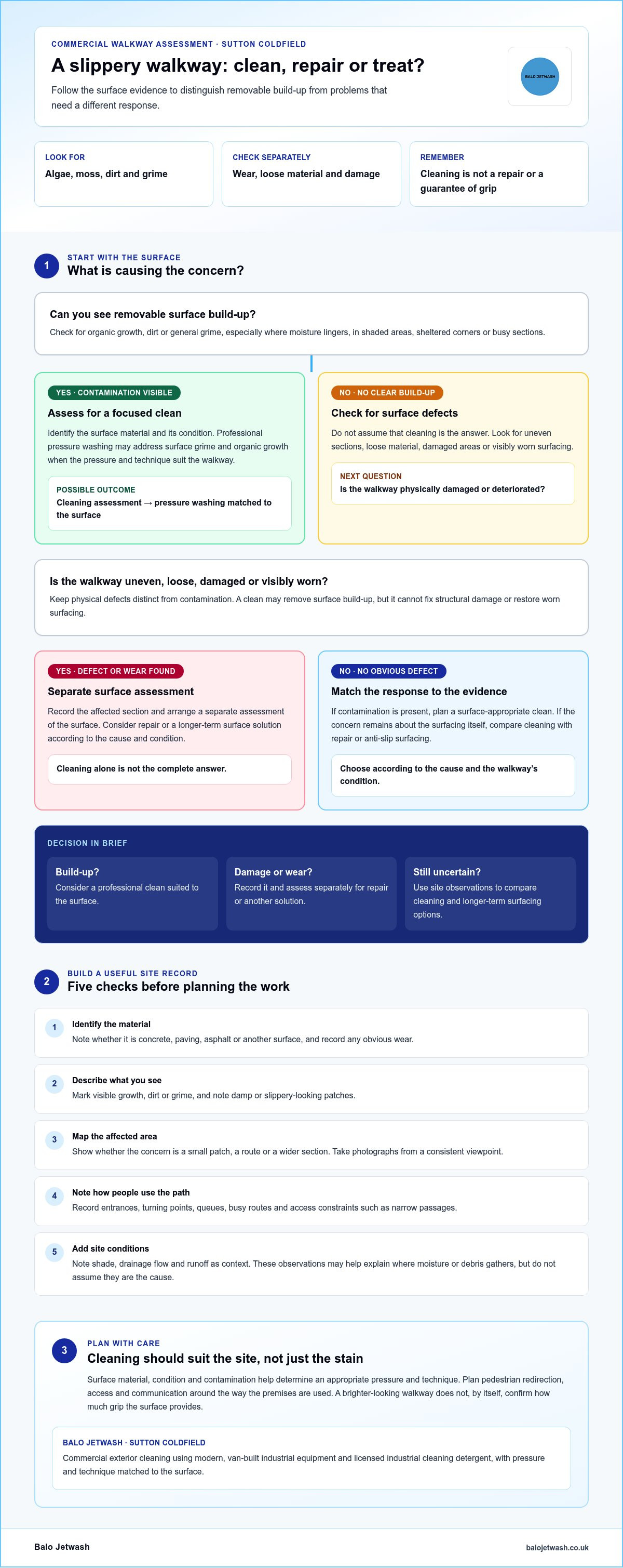
Commercial walkway slip-hazard removal checklist for Sutton Coldfield
A little planning can make walkway cleaning easier to coordinate with the people who use your site. Use this checklist to prepare access, keep communication clear and record what needs attention after the clean. Adjust the arrangements to suit the layout and day-to-day flow of your premises.
Before the walkway cleaning visit
Pinpoint the work area. Identify the affected route and surface type, then mark the sections that need attention. Include connecting paths or entrances that may be affected by access changes. Consider site activity. Note busy periods, delivery movements, visitor arrivals and regular pedestrian routes. This helps you plan the work area around how the premises operate. Plan an alternative route. Decide how staff and visitors can move around the area being treated. Make sure the route is clear and easy to communicate before the work starts. Share the arrangements. Tell relevant staff, reception teams or site users when access will change and where to go instead. Use clear notices at suitable points so people see the information before reaching the work area. Prepare useful site details. Keep your location notes, photographs and access information ready to share with the cleaning team. This can help clarify which sections need priority and where movement may need managing.For commercial pressure washing, a clear brief helps match the work to the walkway and the practical needs of the site. Balo Jetwash provides commercial pressure washing for exterior areas, with the approach tailored to the commercial site and its surfaces.
During and after cleaning
Keep clear of active work. Maintain the planned pedestrian redirection and keep people away from the area being treated. Follow the operator’s site instructions, and pass any changes in access arrangements to staff and visitors promptly. Wait before reviewing. Allow the walkway to dry before looking over its appearance and condition. A wet surface can make it harder to judge the visible result, so avoid drawing conclusions from an immediate post-clean view. Check the route in context. Once dry, review the treated sections and note any remaining visible growth, damaged areas or patches that continue to become wet. Record the location rather than relying on a general description. Plan any follow-up. Keep notes of areas that may need further assessment, particularly where the concern appears connected to surface damage or recurring wet patches. Cleaning can address removable build-up, but it does not repair damaged surfacing.Good preparation and follow-up make removing slip hazard from commercial walkway Sutton Coldfield a more considered process, from access planning through to reviewing the finished work. Arrange a walkway cleaning plan with Balo Jetwash’s commercial pressure washing team.
Arrange commercial walkway cleaning in Sutton Coldfield with Balo Jetwash
Planning a commercial walkway clean starts with a clear picture of the job. Balo Jetwash provides commercial exterior cleaning in Sutton Coldfield, including pressure washing for walkways. A useful enquiry describes the area, the visible build-up and the way the site operates, so the discussion can focus on the work you need.
You do not need a technical report to get started. A simple description, a few photographs and practical access notes can give a helpful overview. If the walkway connects several entrances or forms part of a longer route, mention that too. These details can help distinguish a single affected patch from a larger cleaning project.
What to include in a commercial walkway cleaning enquiry
Walkway material: Describe what the surface is made from, if known. If you are unsure, a clear photograph can help show its appearance. Approximate area: Give an estimate of the walkway’s size or describe its length and layout. It is helpful to say whether the route includes connected sections. Visible surface build-up: Note what you can see, such as algae, moss, dirt or general grime, and identify where it appears most noticeable. Site access: Explain how the walkway can be reached and whether there are any restrictions that could affect the cleaning arrangements. Pedestrian activity: Share the busiest periods and say whether the concern affects one section or several routes used by staff, customers or visitors.With this information to hand, it is easier to have a focused discussion about the work area and how the cleaning visit fits the premises. Balo Jetwash’s commercial pressure washing service covers exterior cleaning at business sites, including walkways.
What to expect from a tailored cleaning plan
A cleaning plan considers the walkway’s material, its visible condition and the site’s access arrangements. The cleaning approach is adapted to the surface, rather than relying on a single method for every commercial exterior. This keeps the work focused on the build-up that cleaning can address.
It is also useful to be clear about what cleaning can and cannot do. Pressure washing can remove surface contamination, but it will not repair worn, loose or damaged material. If your photographs or site notes show defects, mention them as a separate concern so they are not mistaken for a cleaning issue.
Ready to discuss the walkway at your premises? Request a free, no-obligation quote for commercial walkway cleaning from Balo Jetwash.
Take the next step towards a cleaner walkway
A well-planned exterior clean can be a practical next step for a commercial site, especially when your notes point to removable build-up as the concern. Keep the walkway’s condition in view as you plan: a fresh appearance is welcome, but any damaged or persistently wet areas may still need attention of their own.
If you are considering removing slip hazard from commercial walkway Sutton Coldfield, use your site observations to start a focused conversation about the areas that need cleaning and how people use them. Clear details can help shape a plan around your premises, rather than treating every walkway as the same job.
Request a free, no-obligation quote for commercial walkway cleaning and take a positive step towards a cleaner, more welcoming exterior.
Frequently Asked Questions
Can pressure washing remove slippery algae from a commercial walkway?
Yes, professional pressure washing can remove algae from a suitable external walkway. The operator should account for the material and its condition, as well as the extent of the growth, when choosing the pressure and technique. For example, a small affected section may need a different work plan from a long pedestrian route. Cleaning removes surface growth, but it cannot guarantee that the path will never become slippery again.
Is pressure washing safe for every commercial walkway surface?
No, one pressure setting or technique is not right for every walkway. Concrete, paving and other outdoor surfaces can differ in material and condition, so the cleaning approach needs to suit the surface being treated. Loose, cracked or worn areas deserve particular attention in the assessment. Professional cleaning should be planned around those observations, rather than assuming that stronger pressure will produce a better or safer result.
How do you remove a slip hazard from a commercial walkway?
Start by working out whether the concern is removable surface build-up, physical damage or a combination of both. If grime or organic growth is the issue and the surface is suitable, professional pressure washing may help clear it. For removing slip hazard from commercial walkway Sutton Coldfield, describe the walkway material, affected areas and site access when arranging a cleaning plan. Damaged or uneven sections may need separate assessment.
What causes commercial walkways to become slippery?
Slipperiness can be linked to contamination, moisture or the condition of the surface. Algae and moss may develop where dampness persists, while dirt and grime can collect along busy routes or sheltered edges. Runoff, drainage patterns and shade are useful details to observe, but they do not prove the cause on their own. Note when and where the problem appears, such as after wet weather or near a frequently used entrance.
Does cleaning a walkway prevent algae from coming back?
No, cleaning can remove existing algae, but it cannot promise that new growth will not return. Conditions such as recurring dampness, shade or nearby organic debris may remain after the surface has been cleaned. Keep an eye on previously affected areas and record whether growth reappears or wet patches persist. That information can help the site team consider whether the maintenance approach or surrounding conditions need further attention.
Should a business clean a walkway or install anti-slip surfacing?
It depends on what the assessment finds. Cleaning may be appropriate where removable grime or organic growth is the main issue and the walkway remains in suitable condition. Worn, damaged or unsuitable surfacing may call for a separate repair assessment or consideration of an anti-slip treatment. These options address different problems, so do not assume that installing a new surface is necessary just because contamination has made a path look slippery.
How can businesses keep a commercial walkway accessible during cleaning?
Plan an alternative route before work begins, then tell staff and visitors where access will change. Consider entrances, delivery movements and busy pedestrian periods when deciding how to redirect people around the work area. Keep people clear of the active cleaning zone and follow the operator’s site instructions. Once work is complete, wait for the surface to dry before reviewing it and reopening the route according to the agreed site arrangements.
{"@context":"https://schema.org","@type":"FAQPage","mainEntity":[{"@type":"Question","name":"Which walkway conditions should a site inspection look for?","acceptedAnswer":{"@type":"Answer","text":"Walk the route and note where people enter, turn, queue or regularly pass. Look for green or dark organic growth, dirt build-up and persistent damp patches. Give extra attention to shaded stretches, places that stay wet and sections with heavier footfall. These observations can help show whether the concern is concentrated in one area or spread along the route. Record physical defects separately from contamination. Uneven sections, loose material and damaged areas are not simply cleaning issues, and pressure washing should not be treated as a repair for them. Keeping the observations distinct helps the site team decide what cleaning may address and what needs separate attention."}},{"@type":"Question","name":"Why does identifying the surface material matter?","acceptedAnswer":{"@type":"Answer","text":"Commercial walkways can include concrete, paving slabs, asphalt or other hard external surfaces. They should not all be treated as though they respond identically. The material, its condition and the kind of contamination help determine a suitable cleaning pressure and technique. A surface-specific approach can target grime and organic growth without assuming that more force is always better. This distinction matters when planning removing slip hazard from commercial walkway Sutton Coldfield. Cleaning can remove surface contamination, but it cannot restore worn surfacing or fix structural damage. If the walkway is visibly broken, loose or uneven, record that separately rather than expecting a clean to resolve it. Balo Jetwash tailors commercial exterior cleaning to the site and its surfaces, using modern, van-built industrial equipment and licensed industrial cleaning detergent. The same surface-aware approach is reflected in its roof cleaning and moss removal in Sutton Coldfield, although a walkway needs its own assessment. Once the material and problem areas are clear, it is easier to weigh cleaning against repair or a longer-term surface treatment. A clear site assessment helps separate contamination that may respond to cleaning from issues that need a different response. It also gives the cleaning team useful context, so the work can be planned around the surface, affected areas and normal pedestrian movement. Start with a straightforward record rather than relying on memory."}},{"@type":"Question","name":"What should a walkway manager record on site?","acceptedAnswer":{"@type":"Answer","text":"Mark where the surface feels or looks slippery and when the issue is most noticeable, such as after rain or during a particular part of the day. Take photographs from a consistent viewpoint and add simple labels to a site map. Together, these records make it easier to show the location, extent and pattern of the concern without relying on vague descriptions. Include the surface type, visible growth, drainage flow, damaged sections and pedestrian routes. Note access constraints too, such as narrow passages or entrances that need to remain in use. The HSE guidance on slips and trips offers useful background for managing slip risks, while your site notes help make the cleaning plan practical for the premises."}},{"@type":"Question","name":"When is cleaning not the only consideration?","acceptedAnswer":{"@type":"Answer","text":"Surface build-up and physical deterioration are different problems. Dirt or organic growth may be suitable for a cleaning assessment; loose material, uneven areas or visibly deteriorated sections should be recorded separately. Photographs can document what is visible, but they do not establish the underlying cause or amount to a structural diagnosis. If damage is present, arrange a separate assessment of the surface before treating cleaning as the complete answer. A cleaning method should suit both the walkway’s surface and its current condition. Select pressure and technique with the material in mind, rather than assuming one approach fits every path. For removing slip hazard from commercial walkway Sutton Coldfield, a focused assessment helps clarify whether cleaning is a sensible next step and what needs attention beyond it. Once the surface, problem areas and access needs are documented, you will have a more useful brief for planning the work. Balo Jetwash provides commercial pressure washing for exterior walkways, with the approach tailored to the site and surface. Once you have identified what is affecting the walkway, compare the options against the condition of the existing surface. Cleaning can tackle removable dirt and organic build-up. Repair and anti-slip surfacing address different needs, so neither is automatically the right answer for every path. The deciding question is whether contamination is the main issue or whether the surface itself is worn, damaged or unsuitable. These are different responses, not competing promises. Cleaning removes surface build-up; it does not renew worn material, repair damage or guarantee slip prevention. Repairs address defects rather than general grime. Anti-slip surfacing is a separate option to assess, not an automatic next step after a walkway becomes dirty. Base the choice on the observed condition of the path and the needs of the site."}},{"@type":"Question","name":"When might professional pressure washing be appropriate?","acceptedAnswer":{"@type":"Answer","text":"Professional pressure washing can be a practical option for removing dirt, algae, moss and grime from suitable external surfaces. The operator should match pressure and technique to the material and its condition, rather than assume every walkway can be treated alike. Pressure washing addresses contamination, but it cannot promise to prevent regrowth or guarantee that a surface will not be slippery."}},{"@type":"Question","name":"When might a surface treatment or repair be considered?","acceptedAnswer":{"@type":"Answer","text":"If the surface is worn, loose, damaged or otherwise unsuitable, cleaning alone may not address the concern. A separate repair assessment can help establish what attention is needed; anti-slip surfacing can also be considered where appropriate. Look at the wider setting too. Growth on an adjoining roof or runoff reaching the path may be relevant, and roof cleaning and moss removal in Sutton Coldfield can address that separate source of debris or growth. For removing slip hazard from commercial walkway Sutton Coldfield, let the observed condition guide the choice rather than defaulting to a product or a clean. Balo Jetwash tailors its commercial pressure washing to the site and surface, providing a cleaning response where removable build-up is the issue. A little planning can make walkway cleaning easier to coordinate with the people who use your site. Use this checklist to prepare access, keep communication clear and record what needs attention after the clean. Adjust the arrangements to suit the layout and day-to-day flow of your premises."}},{"@type":"Question","name":"Can pressure washing remove slippery algae from a commercial walkway?","acceptedAnswer":{"@type":"Answer","text":"Yes, professional pressure washing can remove algae from a suitable external walkway. The operator should account for the material and its condition, as well as the extent of the growth, when choosing the pressure and technique. For example, a small affected section may need a different work plan from a long pedestrian route. Cleaning removes surface growth, but it cannot guarantee that the path will never become slippery again."}},{"@type":"Question","name":"Is pressure washing safe for every commercial walkway surface?","acceptedAnswer":{"@type":"Answer","text":"No, one pressure setting or technique is not right for every walkway. Concrete, paving and other outdoor surfaces can differ in material and condition, so the cleaning approach needs to suit the surface being treated. Loose, cracked or worn areas deserve particular attention in the assessment. Professional cleaning should be planned around those observations, rather than assuming that stronger pressure will produce a better or safer result."}},{"@type":"Question","name":"How do you remove a slip hazard from a commercial walkway?","acceptedAnswer":{"@type":"Answer","text":"Start by working out whether the concern is removable surface build-up, physical damage or a combination of both. If grime or organic growth is the issue and the surface is suitable, professional pressure washing may help clear it. For removing slip hazard from commercial walkway Sutton Coldfield, describe the walkway material, affected areas and site access when arranging a cleaning plan. Damaged or uneven sections may need separate assessment."}},{"@type":"Question","name":"What causes commercial walkways to become slippery?","acceptedAnswer":{"@type":"Answer","text":"Slipperiness can be linked to contamination, moisture or the condition of the surface. Algae and moss may develop where dampness persists, while dirt and grime can collect along busy routes or sheltered edges. Runoff, drainage patterns and shade are useful details to observe, but they do not prove the cause on their own. Note when and where the problem appears, such as after wet weather or near a frequently used entrance."}},{"@type":"Question","name":"Does cleaning a walkway prevent algae from coming back?","acceptedAnswer":{"@type":"Answer","text":"No, cleaning can remove existing algae, but it cannot promise that new growth will not return. Conditions such as recurring dampness, shade or nearby organic debris may remain after the surface has been cleaned. Keep an eye on previously affected areas and record whether growth reappears or wet patches persist. That information can help the site team consider whether the maintenance approach or surrounding conditions need further attention."}},{"@type":"Question","name":"Should a business clean a walkway or install anti-slip surfacing?","acceptedAnswer":{"@type":"Answer","text":"It depends on what the assessment finds. Cleaning may be appropriate where removable grime or organic growth is the main issue and the walkway remains in suitable condition. Worn, damaged or unsuitable surfacing may call for a separate repair assessment or consideration of an anti-slip treatment. These options address different problems, so do not assume that installing a new surface is necessary just because contamination has made a path look slippery."}},{"@type":"Question","name":"How can businesses keep a commercial walkway accessible during cleaning?","acceptedAnswer":{"@type":"Answer","text":"Plan an alternative route before work begins, then tell staff and visitors where access will change. Consider entrances, delivery movements and busy pedestrian periods when deciding how to redirect people around the work area. Keep people clear of the active cleaning zone and follow the operator’s site instructions. Once work is complete, wait for the surface to dry before reviewing it and reopening the route according to the agreed site arrangements."}}]}Information
Water available? - You don't need to be present for us to carry out the service. If required, we can supply water ourselves.
Insurance
Balo Jetwash is fully insured, We have £5,000,000 of public liability insurance. Balo Jetwash operatives are professional, reliable and endeavour to carry out the work to the highest standard with minimal fuss and upheaval.