
How to Remove Oil Stains from Your Driveway: 2026 UK Guide

What if that ugly, dark patch on your paving isn't actually the permanent scar you fear it is? You've likely stared at that stubborn leak every morning, wondering how to remove oil stains from driveway surfaces without causing even more damage. It's incredibly frustrating to invest in a beautiful home only to have a single car leak turn your entrance into a messy eyesore. You might even feel confused by the endless DIY hacks, fearing that the wrong chemical could ruin your expensive stone forever.
We completely understand that sense of frustration. The good news is that you don't have to live with a stained mess. This 2026 guide reveals the most effective UK methods to shift that deep-seated grease and restore your property to a pristine, like-new condition. We promise to give you the confidence to tackle the problem head-on and reclaim your home's kerb appeal. We will walk you through everything from simple household degreasers to the industrial-grade power needed for a total, professional-standard restoration.
Key Takeaways
Discover why oil bonds so stubbornly to porous paving and why acting fast is your absolute best defence against permanent damage. Master the "Golden Rule" of blotting to prevent deep-seated staining as you learn exactly how to remove oil stains from driveway surfaces. Uncover why common household soaps often fail on old engine oil and how to avoid the risk of accidentally discolouring your stone. See how industrial-grade tech and licensed detergents achieve a "like-new" finish that standard DIY pressure washers simply cannot touch! Pick up proactive tips for long-term maintenance, including the vital role of professional re-sanding to keep your entrance looking stunning.Why Oil Stains are a Nightmare for British Driveways
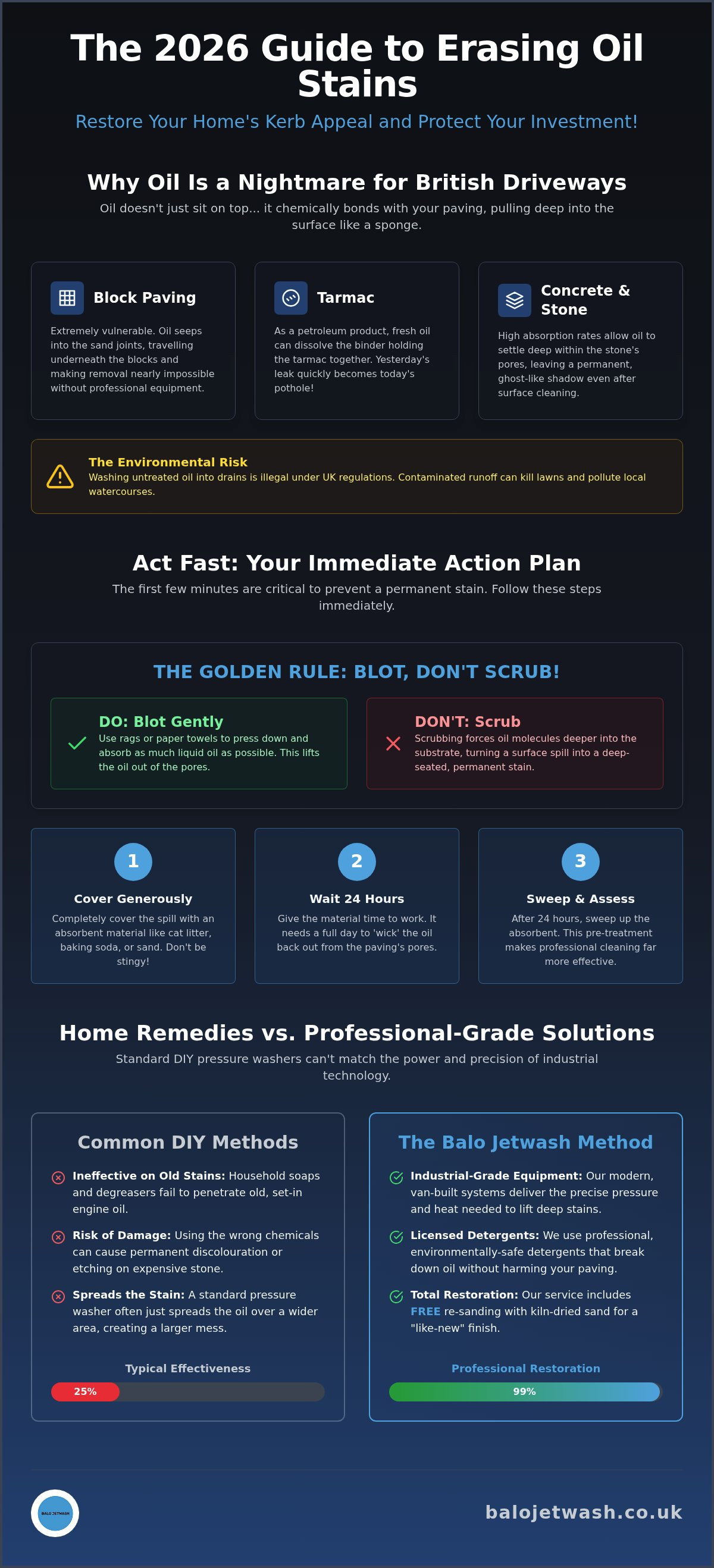
Oil isn't just a messy spill. It's a chemical nightmare that actually bonds with your paving. Because oil is hydrophobic, it actively repels water and clings desperately to the minerals in your driveway. This is exactly why simply hosing it down never works! In fact, reaching for the garden hose often makes the situation worse by spreading the grease across a larger area, turning a small spot into a massive eyesore. For homeowners in the West Midlands, where kerb appeal directly impacts property value, these dark blotches are more than just a nuisance; they're a financial drain.
The real trouble lies beneath the surface. Most British driveways are made of porous materials that act like a giant stone sponge. Through a process called 'wicking', the liquid oil is pulled deep into the substrate. Once it's down there, standard domestic cleaners can't reach it. This is why learning how to remove oil stains from driveway surfaces requires more than just a bucket of soapy water. You need to understand the material you're dealing with to avoid making a permanent mistake.
Common Paving Materials and Their Vulnerability
Every surface reacts differently to a leak. Block paving is particularly tricky because the oil seeps into the sand joints and travels underneath the blocks, making it nearly impossible to lift without professional jet washing techniques and industrial equipment. Tarmac is even more vulnerable. Since tarmac is a petroleum-based product, a fresh oil leak can actually dissolve the binder that holds the stones together. If left yesterday's leak is today's pothole! Even tough materials like concrete and Indian Sandstone have high absorption rates that allow oil to settle deep within the stone's pores, leaving a ghost-like shadow even after a surface scrub.
The Environmental Risk of Untreated Oil Leaks
It's not just about looks. In the UK, environmental regulations for 2026 are stricter than ever regarding chemical runoff. If you try to wash oil away with harsh detergents, that contaminated water can easily reach local drainage systems and watercourses. This isn't just bad for the planet; it's illegal. Untreated leaks can also kill off your prize-winning lawn or garden borders as the toxins leach into the soil. Using professional-grade neutralisers is the only way to ensure you're protecting your home and the local West Midlands environment while you figure out how to remove oil stains from driveway areas effectively.
Act Fast: Immediate Steps to Minimise Driveway Damage
Speed is your secret weapon. If you spot a fresh, glistening puddle on your block paving, you need to act before the wicking process takes hold. The first few minutes are critical. Your primary goal is containment. You must stop that oil from spreading across the surface or, worse, running into the public road and local drains. Creating a "bund" or a small barrier using soil or sand around the perimeter of the spill is a brilliant first move. This keeps the mess localised and protects the environment from contaminated runoff.
There is one golden rule you must never break: blot, don't scrub! It's a natural instinct to grab a brush and start scrubbing with soapy water, but this is a disaster for porous stone. Scrubbing actually forces the oil molecules deeper into the substrate, making the stain much harder to lift later. Instead, use old rags, paper towels, or even cardboard to soak up as much standing liquid as possible. Press down firmly, lift, and repeat until no more oil transfers to the cloth. Knowing how to remove oil stains from driveway surfaces effectively always begins with this gentle, patient approach.
The Best Absorbents You Already Have at Home
You don't always need fancy chemicals to start the rescue mission. Some of the best tools are sitting in your kitchen or garage right now. Cheap, clay-based cat litter is the ultimate secret weapon for large spills because it "drinks" the oil from the surface. For smaller, fresher spots, baking soda or cornflour work wonders as fine-particle absorbents. If you've had a major leak in the garage, traditional sand or sawdust can provide the bulk needed to manage the mess before it reaches your main driveway.
Step-by-Step: Managing a Fresh Oil Leak
Step 1: Generously cover the entire spill with your chosen absorbent material. Don't be stingy; you want a thick layer that completely hides the oil. Step 2: Leave the material to sit for at least 24 hours. This is the part most people get wrong. You need to give the absorbent time to "wick" the oil back out of the stone. Step 3: Sweep up the dry material carefully. Dispose of it in your general waste bin rather than washing it down the drain to stay compliant with UK environmental standards. Step 4: Check for a residual shadow. If the surface still looks dark or damp, the oil has likely penetrated deeper than a DIY fix can reach.If you've followed these steps and a stubborn mark remains, don't lose heart. Some engine oils are designed to be incredibly sticky and resilient. If your DIY efforts have stalled, it's often safer to call in a specialist rather than risking damage with harsh, unverified chemicals. A professional driveway cleaning can often lift what's left behind, restoring that pristine finish you're looking for.
Home Remedies vs. Professional Grade Solutions
It's tempting to reach for the washing-up liquid, isn't it? We've all seen the forum posts claiming a splash of soap and a stiff brush is the ultimate secret to how to remove oil stains from driveway surfaces. Whilst these household soaps are brilliant for fresh surface grease, they almost always fail on older, dried-on engine oil. Why? Because they lack the chemical strength to break the molecular bond between the oil and the porous stone. You might scrub until your arms ache, but you'll likely be left with a stubborn, dark "shadow" that just won't budge. It's frustrating, exhausting, and often a waste of a good Saturday!
The DIY route often leads to another hidden danger: the high-street degreaser. Many of these products are incredibly aggressive. If you aren't careful, you risk "white spotting" or permanent etching on your concrete or block paving. Imagine trying to fix a stain only to end up with a bleached patch that looks even worse than the oil did! This is where professional-grade solutions make all the difference. We use Licensed Industrial Cleaning Detergents specifically designed to emulsify oil without harming the underlying material. It's about being thorough whilst remaining responsible.
The Limitations of Household Degreasers
Most supermarket solutions only offer surface-level cleaning. They can't achieve the deep-pore penetration needed to lift oil that has "wicked" into the substrate. On materials like Indian Sandstone, using the wrong chemical ratio can cause irreversible discolouration. Repeated, heavy scrubbing with the wrong tools can also ruin the delicate texture of your driveway, stripping away the finish and leaving the stone vulnerable to future damage. You want a restoration, not a wrecking job!
Why Professional Intervention Wins Every Time
The real game-changer is the equipment. A standard garden hose or even a domestic pressure washer simply cannot generate the heat or flow required to melt an oil bond. Our Modern, Industrial Vanbuilt equipment uses high-temperature water systems that literally liquify the grease. This allows our specialised detergents to lift it away completely. We combine this power with expert knowledge of chemical ratios for every stone type, from tarmac to limestone. Want to see the difference for yourself? Learn about our professional Driveway cleaning process and how we achieve that stunning, like-new finish every single time. It’s stress-free, effective, and saves you from the frustration of a DIY job gone wrong!
The Balo Jetwash Method: Restoring Your Driveway
Tired of seeing that stubborn blotch every time you pull into your home? We get it. That's why we've perfected a system that goes far beyond what any DIY kit can offer. At Balo Jetwash, we don't just "wash" your paving; we restore it to its former glory! Our secret lies in our Modern, Industrial Vanbuilt equipment. This isn't your average supermarket pressure washer. It's a high-performance system designed to deliver the heat and precision needed to lift deep-seated carbon and grease. If you're wondering how to remove oil stains from driveway surfaces permanently, this industrial-grade power is the answer you've been looking for.
We take massive pride in serving our local neighbours across Wolverhampton, Solihull, and Sutton Coldfield. Being a local expert means we care about the visual impact of every job we finish. We treat your property with the same respect we'd show our own. It's a proactive, "can-do" approach that ensures you aren't just satisfied, but absolutely thrilled with the result. Let’s turn that source of frustration into a point of pride once again!
Our Specialised Cleaning Process
Our method is methodical and thorough. We start by applying a Licensed Industrial Cleaning Detergent. This isn't just a surface soap; it's a specialised formula that penetrates deep to break down stubborn oil bonds at a molecular level. Once the detergent has done its job, we use controlled pressure washing. This is vital! Too much pressure can shatter porous tiles or blast away tarmac binders, but our calibrated systems lift the debris without any risk of damage. We finish with meticulous waste management, ensuring all contaminated water is handled responsibly according to UK regulations.
The Finishing Touch: Re-Sanding and Protection
A deep clean is only half the battle. High-pressure washing can often displace the sand that keeps block paving stable. That's why we include FREE re-sanding as part of our professional service! We use high-quality kiln-dried sand to refill those joints, ensuring your driveway remains structurally sound and looks "like-new" from every angle. Want to keep it that way? We also offer specialised sealing to create a protective barrier against future leaks. It's the ultimate way to boost your kerb appeal instantly. Ready for a stunning transformation? Book your professional driveway cleaning today and let us handle the hard work!
Long-Term Maintenance: Keeping Your Driveway Oil-Free
You've done it! Your driveway is back to its best, and that ugly oil shadow is a thing of the past. It's a fantastic feeling, isn't it? But the work doesn't stop once the stone is clean. Maintaining that "like-new" finish requires a bit of proactive care. Prevention is always easier than restoration, and a few simple habits can save you from ever needing to search for how to remove oil stains from driveway tips again. By staying vigilant, you protect your property's kerb appeal and its long-term value.
Simple Prevention Strategies for Homeowners
Success starts in the garage. If you enjoy a bit of weekend car maintenance or manage a family fleet, invest in heavy-duty drip trays or oil-resistant mats. These are absolute lifesavers during oil changes amongst your vehicles! We also recommend keeping a small bag of absorbent material, like clay-based cat litter or sand, tucked away in a corner. If a leak happens, you can smother it instantly. Don't forget to check your vehicle's health regularly too. A tiny drop on the concrete today could be a sign of a failing gasket that leads to a massive puddle tomorrow. Catch it early, and you catch the problem before it becomes a permanent mark.
The Value of an Annual Professional Refresh
Even with the best habits, British weather and daily use take their toll. Dirt, algae, and moss can slowly dull your driveway's sparkle. An annual professional refresh is the best way to ensure property longevity. It isn't just about aesthetics; it's about structural health. Our team can spot minor oil spots and treat them before they penetrate deep into the substrate. Plus, we don't just stop at the front of the house. Explore our Patio cleaning services for a total garden revive to keep your entire outdoor space looking stunning!
Trust Balo Jetwash for all your exterior cleaning needs. We are your energetic local experts, serving Wolverhampton, Solihull, and Sutton Coldfield with pride. Whether it's a stubborn oil leak or a mossy roof, we have the industrial tech and the passion to get the job done right. Call us today for your free, no-obligation quote! Let's keep your home looking its absolute best, year after year.
Reclaim Your Home's Kerb Appeal Today
Don't let a stubborn oil leak define your property's entrance. You now know that the secret to how to remove oil stains from driveway surfaces lies in a mix of fast action and industrial power. Whilst blotting a fresh spill helps, only professional-grade heat can truly lift those deep-seated shadows from porous stone. It's time to stop the guesswork and the frustration of failed DIY hacks!
Our team at Balo Jetwash is ready to deliver that "like-new" finish you deserve. As trusted local specialists in Wolverhampton and Sutton Coldfield, we bring Modern, Industrial Vanbuilt equipment right to your door. We include FREE re-sanding and licensed detergents to ensure your paving is not just clean, but structurally sound and protected. Why settle for an eyesore when a stunning transformation is just one call away? Call Balo Jetwash today for your FREE, no-obligation quote! We can't wait to help you take pride in your driveway once again.
Frequently Asked Questions
Can Coca-Cola really remove oil stains from a driveway?
Coca-Cola is a popular internet myth, but it isn't an effective way to remove oil stains from driveway surfaces. Whilst the mild acidity might shift a tiny bit of surface grime, it's far too weak to break down heavy engine oil that has soaked into the stone. The high sugar content also leaves a sticky residue that can attract ants or grow mould. You’re much better off using a dedicated degreaser or calling in a specialist for a proper deep clean!
Is it possible to remove old, dried oil stains that have been there for months?
Yes, it is certainly possible, though it requires a more intensive approach than fresh spills. Over months, oil hardens and binds deep within the pores of the stone. Standard DIY methods often fail here, but our industrial heat-based systems are designed for exactly this challenge. We can emulsify that old grease and lift it away, showing you exactly how to remove oil stains from driveway surfaces that have been neglected for ages.
Will pressure washing damage my block paving joints?
Standard high-pressure jetting can blast out the sand that keeps your blocks stable if it isn't done with care. However, we use professional techniques and calibrated equipment to minimise displacement. To give you total peace of mind, we always include FREE re-sanding as part of our service! This ensures your driveway remains structurally sound whilst looking absolutely stunning. It’s the difference between a risky DIY job and a master’s touch.
Are the cleaning detergents you use safe for my pets and garden?
Absolutely! We use Licensed Industrial Cleaning Detergents that are selected for their effectiveness and responsible environmental profile. Once the area has been thoroughly rinsed and allowed to dry, it is perfectly safe for your pets and garden borders. We take massive pride in being a community-minded business that cares about your local West Midlands environment. We treat your home with the same care and respect we would our own.
How much does professional oil stain removal cost in the West Midlands?
Professional costs depend on several factors, including the size of the paving and the depth of the staining. Because every job is different, we don't offer a one-size-fits-all price. Instead, we provide a bespoke, free quote after assessing your specific needs. This ensures you get the best value for a professional restoration without any hidden surprises. We love helping our neighbours in Wolverhampton and beyond get the best possible results for their budget!
Can I use bleach to clean oil off my concrete driveway?
Please avoid using bleach! It doesn't actually break down oil; it merely lightens the colour of the stain and the surrounding stone. This often results in permanent "white spotting" or a patchy finish that looks far worse than the original leak. Stick to specialised oil emulsifiers or professional-grade neutralisers to protect your investment. You want to restore the colour of your drive, not bleach it away forever.
What should I do if my car leaks oil on a rented property's drive?
Don't panic, but act immediately! Use a household absorbent like cat litter to soak up any standing oil before it wicks deep into the stone. It's best to notify your landlord straight away to show you're being proactive and responsible. Booking a professional clean is often the safest way to ensure the drive is restored to its original state. This protects your deposit and keeps your relationship with your landlord on great terms.
How long does the professional cleaning process take to complete?
For most standard UK driveways, the deep cleaning process takes between 4 and 6 hours. This timeframe allows us to apply our specialised detergents, perform the high-heat wash, and manage all waste runoff responsibly. Re-sanding is usually completed once the surface is bone dry, ensuring the new sand settles perfectly into the joints. We work quickly and efficiently to minimise any disruption to your day whilst delivering a transformative, like-new finish.
{"@context":"https://schema.org","@type":"FAQPage","mainEntity":[{"@type":"Question","name":"Can Coca-Cola really remove oil stains from a driveway?","acceptedAnswer":{"@type":"Answer","text":"Coca-Cola is a popular internet myth that rarely works on tough stains! Whilst the phosphoric acid might shift a tiny bit of surface grease, the high sugar content leaves a sticky residue that attracts even more dirt. It simply doesn't have the strength to penetrate porous paving. For a real solution on how to remove oil stains from driveway surfaces, skip the soft drinks and use a professional-grade degreaser instead!"}},{"@type":"Question","name":"Is it possible to remove old, dried oil stains that have been there for months?","acceptedAnswer":{"@type":"Answer","text":"Yes, it is absolutely possible to lift old stains, but you'll need more than a garden hose! Dried-on engine oil binds chemically to your paving over time. Our Modern, Industrial Vanbuilt equipment uses high-temperature water to melt those bonds and lift the oil from deep within the substrate. Don't give up on your driveway just because the stain is months old; we can still achieve a stunning transformation!"}},{"@type":"Question","name":"Will pressure washing damage my block paving joints?","acceptedAnswer":{"@type":"Answer","text":"Incorrect use of a DIY pressure washer can definitely blast out too much sand and destabilise your blocks! However, our professional process is carefully controlled to lift dirt whilst protecting the structure. We always include FREE re-sanding as part of our service. This ensures your joints are refilled with high-quality Klin dried sand, keeping your driveway strong, stable, and looking like new for years to come!"}},{"@type":"Question","name":"Are the cleaning detergents you use safe for my pets and garden?","acceptedAnswer":{"@type":"Answer","text":"Absolutely, your family's safety is our top priority! The Licensed Industrial Cleaning Detergent we use is chosen for its effectiveness and responsible profile. We are experts in waste management and ensure all runoff is handled correctly to protect your lawn and local West Midlands watercourses. Once the area is thoroughly rinsed and dried, it is perfectly safe for your pets to enjoy their garden again!"}},{"@type":"Question","name":"How much does professional oil stain removal cost in the West Midlands?","acceptedAnswer":{"@type":"Answer","text":"Costs for professional cleaning vary based on the size of your driveway and the severity of the oil penetration. Factors like the type of paving material also play a role in the total price. We always provide a free, no-obligation quote so you know exactly what to expect! Hiring a local expert is often more cost-effective than replacing damaged blocks or paying environmental fines for improper DIY runoff."}},{"@type":"Question","name":"Can I use bleach to clean oil off my concrete driveway?","acceptedAnswer":{"@type":"Answer","text":"You should never use bleach to tackle oil on concrete! Bleach is not a degreaser; it won't break down the hydrocarbons in the oil at all. Instead, it can permanently discolour your paving or leave unsightly white patches that are impossible to fix. If you want to know how to remove oil stains from driveway paving without causing permanent damage, stick to specialised detergents designed for the job!"}},{"@type":"Question","name":"What should I do if my car leaks oil on a rented property's drive?","acceptedAnswer":{"@type":"Answer","text":"Act immediately by blotting the spill and covering it with an absorbent material like cat litter! This shows you've taken reasonable steps to prevent damage. If a dark shadow remains, we recommend booking a professional clean before your tenancy ends. It's usually much cheaper to revitalise the drive yourself than to face a heavy deduction from your security deposit for property neglect or damage!"}},{"@type":"Question","name":"How long does the professional cleaning process take to complete?","acceptedAnswer":{"@type":"Answer","text":"Most professional driveway cleans are completed within three to five hours! The exact time depends on the size of the area and the level of staining we need to tackle. If your project includes our FREE re-sanding, we may need to return on a dry day to ensure the Klin dried sand settles perfectly into the joints. We always work efficiently to minimise any disruption to your day!"}}]}Information
Water available? - You don't need to be present for us to carry out the service. If required, we can supply water ourselves.
Insurance
Balo Jetwash is fully insured, We have £5,000,000 of public liability insurance. Balo Jetwash operatives are professional, reliable and endeavour to carry out the work to the highest standard with minimal fuss and upheaval.