
Green Algae on Patio: How to Clean and Restore Paving in 2026

What if blasting your garden paving with a standard domestic pressure washer is actually making your slickest outdoor hazard worse? When faced with a treacherous coat of green algae on patio how to clean it safely without etching delicate Indian sandstone or blowing out vital sand joints becomes an urgent priority.
We know the feeling all too well. There is nothing more frustrating than spending an entire afternoon scrubbing on your hands and knees, only to watch that slimy green film creep straight back a few weeks later. Damp, shaded garden stone quickly turns into a dangerous ice rink for children and pets, leaving homeowners trapped in an exhausting cycle of temporary fixes.
It doesn't have to be a never-ending chore. Discover proven methods to remove stubborn green algae from your patio slabs safely, preventing slippery surfaces and permanent stone damage. Below, we break down effective surface treatments, essential joint care, and the clear differences between basic weekend maintenance and deep, industrial restoration to keep your stone looking brand new.
Key Takeaways
Master the essentials of green algae on patio how to clean thoroughly without scouring soft stone or blowing out joint mortar. Discover why substrate porosity matters and how treatment varies across Indian sandstone, block paving, concrete, and porcelain. Learn safe DIY scrubbing sequences using appropriate brushes and garden-safe detergents to lift slippery surface grime quickly. Uncover why proper joint re-sanding is the critical step to prevent rapid regrowth and keep paving slabs firmly locked in place. Understand when industrial van-mounted cleaning systems are necessary to eradicate sub-surface spores for a lasting, like-new restoration.What Causes Green Algae on Patio Slabs and Why Must You Act?
Spotting a green tinge across your garden paving is rarely just an aesthetic issue. Green algae consist of microscopic, photosynthetic plant organisms that drift through the air as invisible spores. Once they touch damp, mineral-rich paving slabs, they multiply at lightning speed. Understanding why this happens is the first step when researching green algae on patio how to clean methods that actually work long term.
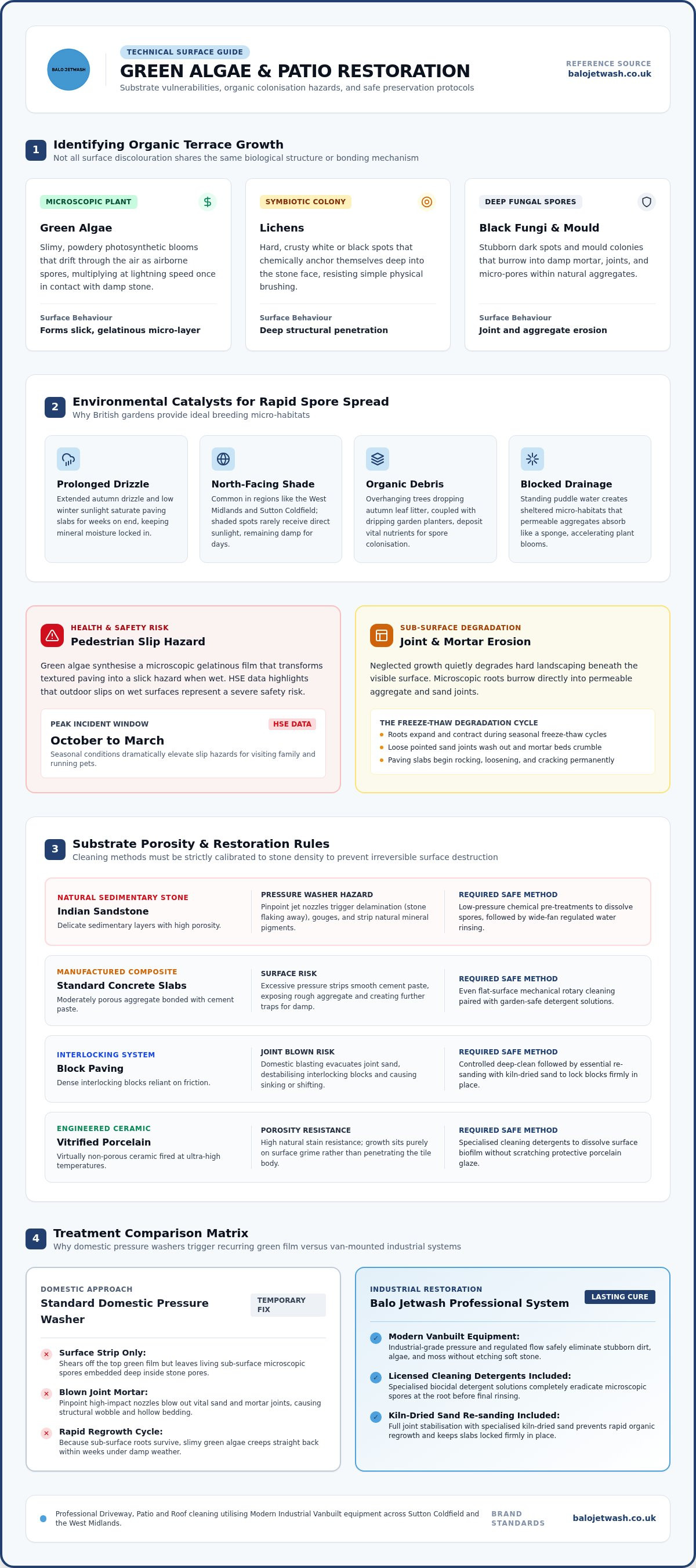
Our unpredictable British climate provides the perfect breeding ground. Prolonged autumn drizzle, low winter sunlight, and standing puddle water saturate paving for weeks on end. It pays to know exactly what is growing across your terrace:
Green Algae: A slimy, powdery microscopic plant bloom that spreads across damp surfaces. Lichens: Hard, crusty white or black spots that chemically anchor themselves deep into the stone face. Black Fungi: Stubborn dark spots and mould that burrow into damp mortar and porous minerals.The Environmental Triggers Behind Garden Paving Algae
Algae cannot thrive without moisture and shade. Blocked drainage channels, dripping garden planters, and overhanging trees that drop organic leaf litter accelerate spore colonisation. High-porosity paving stones drink in standing rainwater like a sponge, creating sheltered micro-habitats within the natural stone. North-facing gardens throughout the West Midlands and Sutton Coldfield are especially vulnerable. Because these shaded spots rarely see direct sunlight during cooler months, paving slabs stay damp for days, encouraging dense organic growth to return year after year.
Safety Hazards and Material Damage from Neglected Slabs
Neglecting organic growth quickly turns an attractive outdoor space into a genuine hazard. Algae produce a gelatinous, microscopic film that becomes dangerously slick when wet. HSE data highlights that outdoor slips on wet walking surfaces represent a massive safety risk, with seasonal incidents spiking between October and March. A quick stroll across a green terrace can lead to sudden slips for visiting family and running pets.
The damage beneath the surface is just as alarming. Microscopic roots burrow into permeable aggregate, expanding and contracting through seasonal freeze-thaw cycles. Over time, these roots loosen pointed sand joints, erode mortar beds, and cause paving slabs to rock and crack. Neglected growth ruins kerb appeal and quietly degrades your hard landscaping. Seeking dedicated patio cleaning restores your garden's beauty while protecting its structural foundations before permanent stone damage occurs.
Assessing Your Paving: Tailoring Methods to Different Patio Materials
Grab a generic domestic pressure washer, blast at point-blank range, and hope for the best. That common weekend shortcut ruins countless British gardens every year. Paving materials react differently to water pressure, chemical solutions, and mechanical brushing. When tackling green algae on patio how to clean effectively depends entirely on identifying the exact substrate underneath your boots.
Every stone type features distinct porosity levels, structural bonding, and colour profiles:
Indian Sandstone: Highly porous, layered, and naturally soft. Standard Concrete Slabs: Moderately porous aggregate bonded with cement paste. Block Paving: Dense, interlocking composite blocks reliant on friction and joint sand. Vitrified Porcelain: Virtually non-porous ceramic fired at ultra-high temperatures.Natural Stone and Indian Sandstone Considerations
Natural stone boasts gorgeous earth tones and rich textures, but it demands genuine care. Indian sandstone consists of delicate sedimentary layers. Directing high-impact pinpoint jet nozzles onto these slabs triggers delamination, causing thin sheets of stone to flake away permanently. Aggressive blasting also leaves behind circular gouges and strips natural mineral pigments, leaving your terrace looking chalky and bleached. Safe restoration requires targeted chemical pre-treatments that dissolve living algae spores at low pressure, paired with wide-fan, regulated water rinsing to preserve delicate mortar bedding.
Concrete Slabs, Block Paving, and Vitrified Porcelain
Manufactured paving brings a completely different set of challenges. Concrete flags possess a smooth top layer of cement paste. If attacked with excessive pressure, this protective cream layer washes away, exposing rough underlying gravel that traps future spores twice as fast.
Block paving introduces another risk: joint stability. High-velocity water jets easily blow out the kiln-dried jointing sand that locks interlocking blocks tightly together. Once that structural sand disappears, blocks shift underfoot and weed seeds settle in rapidly. Vitrified porcelain sits at the opposite end of the spectrum. Because porcelain absorbs virtually zero water, green growth cannot put down roots. It merely clings to surface dirt, meaning gentle detergents and low-pressure rinses wipe it clean without risking stone damage.
If you feel unsure about testing pressure settings on your valuable paving, booking an expert patio pressure washing assessment ensures your stones receive the exact care they require.
Step-by-Step DIY Cleaning: How to Remove Green Algae from Paving
Ready to roll up your sleeves? Tackling biological growth yourself takes patience, elbow grease, and the right approach. Many homeowners search for green algae on patio how to clean advice expecting a magic wand, but skipping essential groundwork will only lead to uneven patches and damaged joints. A methodical routine ensures you lift stubborn slime without scarring your paving slabs.
Before mixing any cleaning solution, gather your safety kit and tools:
Safety goggles and heavy-duty waterproof gloves. A stiff-bristled, wire-free yard broom (wire bristles scratch natural stone faces). A low-pressure garden pump sprayer or watering can with a rose head. Specialised garden patio cleaner or eco-friendly detergent. A garden hose with an adjustable spray nozzle or a domestic pressure washer.Preparation, Sweeping, and Garden Border Protection
Start by clearing the entire terrace. Move heavy planters, garden furniture, and barbecues out of the splash zone. Grab your broom and sweep away dead leaves, twigs, and surface grit. Don't skip this dry sweep; wet leaves turn into a mulchy paste that clogs drainage channels. Next, thoroughly drench adjacent flowerbeds, delicate shrubs, and lawn edges using fresh tap water. Pre-wetting your soil acts as a natural buffer, diluting any stray detergent runoff that splashes into root systems during the wash.
Brushing and Safe Application of Detergents
Apply your specialised patio detergent evenly across dry or slightly damp paving slabs using your pump sprayer. Working on dry slabs allows the solution to soak deep into the algal biofilm rather than sitting on top of puddle water. Take your stiff broom and agitate vigorously. Brushing disrupts the slippery cellular film, allowing the cleaning agent to reach embedded root structures. Let the solution dwell for the manufacturer's recommended duration, usually 15 to 30 minutes, but never let chemical puddles dry out completely under direct sun.
Rinsing and Managing Domestic Pressure Washers
Rinsing requires a disciplined touch. If you use a domestic jet washer, fit a wide 25-degree or 40-degree fan nozzle and hold the lance at a steady 45-degree angle, keeping the tip at least 30 centimetres away from the stone face. Avoid using zero-degree pencil jets. Pinpoint jets gouge stone and produce dreadful "tiger stripes", which are permanent zigzag lines carved into soft aggregates. Maintain smooth, overlapping sweeping motions. Remember, small electric washers generate high pressure with very low water volume, making thorough rinsing slow and increasing the risk of washing away delicate joint mortar.
Preventing Algae Regrowth: Post-Clean Maintenance and Joint Stabilisation
Washing your slabs is only half the battle. If you finish rinsing, pack your tools away, and walk away, airborne spores will recolonise the damp stone within weeks. True exterior care means denying algae the moisture and sheltered gaps it needs to multiply. When planning out green algae on patio how to clean projects, your post-wash prevention plan is what protects your hard work for years to come.
A few crucial habits keep paving spotless between major seasons:
Locking pavers firmly by replenishing displaced joint aggregate. Increasing light exposure by opening up garden canopies. Redirecting surface runoff away from walking routes. Applying breathable impregnating sealants rather than glossy topical films that trap rising damp.The Essential Role of Kiln-Dried Sand for Joint Integrity
High-pressure washing inevitably evacuates loose sand from paving joints. Leaving these empty gaps creates sheltered mini-trenches that catch standing rainwater and dead organic matter, creating prime real estate for algae and weeds. Once paving dries completely over two or three sunny days, brush fine, bone-dry kiln-dried sand across the surface. Work the broom diagonally until every void is packed flush. Settled, dry sand locks block edges together, prevents pavers from rocking, and completely eliminates the damp voids where micro-organisms multiply.
Landscape Alterations, Pruning, and Routine Care
Sunlight is nature's finest biocide. Take hedge shears to overhanging shrubs, prune dense lower tree limbs, and clear back boundary foliage. Opening these sightlines lets warming sunlight and drying breezes sweep across stone surfaces, evaporating morning dew before spores take hold.
Pay close attention to garden boundaries too. Edge your perimeter turf so thick grass does not spill muddy soil across patio borders during downpours. Establishing a simple weekly routine with a stiff-bristle yard broom sweeps away airborne dust and organic debris before it breaks down into nutrient-rich compost. If regular brushing still leaves you battling stubborn patches on adjacent surfaces, book a professional driveway pressure washing service to stop organic spread across your entire property footprint.
When to Choose Professional Restoration: The Balo Jetwash Advantage
Spending entire weekends hunched over a sputtering electric washer often leaves you with aching muscles, soaked boots, and streaky stone slabs. While DIY maintenance helps control light seasonal dirt, solving tricky green algae on patio how to clean problems permanently calls for commercial power. Industrial systems deliver immediate, transformative curb appeal without any of the weekend frustration.
Industrial Van-Mounted Equipment vs. Domestic Pressure Washers
The difference between DIY methods and professional restoration comes down to water volume, heat, and regulated pressure control. Domestic electric washers rely on narrow, extreme pressure spikes with minimal water flow. That combination easily gouges soft stone faces, etches sandstone, and blows out fragile mortar beds. In contrast, modern, Vanbuilt industrial-grade equipment delivers consistent, commercial-grade water flow at carefully calibrated pressures, rinsing away stubborn dirt, algae, and moss safely.
Instead of waving an erratic spray lance that leaves visible tiger stripes, technicians use rotary flat-surface cleaners. These enclosed dome units feature twin high-speed spinning jets that hover at a consistent height above paving flags. The heavy-duty skirt keeps muddy slurry contained, eliminating messy overspray against garden walls, pristine render, and patio doors.
Complete Paving Revival Across Sutton Coldfield and the West Midlands
Revitalising your outdoor space should feel rewarding, not exhausting. Homeowners looking for exceptional results can turn to specialised Balo Jetwash patio cleaning services across Sutton Coldfield and the wider West Midlands. Professional treatment penetrates deep into stone pores, applying FREE licensed industrial cleaning detergents to eradicate living microscopic spores at their root.
Every restoration is completed properly from start to finish, including FREE re-sanding with Klin dried sand to lock paver joints, stabilise blocks, and block early weed infestation. Looking to transform your entire exterior? You can easily combine patio care with comprehensive driveway cleaning or moss-removing roof cleaning. Refresh your home and revitalise your paving with Balo Jetwash's professional cleaning! Call today for your free, no-obligation quote!
Reclaim Your Outdoor Space with Long-Lasting Paving Care
Understanding green algae on patio how to clean properly means recognising that aggressive water pressure alone won't solve the problem. Lasting success relies on treating embedded organic spores at their source and protecting delicate stone textures with proper joint stabilisation.
Why lose your precious weekends to backbreaking scrubbing when a complete transformation is within reach? Balo Jetwash uses modern van-built industrial-grade equipment to lift deep-seated grime smoothly and safely, delivering immediate, uniform results. Every paving clean includes specialised, licensed industrial cleaning detergents to eliminate root spores, alongside complimentary re-sanding with kiln-dried sand to lock your joints firmly against weather and weeds.
Refresh your home and revitalise your patio with Balo Jetwash; call today for your free, no-obligation quote! Step outside onto clean, slip-free paving you can genuinely enjoy all year round.
Frequently Asked Questions
Can I use household bleach to clean green algae off my patio?
You can, but it carries serious risks for your garden and stonework. Domestic bleach can discolour natural minerals, lighten coloured concrete slabs, and degrade pointing. Chemical runoff quickly kills adjacent lawn turf and flower borders. To tackle green algae on patio how to clean tasks safely, licensed biocide detergents provide far superior results without harming surrounding landscaping or bleaching your stones.
Will pressure washing damage the pointing or jointing between paving slabs?
Yes, aggressive domestic jet washers can easily dislodge mortar beds and wash out joint compound. Concentrated narrow nozzles strip the sand supporting your slabs, leading to loose, rocking pavers. Professional restoration uses regulated flat-surface cleaners that clean evenly without blasting pointing loose. It also pairs the wash with complimentary joint re-sanding to keep pavers structurally sound.
How long does a professionally cleaned patio stay free from green algae?
A professionally restored terrace typically remains clear for one to three years depending on shade and weather. Routine seasonal brushing and prompt leaf clearance help extend this protection. In shaded, damp garden spaces across Sutton Coldfield, applying specialised industrial detergents sterilises dormant microscopic spores, preventing the swift green return that usually follows basic cold-water hose rinsing.
Is green algae on garden patios dangerous to pets and young children?
The primary danger comes from sudden slips and falls. Algae forms a microscopic, slimy layer that becomes as slick as black ice during damp weather, creating a significant hazard for running dogs and children. In addition, stagnant puddles holding decaying algal matter can cause digestive upset if curious pets lap up the standing water from untreated paving depressions.
What is the difference between green algae, black spots, and lichen?
Green algae is a single-celled, powdery plant film that spreads rapidly over moist surfaces and washes away relatively easily. Lichen is a composite organism formed from algae and fungi that grows into crusty colonies. Black spots are stubborn lichens that produce microscopic fungal filaments, rooting deep inside stone pores and requiring targeted commercial treatments rather than simple surface sweeping.
Why is kiln-dried sand necessary after washing a block paving patio?
Thorough washing clears dirt, but it also strips the loose joint sand holding block paving in position. Kiln-dried sand is essential because its ultra-fine, bone-dry grains settle deep into tight block joints. Sweeping it in locks pavers together through natural friction, stops individual blocks from shifting, and eliminates the damp crevices where weed roots and green growth establish themselves.
Can you remove green algae without using a high-pressure jet washer?
Yes, you can treat light growth using a stiff yard broom and a dedicated patio wash. For anyone wondering about green algae on patio how to clean without heavy machinery, applying a garden-safe detergent, agitating thoroughly with a broom, and rinsing with a low-pressure garden hose works well. However, stubborn ground-in spores usually require van-mounted industrial rinsing to lift completely.
{"@context":"https://schema.org","@type":"FAQPage","mainEntity":[{"@type":"Question","name":"Can I use household bleach to clean green algae off my patio?","acceptedAnswer":{"@type":"Answer","text":"You can, but it carries serious risks for your garden and stonework. Domestic bleach can discolour natural minerals, lighten coloured concrete slabs, and degrade pointing. Chemical runoff quickly kills adjacent lawn turf and flower borders. To tackle green algae on patio how to clean tasks safely, licensed biocide detergents provide far superior results without harming surrounding landscaping or bleaching your stones."}},{"@type":"Question","name":"Will pressure washing damage the pointing or jointing between paving slabs?","acceptedAnswer":{"@type":"Answer","text":"Yes, aggressive domestic jet washers can easily dislodge mortar beds and wash out joint compound. Concentrated narrow nozzles strip the sand supporting your slabs, leading to loose, rocking pavers. Professional restoration uses regulated flat-surface cleaners that clean evenly without blasting pointing loose. It also pairs the wash with complimentary joint re-sanding to keep pavers structurally sound."}},{"@type":"Question","name":"How long does a professionally cleaned patio stay free from green algae?","acceptedAnswer":{"@type":"Answer","text":"A professionally restored terrace typically remains clear for one to three years depending on shade and weather. Routine seasonal brushing and prompt leaf clearance help extend this protection. In shaded, damp garden spaces across Sutton Coldfield, applying specialised industrial detergents sterilises dormant microscopic spores, preventing the swift green return that usually follows basic cold-water hose rinsing."}},{"@type":"Question","name":"Is green algae on garden patios dangerous to pets and young children?","acceptedAnswer":{"@type":"Answer","text":"The primary danger comes from sudden slips and falls. Algae forms a microscopic, slimy layer that becomes as slick as black ice during damp weather, creating a significant hazard for running dogs and children. In addition, stagnant puddles holding decaying algal matter can cause digestive upset if curious pets lap up the standing water from untreated paving depressions."}},{"@type":"Question","name":"What is the difference between green algae, black spots, and lichen?","acceptedAnswer":{"@type":"Answer","text":"Green algae is a single-celled, powdery plant film that spreads rapidly over moist surfaces and washes away relatively easily. Lichen is a composite organism formed from algae and fungi that grows into crusty colonies. Black spots are stubborn lichens that produce microscopic fungal filaments, rooting deep inside stone pores and requiring targeted commercial treatments rather than simple surface sweeping."}},{"@type":"Question","name":"Why is kiln-dried sand necessary after washing a block paving patio?","acceptedAnswer":{"@type":"Answer","text":"Thorough washing clears dirt, but it also strips the loose joint sand holding block paving in position. Kiln-dried sand is essential because its ultra-fine, bone-dry grains settle deep into tight block joints. Sweeping it in locks pavers together through natural friction, stops individual blocks from shifting, and eliminates the damp crevices where weed roots and green growth establish themselves."}},{"@type":"Question","name":"Can you remove green algae without using a high-pressure jet washer?","acceptedAnswer":{"@type":"Answer","text":"Yes, you can treat light growth using a stiff yard broom and a dedicated patio wash. For anyone wondering about green algae on patio how to clean without heavy machinery, applying a garden-safe detergent, agitating thoroughly with a broom, and rinsing with a low-pressure garden hose works well. However, stubborn ground-in spores usually require van-mounted industrial rinsing to lift completely."}}]}Information
Water available? - You don't need to be present for us to carry out the service. If required, we can supply water ourselves.
Insurance
Balo Jetwash is fully insured, We have £5,000,000 of public liability insurance. Balo Jetwash operatives are professional, reliable and endeavour to carry out the work to the highest standard with minimal fuss and upheaval.