
Elderly-Safe Path and Step Cleaning: A Homeowner’s Guide

Could a thorough clean refresh the route to your front door without putting delicate paving or its joints at risk? Moss, algae and grime can leave paths and steps looking neglected, while tackling awkward outdoor areas yourself can be physically demanding. If you’re searching for an elderly-safe path and step cleaning service Mere Green, it’s worth knowing what a professional clean can and can’t achieve. For homeowners in Sutton Coldfield, professional cleaning can refresh suitable surfaces, but cleaning alone can’t guarantee they’ll be slip-free.
Balo Jetwash uses modern, industrial Vanbuilt equipment to remove built-up dirt, algae and moss from driveways and patios. The approach and pressure should suit the surface and its condition, helping to reduce the risk of damage. Specialised cleaning detergent is included. The aim is a visibly cleaner finish, not a promise that every mark or surface issue will disappear.
This guide explains what professional cleaning can realistically improve, what details to share when arranging work, and why paving type, condition and access matter. You’ll also find practical guidance for homeowners in Wolverhampton and Sutton Coldfield on preparing for a clean and choosing an approach that suits the surface.
Key Takeaways
Removing dirt, moss and algae can refresh suitable paving, but cleaning can’t guarantee a slip-free surface. The right pressure and technique depend on the paving material, its condition and access around your home. Gentle brushing may suit light dirt, while professional pressure washing can address broader or more stubborn build-up. For a clearer quote, note which areas need attention and describe visible growth, damage and access constraints. Balo Jetwash provides residential driveway and patio cleaning in Sutton Coldfield and Wolverhampton.Why clean paths and steps matter for everyday access
A front path or set of steps is part of the everyday route in and out of your home. When dirt, algae and moss build up, paving can look tired and neglected. A damp, green film may also make a surface feel less reassuring underfoot, particularly for someone who already feels unsteady. Cleaning can refresh suitable outdoor paving, but it’s only one part of maintaining access around the home.
Path and step cleaning involves removing accumulated dirt and organic growth from suitable outdoor surfaces. Pressure washing can lift built-up grime and help reveal the paving’s appearance, but the material and its condition matter. Not every surface can take the same method or pressure, so the approach should be chosen with care.
A cleaner surface can look fresher, but it can’t guarantee a safe route or prevent accidents. Keeping access clear also means noticing physical defects and considering wider fall prevention strategies, such as addressing uneven surfaces.
Which signs suggest a path or step needs attention?
Look for green or dark patches, moss between paving and grime that dulls the surface. Notice where growth gathers: shaded corners, areas that remain damp after rain, or sections exposed to frequent foot traffic may look different from the rest of the route. If water regularly sits on a step or paved area, mention it when discussing the work.
Not every mark is surface growth. Discolouration may affect appearance, while a loose slab, cracked edge or raised paver is a separate physical issue. Note what you can see, but don’t expect cleaning to fix movement or damage beneath the surface. If a section looks uneven, flag it as a possible repair concern rather than a cleaning problem.
What can cleaning realistically improve?
Removing accumulated algae, moss and grime can leave suitable paving looking clearer and better cared for. The result depends on the surface and the condition of the growth. Cleaning can’t stabilise a loose slab, mend a broken edge or resolve poor drainage. Those issues need attention beyond washing.
As a starting point, note which areas look different and whether the concern is mainly surface growth or visible damage. That information helps set realistic expectations for cleaning in Sutton Coldfield or Wolverhampton. The aim is a refreshed surface, not a promise that the route will be risk-free.
How professional path and step cleaning works
A well-planned clean starts with assessing the surface and preparing the work area. The method should suit the paving rather than rely on one setting for every job. Balo Jetwash uses modern, industrial Vanbuilt equipment to clean residential driveways and patios, removing built-up dirt, algae and moss. Specialised cleaning detergent is included, and the aim is a thorough refresh carried out with care for the surface.
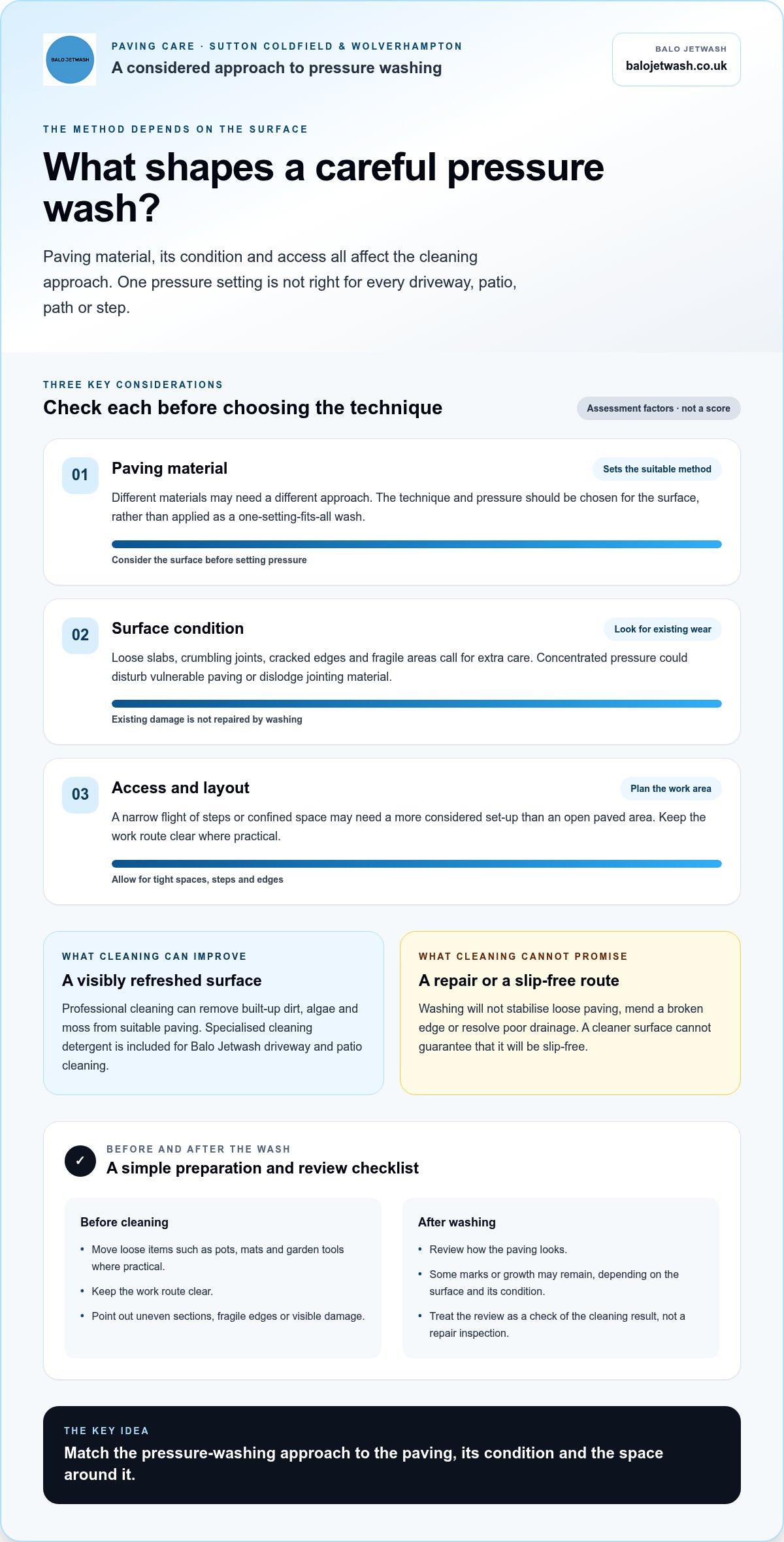
One pressure setting doesn’t suit every surface because paving materials, condition and access all affect how it should be cleaned. A broad, sturdy paved area may call for a different approach from narrow steps, older paving or sections with visible wear. The technique and pressure need to take those differences into account.
Why surface type and condition affect the method
Before cleaning, consider the whole route, including step edges and the joints between paving. Sound, firmly laid paving is different from an area with loose slabs, crumbling joints or cracked edges. Those signs call for extra care, as concentrated pressure could disturb already vulnerable areas. Don’t assume paving is robust simply because it looks solid from a distance.
Joints and edges can collect grime and growth, but careless pressure may dislodge jointing material or worsen existing wear. Access matters too: a confined space or narrow flight of steps may need a more considered setup than an open paved area. Cleaning can refresh suitable paving, but it doesn’t repair loose or damaged sections.
What happens before and after the wash?
Preparation helps the work proceed smoothly. Where practical, move loose items such as pots, mats and garden tools away from the area, and keep the work route clear. Before cleaning, review the visible condition of the paving, including uneven sections, fragile edges or existing damage. Pointing out concerns helps make the intended scope clear.
The surface is then cleaned using an approach suited to its material, condition and accessibility. Detergent may be used where appropriate for the task and surface. After washing, a visual review helps show how the paving looks and whether marks or growth remain. This is a check of the cleaning result, not a repair inspection or a promise that every blemish will disappear.
Cleaning is one part of a considered approach to access. The CDC’s fall prevention information for older adults covers broader ways to reduce fall risks, including attention to the home environment. For suitable paved areas beyond a path or steps, professional patio pressure washing can also refresh built-up grime using a method chosen for the surface.
DIY cleaning or professional pressure washing for outdoor steps?
Light surface dirt on an easy-to-reach path may need no more than gentle brushing and rinsing. That can be manageable routine upkeep if the paving is in good condition and the work feels comfortable. Moss across steps, stubborn build-up or awkward access can make a larger clean demanding. The right choice depends on the surface, the extent of the growth and the effort involved.
Household brushing and rinsing can lift loose dirt, but may not remove established growth. Stronger methods aren’t automatically better: too much force or the wrong technique may disturb vulnerable joints or edges. Professional pressure washing uses equipment suited to the task, with the pressure and technique adapted to the paving. Balo Jetwash uses modern, industrial Vanbuilt equipment and includes specialised cleaning detergent.
| Method | Suitable situation | Key limitation |
|---|---|---|
| Gentle brushing and rinsing | Light dirt on a firm, level area that’s easy to reach | May not shift widespread or stubborn growth |
| Professional pressure washing | Broader build-up or areas that need specialist equipment and a considered technique | Must suit the paving’s material and condition; it doesn’t repair damage |
When might a homeowner handle light surface dirt?
If an area is easy to reach, relatively level and only lightly soiled, gentle brushing followed by rinsing may be enough to freshen it. Keep the task small and manageable. Don’t stretch to reach a far edge, climb to work on difficult sections or clean steps while they’re wet. Stop if paving moves, looks cracked or proves difficult to access. These are reasons not to continue with a DIY clean.
When does professional cleaning make more sense?
Professional cleaning may be more practical if growth covers a broad area, grime resists gentle cleaning or the route includes awkward steps and tight corners. Industrial equipment can remove built-up dirt, algae and moss, while the technique should be chosen for the surface rather than applied indiscriminately. This can be a useful option when the physical work would be strenuous for the homeowner.
Keep expectations realistic. Washing may refresh suitable paving, but it can’t secure a loose slab, fix a damaged edge or correct drainage. Nor can it guarantee safer footing or prevent falls. When weighing up DIY and professional cleaning, consider what you can comfortably reach, the paving’s visible condition and how much growth needs attention. Keep small tasks manageable, and avoid working on surfaces that appear unstable or difficult to access.
How to prepare for path and step cleaning at home
A little preparation makes it easier to explain what you want cleaned and plan around the work. Decide which parts of the route matter most, move portable items out of the way where practical, and plan how people will get around while cleaning is under way. You don’t need to diagnose paving problems. Simply describing what you can see gives a useful starting point for discussing the work and setting realistic expectations.
What details help plan the cleaning visit?
Before requesting a quote, note the paved areas you’d like refreshed and what you can see on them. Mention algae, moss or general grime, along with any loose-looking slabs, damaged edges or uneven sections. Describe the layout in everyday terms, such as a narrow side path, a short flight of steps or a route that turns around the house. Include access constraints, such as a gate or confined working area.
Think about everyday movement too. Is the front entrance the priority, or is a side path used regularly? Are there steps someone needs to use to reach the garden? Being specific makes clear which sections matter most, without suggesting that cleaning will repair paving or resolve wider access problems.
Identify the path, steps and other paved areas you want refreshed. Describe visible growth, dirt and any areas that look loose or damaged. Note narrow access, turns, gates or other features that affect the route. Explain which parts are most important for getting around the home.If the path joins a driveway, include that area in your description if you’d like a wider refresh. Balo Jetwash provides driveway pressure washing, using modern, industrial Vanbuilt equipment to remove built-up dirt, algae and moss from suitable surfaces. If the route also continues onto a patio, describe how the areas connect so the work you have in mind is clear.
How to manage access during the work
Before cleaning starts, move portable items such as pots, mats and garden tools away from the work area where practical. Keep the area accessible for the cleaning work, and let household members know which entrance or path to avoid. If visitors or family members need regular access, plan an alternative route in advance rather than expecting them to cross an active work area.
Keep children, visitors and pets away while the area is being cleaned and as the surface dries. Plan around the route people use most, especially if steps are involved. Paving may remain damp after washing, so wait until the surface is dry before using it again. These arrangements help reduce interruptions and keep expectations clear.
Arrange professional path and step cleaning in Sutton Coldfield or Wolverhampton
A clear description helps when requesting a quote. Say whether you’re asking about a path, steps or adjoining paving, and point out visible algae, moss or grime. If access is narrow or a section looks loose or damaged, mention that too. These details make it easier to explain the areas you want considered from the outset.
Balo Jetwash provides residential driveway and patio cleaning in Wolverhampton and Sutton Coldfield. Modern, industrial Vanbuilt equipment is used to remove built-up dirt, algae and moss, with specialised cleaning detergent included. The cleaning method and pressure are matched to the surface and its condition, rather than assuming every paved area needs the same approach. Cleaning can refresh suitable paving, but it won’t repair damage or guarantee a safe route.
What homeowners can expect from Balo Jetwash
Balo Jetwash cleans residential driveways and patios, giving homeowners a practical option when these outdoor surfaces need a refresh. Describe the surface and where growth has gathered so the work can be considered in context. Where driveway paving has joints suitable for re-sanding, free Klin dried sand re-sanding is included where relevant. It isn’t suitable as a blanket treatment for every surface.
For a straightforward quote request, it helps to have these details ready:
Which paths, steps or other paved areas you’d like cleaned. What growth or grime is visible, and where it is most noticeable. Any access constraints, such as a narrow passage or limited working space. Any sections that appear loose, cracked or otherwise damaged.This gives a clearer picture of the areas to discuss, without suggesting that pressure washing can address paving repairs or drainage concerns.
Choose a clear next step
If you’re in Sutton Coldfield or Wolverhampton, describe the areas that matter most for everyday movement around your home. A short account of the surface, visible growth and access makes it easier to explain what you have in mind. For example, mention if moss is concentrated on entrance steps or if the route continues across a larger paved area.
For a practical refresh to suitable outdoor paving, call Balo Jetwash for a free, no-obligation quote. You can outline the work you have in mind and discuss driveway or patio cleaning in Wolverhampton or Sutton Coldfield.
Take the next step towards a refreshed entrance
A cleaner-looking approach can make a home feel more cared for. Start by deciding which outdoor areas you’d like refreshed and what matters most about their appearance. A considered clean can improve the look of suitable surfaces, while visible damage remains a separate issue to address.
For homeowners in Sutton Coldfield and Wolverhampton, Balo Jetwash provides professional driveway and patio cleaning. The approach is tailored to the surface and its condition, with realistic expectations about what washing can achieve. A cleaner finish is a useful refresh, not a guarantee that a route will be hazard-free.
Ready to discuss a driveway or patio clean? Request a free, no-obligation quote from Balo Jetwash and describe the outdoor areas you’d like refreshed.
Frequently Asked Questions
Can pressure washing make outdoor steps safer?
Pressure washing can remove visible dirt, algae and moss, but it can’t guarantee that steps are safe or prevent falls. Loose paving, raised edges, poor drainage or inadequate lighting may still affect the route. A clean step can remain difficult to use if its edge is damaged or the area is poorly lit. Keep people away during cleaning and until the surface has dried, then consider any remaining access concerns separately.
Can pressure washing damage paving or path joints?
Yes. Unsuitable pressure or technique can disturb paving or its joints, particularly if the surface is older, loose or already damaged. A careful approach accounts for the paving’s condition instead of treating every path alike. If a slab shifts underfoot or jointing looks worn, washing won’t resolve the underlying issue. Mention these concerns when arranging work so they can be considered separately from surface cleaning.
How should I prepare a path before professional cleaning?
Move portable belongings such as a plant stand or doormat, and point out damaged edges or paving that seems loose. Explain which route household members use most, such as the path to the front door. Arrange another way through the garden or to the entrance while work is under way and the surface dries. This helps make the work clear without mistaking cleaning for repair work.
Is DIY cleaning suitable for steps used by an older person?
Gentle cleaning may suit light dirt on a reachable, stable area, but take care around steps. Avoid stretching to reach a far corner, climbing to clean an awkward section or using equipment from an unstable position. Wet steps can be difficult to use during and after cleaning, so plan an alternative route. If growth covers a wide area or paving seems unstable, professional cleaning may be more practical, though neither approach guarantees a hazard-free route.
How long do cleaned paths and steps take to dry?
There’s no single drying time. Weather, shade, airflow, paving and the amount of water left behind all affect it. A shaded step may remain damp after a more exposed section has dried. Don’t assume the route is ready for normal use as soon as washing ends. Keep people away until the surface is dry and use another entrance or path in the meantime. Conditions on the day are the best guide.
Can you clean paths and steps alongside a driveway or patio?
Balo Jetwash provides residential driveway and patio cleaning. When requesting a quote, describe how the paved areas connect, such as an entrance path that continues onto a patio or a driveway that meets the same walkway. The cleaning method depends on the surface, its condition and access. Re-sanding with Klin dried sand is relevant only to suitable paved joints, not every path or step.
Does professional cleaning remove every slip or trip hazard?
No. Cleaning addresses surface grime and organic growth, but it can’t level raised paving, secure a loose slab, mend a broken edge or improve drainage. Nor can it ensure that a surface will never become slippery again. After washing, look at the route as a whole: check whether paving sits evenly and whether water appears to collect. Treat any physical defect as a separate maintenance concern, rather than expecting a surface clean to correct it.
{"@context":"https://schema.org","@type":"FAQPage","mainEntity":[{"@type":"Question","name":"Which signs suggest a path or step needs attention?","acceptedAnswer":{"@type":"Answer","text":"Look for green or dark patches, moss between paving and grime that dulls the surface. Notice where growth gathers: shaded corners, areas that remain damp after rain, or sections exposed to frequent foot traffic may look different from the rest of the route. If water regularly sits on a step or paved area, mention it when discussing the work. Not every mark is surface growth. Discolouration may affect appearance, while a loose slab, cracked edge or raised paver is a separate physical issue. Note what you can see, but don’t expect cleaning to fix movement or damage beneath the surface. If a section looks uneven, flag it as a possible repair concern rather than a cleaning problem."}},{"@type":"Question","name":"What can cleaning realistically improve?","acceptedAnswer":{"@type":"Answer","text":"Removing accumulated algae, moss and grime can leave suitable paving looking clearer and better cared for. The result depends on the surface and the condition of the growth. Cleaning can’t stabilise a loose slab, mend a broken edge or resolve poor drainage. Those issues need attention beyond washing. As a starting point, note which areas look different and whether the concern is mainly surface growth or visible damage. That information helps set realistic expectations for cleaning in Sutton Coldfield or Wolverhampton. The aim is a refreshed surface, not a promise that the route will be risk-free. A well-planned clean starts with assessing the surface and preparing the work area. The method should suit the paving rather than rely on one setting for every job. Balo Jetwash uses modern, industrial Vanbuilt equipment to clean residential driveways and patios, removing built-up dirt, algae and moss. Specialised cleaning detergent is included, and the aim is a thorough refresh carried out with care for the surface. One pressure setting doesn’t suit every surface because paving materials, condition and access all affect how it should be cleaned. A broad, sturdy paved area may call for a different approach from narrow steps, older paving or sections with visible wear. The technique and pressure need to take those differences into account."}},{"@type":"Question","name":"What happens before and after the wash?","acceptedAnswer":{"@type":"Answer","text":"Preparation helps the work proceed smoothly. Where practical, move loose items such as pots, mats and garden tools away from the area, and keep the work route clear. Before cleaning, review the visible condition of the paving, including uneven sections, fragile edges or existing damage. Pointing out concerns helps make the intended scope clear. The surface is then cleaned using an approach suited to its material, condition and accessibility. Detergent may be used where appropriate for the task and surface. After washing, a visual review helps show how the paving looks and whether marks or growth remain. This is a check of the cleaning result, not a repair inspection or a promise that every blemish will disappear. Cleaning is one part of a considered approach to access. The CDC’s fall prevention information for older adults covers broader ways to reduce fall risks, including attention to the home environment. For suitable paved areas beyond a path or steps, professional patio pressure washing can also refresh built-up grime using a method chosen for the surface. Light surface dirt on an easy-to-reach path may need no more than gentle brushing and rinsing. That can be manageable routine upkeep if the paving is in good condition and the work feels comfortable. Moss across steps, stubborn build-up or awkward access can make a larger clean demanding. The right choice depends on the surface, the extent of the growth and the effort involved. Household brushing and rinsing can lift loose dirt, but may not remove established growth. Stronger methods aren’t automatically better: too much force or the wrong technique may disturb vulnerable joints or edges. Professional pressure washing uses equipment suited to the task, with the pressure and technique adapted to the paving. Balo Jetwash uses modern, industrial Vanbuilt equipment and includes specialised cleaning detergent."}},{"@type":"Question","name":"When might a homeowner handle light surface dirt?","acceptedAnswer":{"@type":"Answer","text":"If an area is easy to reach, relatively level and only lightly soiled, gentle brushing followed by rinsing may be enough to freshen it. Keep the task small and manageable. Don’t stretch to reach a far edge, climb to work on difficult sections or clean steps while they’re wet. Stop if paving moves, looks cracked or proves difficult to access. These are reasons not to continue with a DIY clean."}},{"@type":"Question","name":"When does professional cleaning make more sense?","acceptedAnswer":{"@type":"Answer","text":"Professional cleaning may be more practical if growth covers a broad area, grime resists gentle cleaning or the route includes awkward steps and tight corners. Industrial equipment can remove built-up dirt, algae and moss, while the technique should be chosen for the surface rather than applied indiscriminately. This can be a useful option when the physical work would be strenuous for the homeowner. Keep expectations realistic. Washing may refresh suitable paving, but it can’t secure a loose slab, fix a damaged edge or correct drainage. Nor can it guarantee safer footing or prevent falls. When weighing up DIY and professional cleaning, consider what you can comfortably reach, the paving’s visible condition and how much growth needs attention. Keep small tasks manageable, and avoid working on surfaces that appear unstable or difficult to access. A little preparation makes it easier to explain what you want cleaned and plan around the work. Decide which parts of the route matter most, move portable items out of the way where practical, and plan how people will get around while cleaning is under way. You don’t need to diagnose paving problems. Simply describing what you can see gives a useful starting point for discussing the work and setting realistic expectations."}},{"@type":"Question","name":"What details help plan the cleaning visit?","acceptedAnswer":{"@type":"Answer","text":"Before requesting a quote, note the paved areas you’d like refreshed and what you can see on them. Mention algae, moss or general grime, along with any loose-looking slabs, damaged edges or uneven sections. Describe the layout in everyday terms, such as a narrow side path, a short flight of steps or a route that turns around the house. Include access constraints, such as a gate or confined working area. Think about everyday movement too. Is the front entrance the priority, or is a side path used regularly? Are there steps someone needs to use to reach the garden? Being specific makes clear which sections matter most, without suggesting that cleaning will repair paving or resolve wider access problems. If the path joins a driveway, include that area in your description if you’d like a wider refresh. Balo Jetwash provides driveway pressure washing, using modern, industrial Vanbuilt equipment to remove built-up dirt, algae and moss from suitable surfaces. If the route also continues onto a patio, describe how the areas connect so the work you have in mind is clear."}},{"@type":"Question","name":"Can pressure washing make outdoor steps safer?","acceptedAnswer":{"@type":"Answer","text":"Pressure washing can remove visible dirt, algae and moss, but it can’t guarantee that steps are safe or prevent falls. Loose paving, raised edges, poor drainage or inadequate lighting may still affect the route. A clean step can remain difficult to use if its edge is damaged or the area is poorly lit. Keep people away during cleaning and until the surface has dried, then consider any remaining access concerns separately."}},{"@type":"Question","name":"Can pressure washing damage paving or path joints?","acceptedAnswer":{"@type":"Answer","text":"Yes. Unsuitable pressure or technique can disturb paving or its joints, particularly if the surface is older, loose or already damaged. A careful approach accounts for the paving’s condition instead of treating every path alike. If a slab shifts underfoot or jointing looks worn, washing won’t resolve the underlying issue. Mention these concerns when arranging work so they can be considered separately from surface cleaning."}},{"@type":"Question","name":"How should I prepare a path before professional cleaning?","acceptedAnswer":{"@type":"Answer","text":"Move portable belongings such as a plant stand or doormat, and point out damaged edges or paving that seems loose. Explain which route household members use most, such as the path to the front door. Arrange another way through the garden or to the entrance while work is under way and the surface dries. This helps make the work clear without mistaking cleaning for repair work."}},{"@type":"Question","name":"Is DIY cleaning suitable for steps used by an older person?","acceptedAnswer":{"@type":"Answer","text":"Gentle cleaning may suit light dirt on a reachable, stable area, but take care around steps. Avoid stretching to reach a far corner, climbing to clean an awkward section or using equipment from an unstable position. Wet steps can be difficult to use during and after cleaning, so plan an alternative route. If growth covers a wide area or paving seems unstable, professional cleaning may be more practical, though neither approach guarantees a hazard-free route."}},{"@type":"Question","name":"How long do cleaned paths and steps take to dry?","acceptedAnswer":{"@type":"Answer","text":"There’s no single drying time. Weather, shade, airflow, paving and the amount of water left behind all affect it. A shaded step may remain damp after a more exposed section has dried. Don’t assume the route is ready for normal use as soon as washing ends. Keep people away until the surface is dry and use another entrance or path in the meantime. Conditions on the day are the best guide."}},{"@type":"Question","name":"Can you clean paths and steps alongside a driveway or patio?","acceptedAnswer":{"@type":"Answer","text":"Balo Jetwash provides residential driveway and patio cleaning. When requesting a quote, describe how the paved areas connect, such as an entrance path that continues onto a patio or a driveway that meets the same walkway. The cleaning method depends on the surface, its condition and access. Re-sanding with Klin dried sand is relevant only to suitable paved joints, not every path or step."}},{"@type":"Question","name":"Does professional cleaning remove every slip or trip hazard?","acceptedAnswer":{"@type":"Answer","text":"No. Cleaning addresses surface grime and organic growth, but it can’t level raised paving, secure a loose slab, mend a broken edge or improve drainage. Nor can it ensure that a surface will never become slippery again. After washing, look at the route as a whole: check whether paving sits evenly and whether water appears to collect. Treat any physical defect as a separate maintenance concern, rather than expecting a surface clean to correct it."}}]}Information
Water available? - You don't need to be present for us to carry out the service. If required, we can supply water ourselves.
Insurance
Balo Jetwash is fully insured, We have £5,000,000 of public liability insurance. Balo Jetwash operatives are professional, reliable and endeavour to carry out the work to the highest standard with minimal fuss and upheaval.