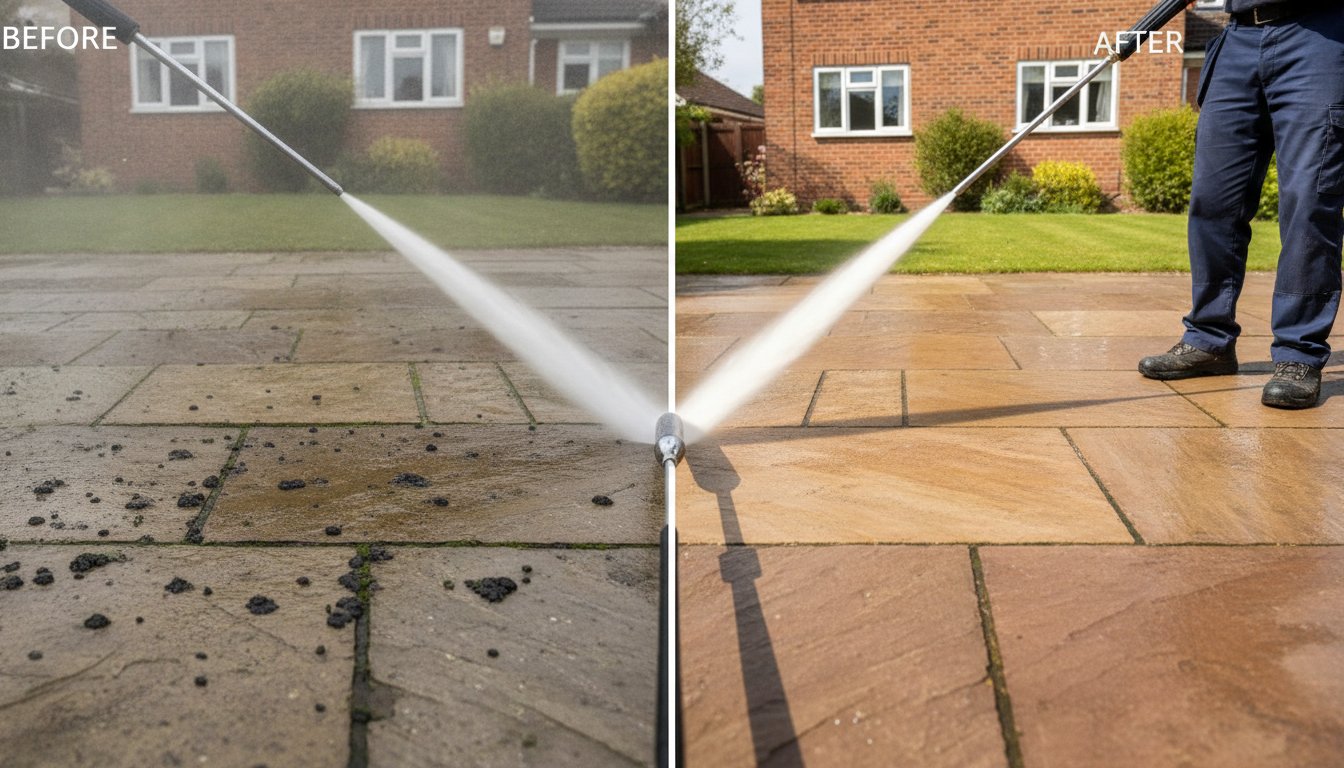

Have you ever spent an entire afternoon blast-cleaning your patio only to find those stubborn, ink-like marks staring right back at you? It is a common headache for homeowners across the West Midlands. We understand the sheer frustration when a standard jet wash fails to deliver the sparkling results you deserve. You want a bright, welcoming space for hosting guests, not a surface that looks neglected or dirty. If you are wondering how to remove black spots from Indian sandstone without causing permanent damage to your expensive natural stone, you aren't alone.
Those marks aren't just dirt; they are hardy biological organisms that have anchored themselves deep into the stone's pores. We promise to show you the professional secrets to vanishing these lichen spots and restoring your patio to its original, stunning glory. We will explore the lifecycle of the black spot, the power of licensed industrial cleaning detergents, and why our modern, industrial Vanbuilt equipment succeeds where domestic machines fail. From the benefits of kiln-dried sand to knowing when to call in the specialists, we have got you covered for a total property revitalisation.
Key Takeaways
Identify the biological culprit behind those ink-like marks and why they anchor so deeply into your natural stone.Master the safest methods for how to remove black spots from Indian sandstone whilst protecting your garden's delicate borders.Avoid the "Acid Trap" and delamination risks associated with aggressive DIY jet washing and improper household chemicals.Discover how our Modern, Industrial Vanbuilt equipment delivers a stunning, professional finish that domestic machines simply cannot touch.Learn about our expert restoration process, including free re-sanding with kiln-dried sand for a perfect, like-new result!What Are Those Stubborn Black Spots on Your Indian Sandstone?
You have seen them. Those tiny, black ink-like splats that seem to multiply overnight on your beautiful patio. Many homeowners in Wolverhampton and Sutton Coldfield spend hours scrubbing, yet these marks refuse to budge. It is incredibly frustrating! These aren't just bits of dirt, mud, or oil spills. They are actually a very specific, hardy biological organism called Lecanora muralis. This is a type of lichen that absolutely thrives in the damp, unpredictable UK climate.
To understand what are lichens? is to understand why your standard garden hose is useless against them. Lichens are complex organisms that don't just sit on the surface; they grow into it. Indian sandstone is naturally porous, meaning it is full of tiny microscopic holes. These black spots use those holes to anchor themselves deep within the stone. This is exactly why you are searching for how to remove black spots from Indian sandstone; surface-level cleaning barely scratches the surface of the problem.
The Lifecycle of Patio Lichen
Microscopic spores are constantly travelling through the air across the West Midlands. When they land on your patio, they find the perfect environment to settle. Indian sandstone is rich in specific minerals that act as a feast for these organisms. They don't just rest there; they develop a complex "root" system that feeds on the minerals within the stone itself. Because they are so well-fed and anchored, they can withstand freezing winters and scorching summers alike. This biological bond is what makes them so incredibly difficult to shift without our professional expertise.